One Atomic Bomb Per Hour

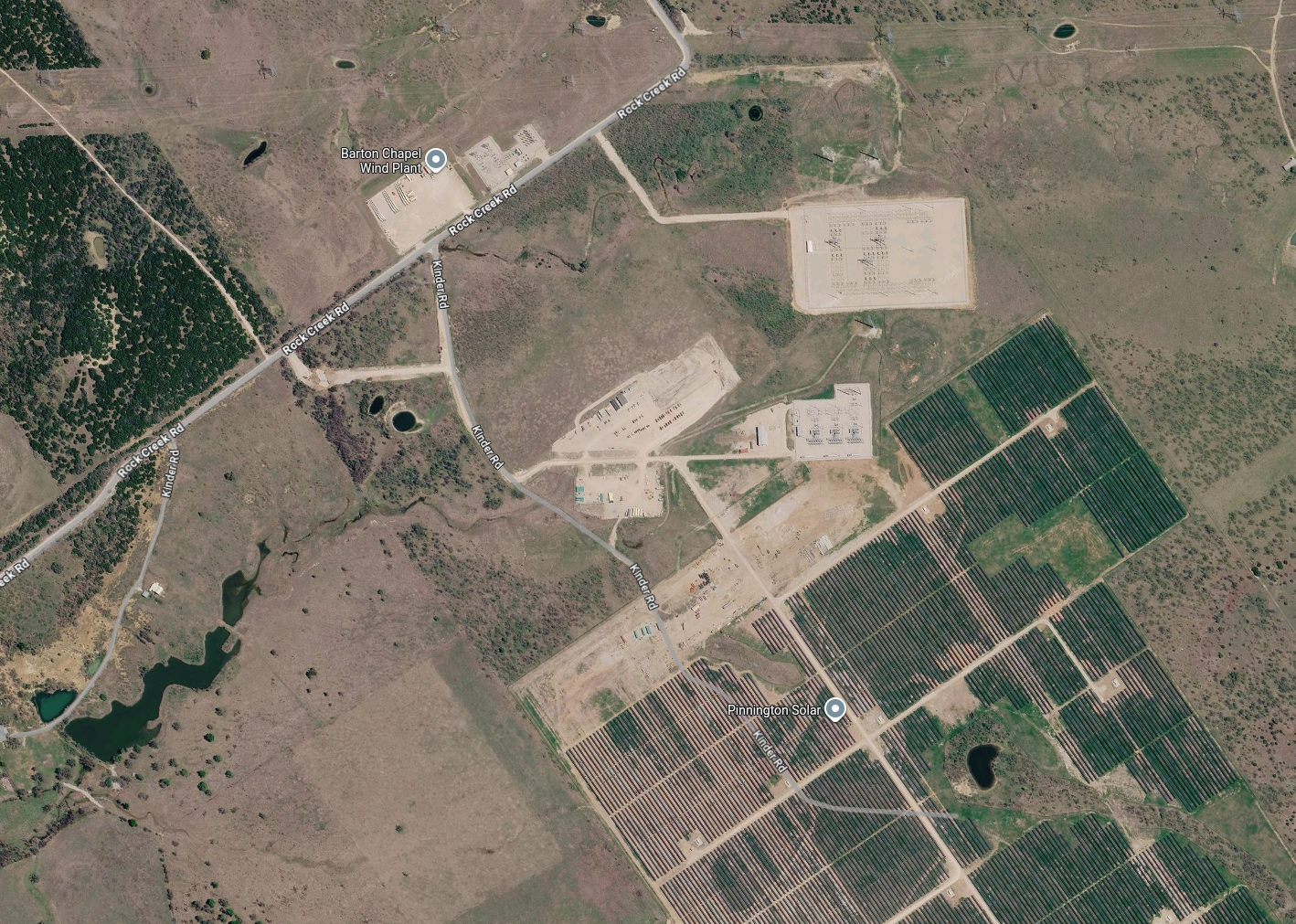
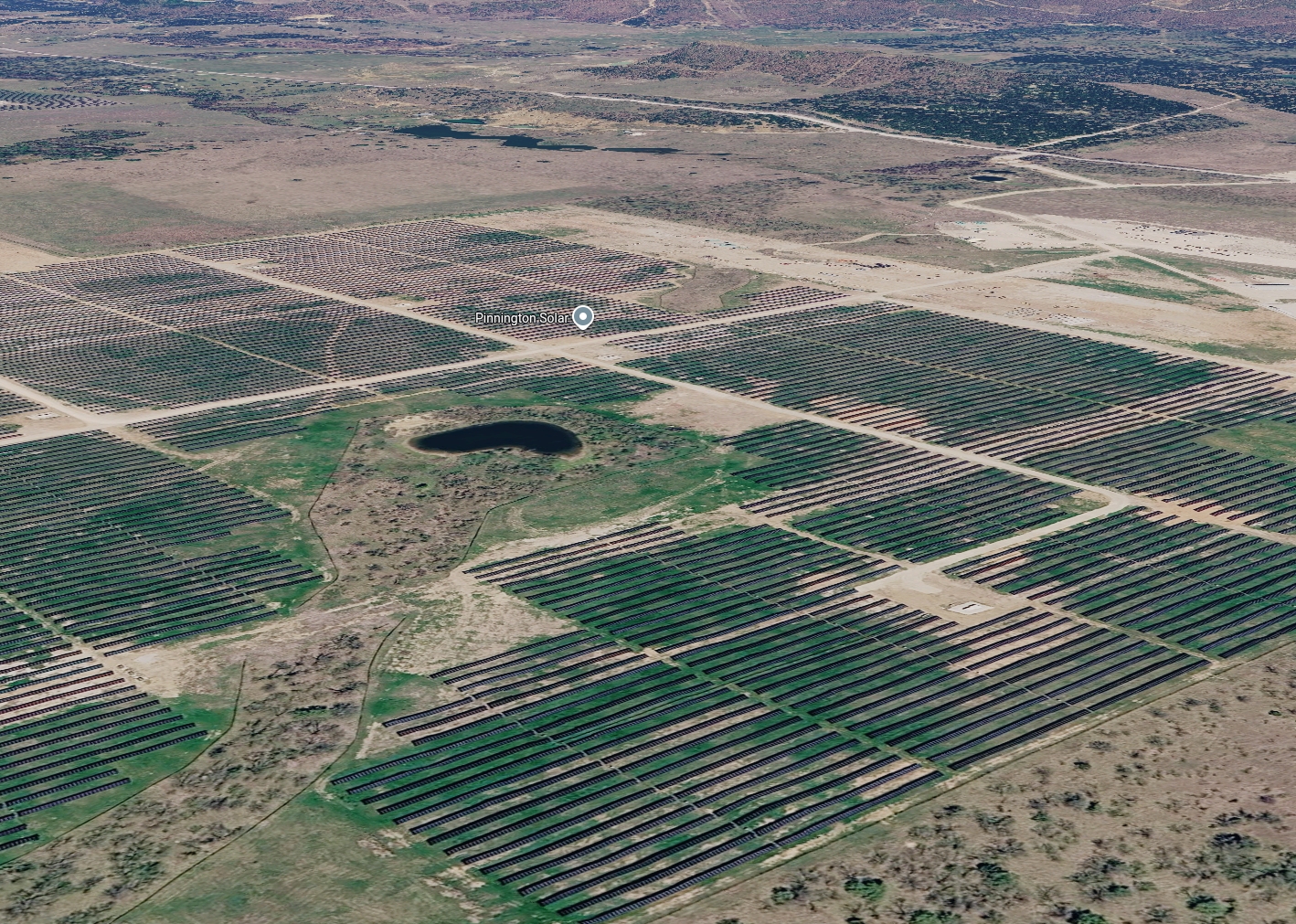
They are planning on building a 10 GW data center here in Cheyenne, Wyoming, and generating all of the electricity on site..

“Wyoming is poised to become an artificial-intelligence powerhouse after Laramie County commissioners last week unanimously voted to move forward with the construction of a 1.8 gigawatt data center designed to eventually scale up to 10 gigawatts, which would be the largest single AI campus in the U.S. “

Wyoming County Approves Construction of What Could Become the Largest Data Center in US – Inside Climate News

10 GW is the equivalent of one hundred million 100W light bulbs.

I asked Google Gemini to calculate the energy balance.

To calculate the true environmental heat flux of a 10 GW compute footprint, we must look at both sides of the meter: Silicon Dissipation and On-Site Generation Inefficiency.

  1. The Silicon Compute Load (100% Thermal Conversion)

    According to the First Law of Thermodynamics, energy cannot be destroyed. Inside the computing cluster, electrical energy is fed into transistors to drive bit transitions. Aside from a negligible fraction of a percent that escapes as light through fiber optics, 100% of the computing wattage degrades into Joule heating due to electrical resistance.

The mathematical representation of continuous heat generation (E_compute) over one hour (t = 3,600 seconds) is:

E_compute = P * t

E_compute = (10 * 10^9 J/s) * 3,600 s = 3.6 * 10^13 Joules (36 Terajoules)

  1. The On-Site Generation Load (50% Thermal Inefficiency)

    To deliver 10 GW of usable electricity to the servers, an on-site power plant must burn fuel. If the plant operates at a standard 50% thermal efficiency (eta = 0.50), it means that for every 1 Joule of electricity produced, 1 Joule of raw heat is lost directly to the environment through the plant’s own cooling towers and exhaust stacks.

The total fuel energy input required (P_input) is:

P_input = P_compute / eta = 10 GW / 0.50 = 20 GW

Thus, the heat wasted purely by generating the electricity on-site (E_generator) over one hour is:

E_generator = 10 GW * 3,600 s = 3.6 * 10^13 Joules (36 Terajoules)

  1. Total Combined Heat Footprint

    Adding the heat from the chips to the waste heat from the on-site generators gives us the total hourly thermal output (E_total):

    E_total = E_compute + E_generator

    E_total = 3.6 * 10^13 J + 3.6 * 10^13 J = 7.2 * 10^13 Joules (72 Terajoules)

Quantifying the Yield of an Atomic Bomb

To provide context for 72 Terajoules, we examine the energy released during a nuclear explosion. The “Little Boy” weapon detonated over Hiroshima was a uranium-235 fission device. In physical reviews, the energy metrics of nuclear weapons are calibrated in kilotons (kt) of TNT equivalent.

By international scientific convention, one gram of TNT releases exactly 4,184 Joules. Therefore, a standard metric kiloton of TNT translates to:

1 kt TNT = 4.184 * 10^12 Joules

Forensic assessments by Los Alamos National Laboratory place the explosive yield of the Hiroshima detonation at approximately 15 kilotons. To determine the absolute energy yield (E_bomb) in Joules, we compute:

E_bomb = 15 kt * (4.184 * 10^12 J/kt) = 6.276 * 10^13 Joules

The Hourly Comparison: Side-by-Side Analysis

We can now calculate the explicit ratio (R) between the hourly heat emission of our 10 GW megastructure (with on-site generation) and the total yield of the Hiroshima bomb:

R = E_total / E_bomb

R = (7.2 * 10^13 J) / (6.276 * 10^13 J) = 1.147

Metric Comparison:

  • Energy Release for 10GW Data Center Complex (Every Hour): 7.2 * 10^13 Joules

  • Energy Release for Hiroshima Atomic Bomb (Total Yield): 6.276 * 10^13 Joules

  • TNT Equivalent for 10GW Data Center Complex (Every Hour): 17.2 Kilotons

  • TNT Equivalent for Hiroshima Atomic Bomb (Total Yield): 15.0 Kilotons

When factoring in the 50% thermal efficiency of on-site generators, a 10 GW data center campus generates 114.7% of the total energy of the Hiroshima bomb every single hour. Stated another way, the facility matches the energy footprint of an atomic bomb every 52 minutes.

A study done of existing smaller data centers shows a massive data heat island effect extending many kilometers away.

(PDF) The data heat island effect: quantifying the impact of AI data centers in a warming world

Steel plants generate a lot of heat, but are located near bodies of water which dissipate the heat and minimize any local temperature increases. Without water to transport and evaporate the heat away, the air is going to become very hot.

From Gemini:

“Because water’s volumetric heat capacity is roughly 3,500 times greater than that of air, a tiny temperature shift in a body of water represents a massive reservoir of energy. Mathematically, transferring the exact amount of thermal energy required to raise a specific volume of water by just 2°C into an identical volume of air would trigger an astronomical temperature spike of nearly 7,000°C—well beyond the 6,000°C mark.

To put this into perspective, this concentrated thermal energy would make that volume of air hotter than the radiant surface of the sun, which burns at approximately 5,500°C.”

The Rawhide Generating Station near us in Colorado uses water to evaporate away the heat.  I took this picture at -10F on February 14, 2021 and you can see the water evaporating off the cooling pond and out of the stack.

Evaporating water is the only viable way to remove large amounts of heat from the local environment, but these data centers are being sold based on the idea that they won’t use water.

Mayor: Data center water use in Cheyenne is far below city supply, other local industries | News | wyomingnews.com

We are having the warmest and driest year on record here in Cheyenne, and there is no snow at any of the locations we depend on for our water supply.

https://www.ncei.noaa.gov/pub/data/ghcn/daily/all/USW00024018.dly

NWCC iMap

Besides the noise, pollution and heat, this will greatly increase the competition for energy, which will drive up fuel prices.

Cheyenne to host massive AI data center using more electricity than all Wyoming homes combined | AP News

In order to house the workers, they are building hideous four story apartment complexes all over town.

Report projects worsening housing crisis in Cheyenne | Local News | wyomingnews.com

Our community and environment are being destroyed by these data centers, but big money seems to get whatever they want.  “Consent of the governed” no longer seems to be a valid concept in America.

“Governments are instituted among Men, deriving their just powers from the consent of the governed”

Posted in Uncategorized | 3 Comments

New Video : Analyzing Oil And Gas

Gas and oil production made simple.

Posted in Uncategorized | 3 Comments

Is Antarctica Melting?

Other AI websites answer questions like this based on the information it finds on the Internet. At visitech.ai we do real analysis with actual data, and provide a more accurate answer. Contact [email protected] for more information.

Posted in Uncategorized | 21 Comments

High Speed Analysis And Visualization

At visitech.ai we have created the world’s fastest data analysis, visualization and presentation graphics tool. It reduces work time from hours to a few minutes. Contact [email protected] for more information.

Posted in Uncategorized | 1 Comment

El Nino To The Rescue?

The US is experiencing the worst springtime drought on record, but the weather seems to be changing and the change may be due to a rapidly developing El Nino.

Posted in Uncategorized | 1 Comment

Fake News Update

“The Fake News was wrong (again).”
“Cheapest Summer Gas Prices in Four Years”

ICYMI: Cheapest Summer Gas Prices in Four Years – The White House

Posted in Uncategorized | Leave a comment

Growth Of Antarctic Sea Ice

ftp://osisaf.met.no/prod_test/ice/index/v2p3/sh/osisaf_sh_sie_daily.txt

Posted in Uncategorized | Leave a comment

65 Years Of Progress!


Posted in Uncategorized | 26 Comments

El Nino To The Rescue?

The US is experiencing the worst springtime drought on record

https://www.ncdc.noaa.gov/monitoring-content/sotc/drought/psi/psi-202603.png

https://www.ncei.noaa.gov/pub/data/cirs/climdiv/climdiv-pdsidv-v1.0.0-20240606

Conditions have worsened during April

Contiguous U.S. | U.S. Drought Monitor

Temperatures at Imperial, Nebraska have averaged 10F above the post 1895 average, and have been far above normal almost every day.

https://www.ncei.noaa.gov/pub/data/ghcn/daily/all/USC00254110.dly

Northern Colorado is completely barren.  Normally this spot would be very green by late April.

Snowpack in the west is at an historic low.

NWCC iMap

Wolf Creek Pass is frequently the snowiest place in Colorado, and snowpack peaks there normally during April. In 1980 I skied there in July, but this year there is no snow.

NWCC iMap

Streamflow in much of the US is at a record low.


USGS | National Water Dashboard

At the current rate of decline, Lake Powell would be empty in a little over three years. This can’t actually happen, but is an interesting reference point.

Water is being withdrawn from Lake Powell about 1.5 times faster that it is being replenished.

https://lakepowell.water-data.com/

Lake Powell has lost nine feet of water since the end of January.

Wahweap Main Launch Ramp Webcam (U.S. National Park Service)

But there is about to be a change in the weather, with lots of rain forecast in some of the drought areas.

This may be due to the rapid increase in Nino 3.4 sea surface temperatures as El Nino forms.

Climate Reanalyzer

Lake Powell filled up during the 1983 El Nino, and made a significant recovery during the 2023 El Nino

https://www.cpc.ncep.noaa.gov/products/analysis_monitoring/ensostuff/detrend.nino34.ascii.txt

Posted in Uncategorized | 17 Comments

Worst March Drought On Record

The Palmer Drought Severity Index for March 2026 was the worst on record, worst than March 1934 and March 1977.

https://www.ncei.noaa.gov/pub/data/cirs/climdiv/climdiv-pdsidv-v1.0.0-20240606

https://www.ncdc.noaa.gov/monitoring-content/sotc/drought/psi/psi-202603.png

https://www.ncdc.noaa.gov/monitoring-content/sotc/drought/psi/psi-193403.gif

https://www.ncdc.noaa.gov/monitoring-content/sotc/drought/psi/psi-197703.gif

Streamflow in many US rivers is near or at a record low.

USGS | National Water Dashboard

Posted in Uncategorized | 12 Comments