I asked Gemini to draw a graph of Arctic sea ice extent since 2007, and it plotted values for 2025 and 2030. Then it acknowledged that was scientific malpractice.


I asked Gemini to draw a graph of Arctic sea ice extent since 2007, and it plotted values for 2025 and 2030. Then it acknowledged that was scientific malpractice.
“New poll shows Clinton over Trump by double-digits
By Eric Bradner, CNN
Sun October 23, 2016”

Presidential poll: Hillary Clinton leads Donald Trump by 12 | CNN Politics
venice.ai claims that arctic sea ice extent has declined since 2007, and they say that this year’s minimum is “3.25 million square kilometers”
Ice extent has not declined since 2007 and this year’s minimum so far is 4,311,000 km.sq. according to NSIDC and 4,760,000 km.sq. according to OSI.


ftp://sidads.colorado.edu/DATASETS/NOAA/G02135/north/daily/data/N_seaice_extent_daily_v3.0.csv
The BBC says Kamala Harris has thrived in debates. Her only memorable debate performance was getting crushed by Tulsi Gabbard.

Kamala Harris has thrived in debates – will her tactics work on Trump?
“Top Climate Scientist: Humans Will Go Extinct if We Don’t Fix Climate Change by 2023
A top climate scientist is warning that climate change will wipe out all of humanity unless we stop using fossil fuels over the next five years.In a recent speech at the University of Chicago, James Anderson — a professor of atmospheric chemistry at Harvard University — warned that climate change is drastically pushing Earth back to the Eocene Epoch from 33 million BCE, when there was no ice on either pole. Anderson says current pollution levels have already catastrophically depleted atmospheric ozone levels, which absorb 98 percent of ultraviolet rays, to levels not seen in 12 million years.”

Top Climate Scientist: Humans Will Go Extinct if We Don’t Fix Climate Change by 2023
“Every record has been destroyed or falsified, every book rewritten, every picture has been repainted, every statue and street building has been renamed, …. Nothing exists except an endless present in which the Party is always right.”
George Orwell, 1984
In 1974, the National Academy of Sciences showed that the 1930s were very warm in the Northern Hemisphere, and there was almost 0.75C cooling through the end of the 1960s. But the warmth from 1890 to the mid-1950s has since been erased.

Climate at a Glance | Global Time Series | National Centers for Environmental Information (NCEI)


“So, if we could reduce the ocean blip by, say, 0.15 degC,
then this would be significant for the global mean — but
we’d still have to explain the land blip.It would be good to remove at least part of the 1940s blip,
but we are still left with “why the blip”.”

I asked ChatGPT to generate some graphs of climate data.


Experts say Fort Lauderdale is drowning, but satellite imagery doesn’t provide any support for that idea.
“It’s a scary thought: Sea levels rising by as much as 2 feet, swallowing up land, homes and everything else not on high ground.
It could happen as soon as 2060, experts say.”

Fort Lauderdale is looking at raising roads to battle rising seas

The Titanic sank on April 14, 1912, largely due to a dramatic shift in weather patterns more than two years earlier.
During the summer of 2012, Arctic experts announced the imminent collapse of Arctic sea ice. Extent has increased 24% since then.


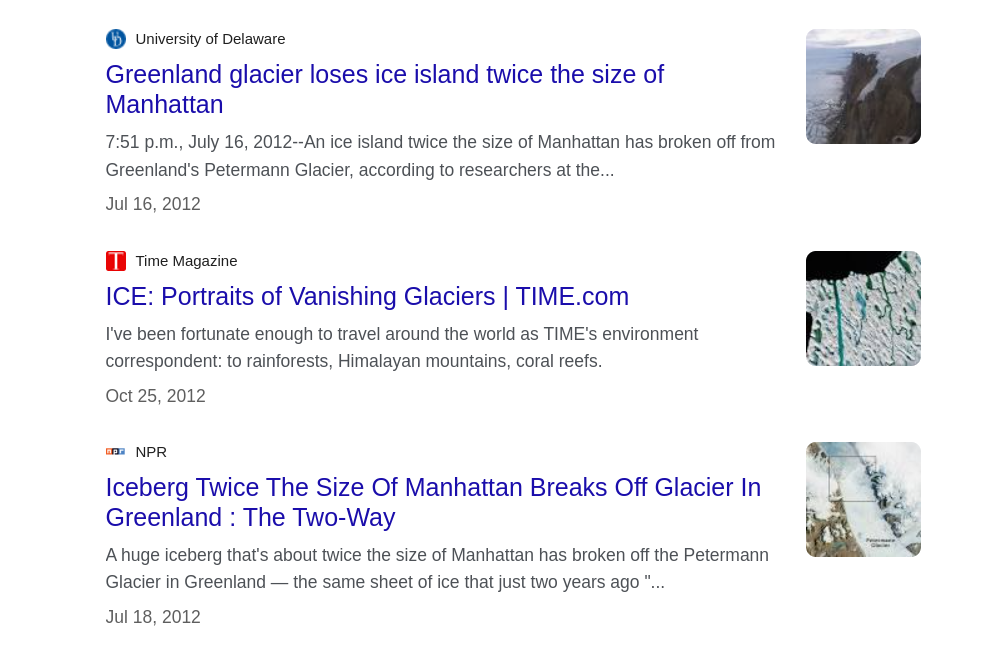
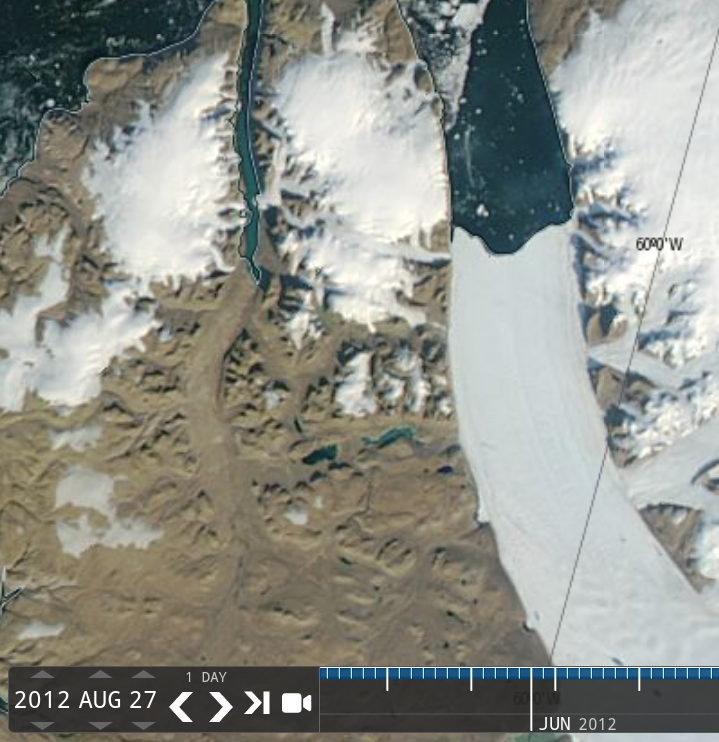
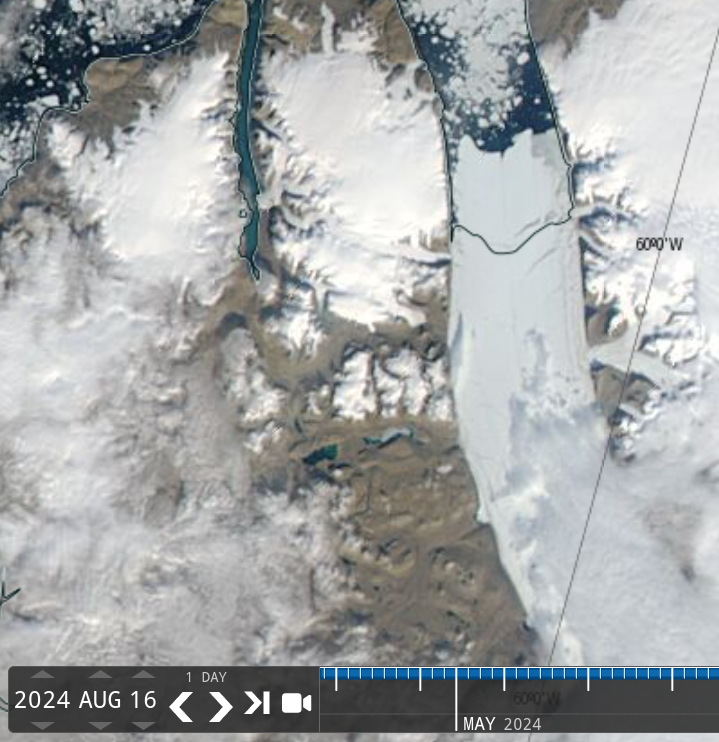
Greenland’s Petermann Glacier has grown almost ten miles since experts announced its demise in 2012.