
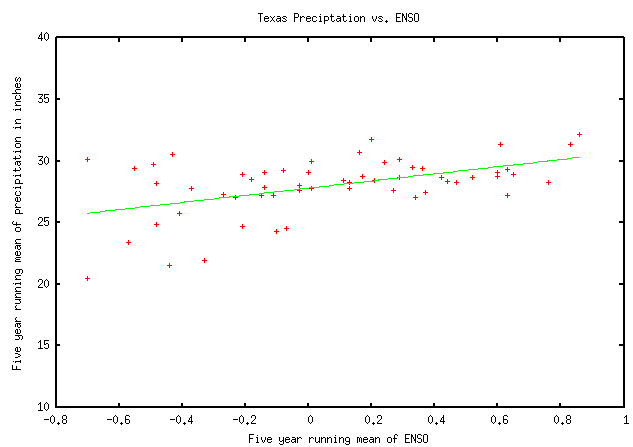
Strong La Nina periods average about 15% less rain than strong El Nino periods. All eight periods which averaged less than 25 inches of rain were also ENSO negative.
Disrupting the Borg is expensive and time consuming!
Google Search
-
Recent Posts
- Fact Checking NASA
- Fact Checking Grok
- Fact Checking The New York Times
- New Visitech Features
- Ice-Free Arctic By 2014
- Debt-Free US Treasury Forecast
- Analyzing Big City Crime (Part 2)
- Analyzing Big City Crime
- UK Migration Caused By Global Warming
- Climate Attribution In Greece
- “Brown: ’50 days to save world'”
- The Catastrophic Influence of Bovine Methane Emissions on Extraterrestrial Climate Patterns
- Posting On X
- Seventeen Years Of Fun
- The Importance Of Good Tools
- Temperature Shifts At Blue Hill, MA
- CO2²
- Time Of Observation Bias
- Climate Scamming For Profit
- Back To The Future
- “records going back to 1961”
- Analyzing Rainfall At Asheville
- Historical Weather Analysis With Visitech
- “American Summers Are Starting to Feel Like Winter”
Recent Comments
- arn on Fact Checking NASA
- Gordon Vigurs on Fact Checking NASA
- Bob G on Fact Checking NASA
- arn on Fact Checking NASA
- conrad ziefle on Fact Checking NASA
- arn on Fact Checking NASA
- Bob G on Fact Checking NASA


sorry, OT take a look at this http://www.foxnews.com/politics/2011/04/25/washington-state-considers-nation-electric-car-fee/
LOL…..be careful what you wish for
Texas is starting to get some rain. Hopfully, this drought will be lessened soon, meaning that the alarmists will have to search for another poster child, like tornadoes.
Looks like the variability of rainfall also increases with negative ENSO conditions.
-Scott