
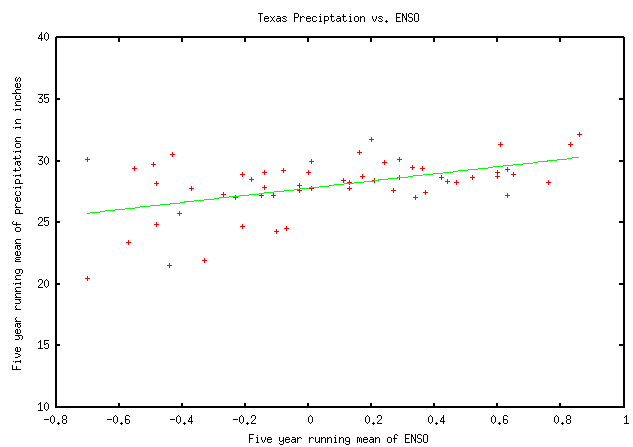
Strong La Nina periods average about 15% less rain than strong El Nino periods. All eight periods which averaged less than 25 inches of rain were also ENSO negative.
Disrupting the Borg is expensive and time consuming!
Google Search
-
Recent Posts
- Bullseye!
- It’s Getting Closer
- Greenland Meltdown Scam
- Greenland Ice Update
- Wyoming Gold
- Three Years Since The Apocalypse
- Arctic Report card Summer 2026
- Elon Pushing Pushing Geoengineering
- Earth, Wind And Fire
- On The Road Again
- Vandalism At The Reflecting Pool
- Fifty Years Ago Today
- Truth Or Consequences
- US Climate Trend Maps
- Declining Spring Snow Cover In Northern New Mexico
- You Can’t Fool Mother Nature
- Cattle And The Climate
- One Atomic Bomb Per Hour
- New Video : Analyzing Oil And Gas
- Is Antarctica Melting?
- High Speed Analysis And Visualization
- El Nino To The Rescue?
- Fake News Update
- Growth Of Antarctic Sea Ice
- 65 Years Of Progress!
Recent Comments
- Stuart Hamish on Three Years Since The Apocalypse
- Stuart Hamish on Cattle And The Climate
- Bob G on Bullseye!
- conrad ziefle on Bullseye!
- arn on Greenland Ice Update
- D. Boss on Bullseye!
- scott allen on Bullseye!


sorry, OT take a look at this http://www.foxnews.com/politics/2011/04/25/washington-state-considers-nation-electric-car-fee/
LOL…..be careful what you wish for
Texas is starting to get some rain. Hopfully, this drought will be lessened soon, meaning that the alarmists will have to search for another poster child, like tornadoes.
Looks like the variability of rainfall also increases with negative ENSO conditions.
-Scott