“Patriotism is the last refuge of a scoundrel.”
– Samuel Johnson

“Patriotism is the last refuge of a scoundrel.”
– Samuel Johnson
In 1974, the consensus was near certain death, starvation and anarchy due to global cooling, while others argued that sea level would soon rise dangerously.
Lakeland Ledger – Dec 29, 1974
“Bryson and a group of fellow climatologists met last summer in Bonn under the auspices of a group called the International Federation of Institutes for Advanced Study and issued a statement that startled many of their colleagues. It read, in part: “The facts of present climate change are such that the most optimistic experts would assign near certainty to major crop failures within a decade. If national and international policies do not take these near-certain failures into account, they will result in mass deaths by starvation and probably in anarchy and violence that could exact a still more terrible toll … We are aware of differences among experts as to the cause-and-effect relationships of observed climatic facts and, consequently, as to the most likely prognosis. Professionally, the differences are important, but they do not—and should not be allowed to—obscure the larger consensus that the observed changes are neither trivial nor ephemeral.”
The Bonn statement caused an uproar, and its strong wording was subsequently softened; a number of climatologists and meteorologists also took issue with the “consensus” it described. Prof. Mikhail Budyko of the Soviet Hydrometeorological Service, for one, discounts the significance of the recent cooling trend and warns that over a longer term the climate has actually been getting warmer because of human activities, particularly the burning of fossil fuels, and that the sea level will soon rise dangerously as the Antarctic and other ice caps melt.”

Lakeland Ledger – Google News Archive Search
Fifty years later, academics are just starting to get past the Antarctic melting scam.
“during most of the LIG, the Ronne Ice Shelf was still in place, and close to its current extent. Water isotope data are consistent with a retreat of WAIS9, but seem inconsistent with more dramatic model realizations10 in which both WAIS and the large Antarctic ice shelves were lost. This new constraint calls for a reappraisal of other elements of the LIG sea-level budget. It also weakens the observational basis that motivated model simulations projecting the highest end of projections for future rates of sea-level rise to 2300 and beyond.”

In 2008, RFK Jr. wrote an article in the LA Times blaming a lack of snow in Virginia on Sarah Palin and Exxon. Virginia is about to get buried in snow again.

Accumulated Snowfall (GFS 10-dayforecast)

Palin’s Big Oil infatuation – LA Times
The following year. Washington DC had their biggest snow on record.

Remembering 2010’s Snowmageddon in 10 images and scenes – The Washington Post
In 2012 the Washington Post predicted cherry blossoms would bloom in February due to the burning of fossil fuels.

Could cherry blossoms one day be blooming in winter? – The Washington Post
During 1946, Cherry trees bloomed twice in DC. Once on March 15, and again in November.
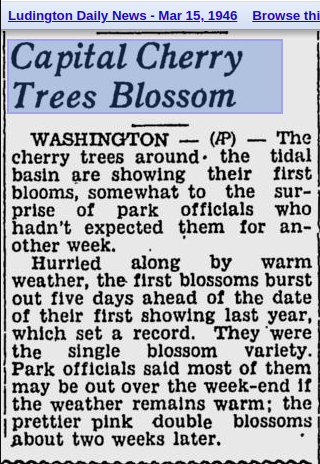
Ludington Daily News – Google News Archive Search
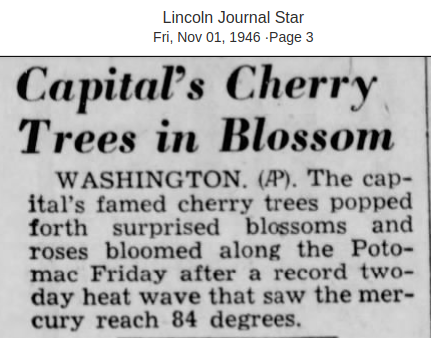
1 Nov 1946, Page 3 – at Newspapers.com
During 1946, Purcellville, VA averaged 3F above the long term mean. It was 79F on March 4 and 86F on October 31,

Their biggest snowfalls all occurred during the last 15 years.
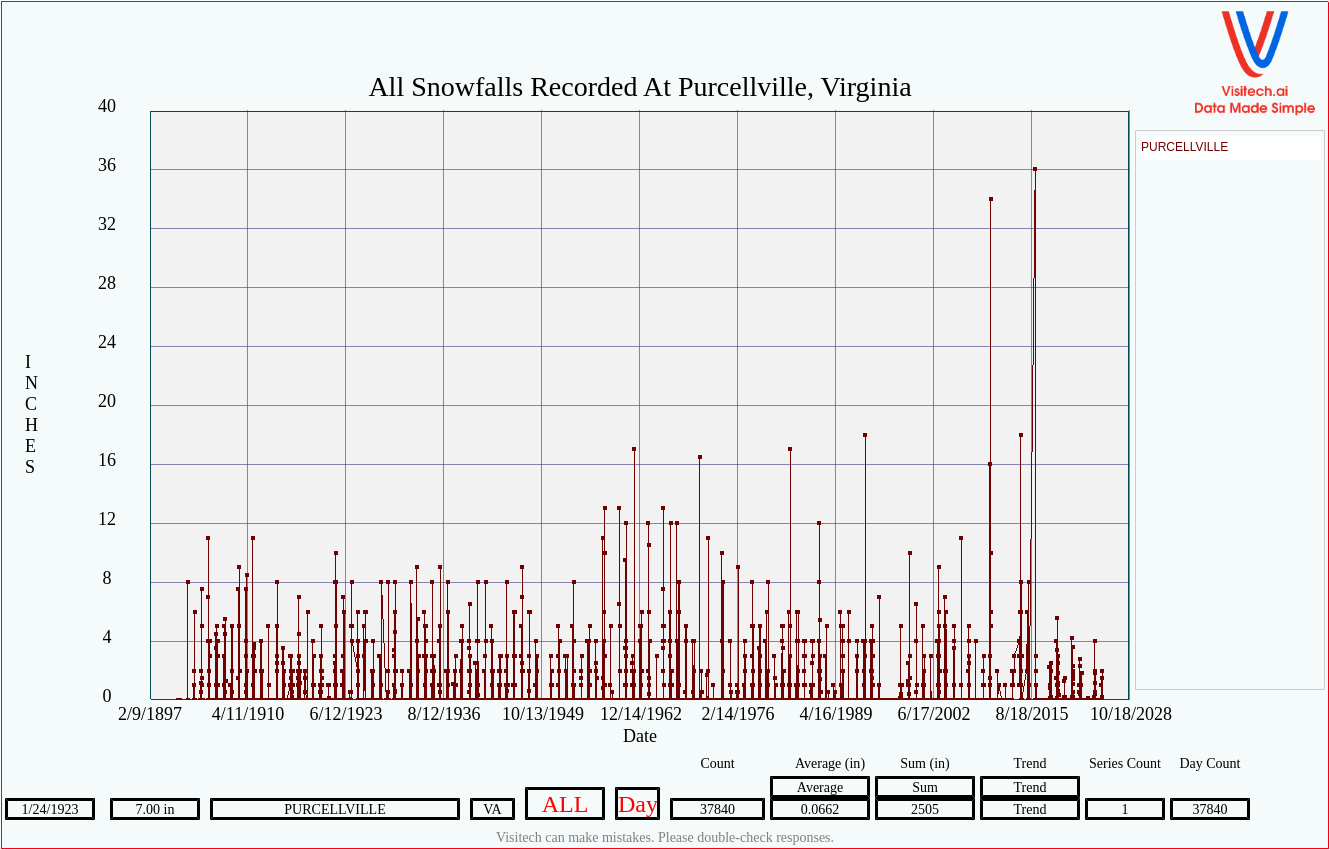
https://www.ncei.noaa.gov/pub/data/ghcn/daily/all/USC00444909.dly

One month after the JFK assassination, President Truman wrote this editorial.
“FOR SOME TIME I have been disturbed by the way the CIA has been diverted from its original assignment. It has become an operational and at times a policy-making arm of the government. This has led to trouble and may have compounded our difficulties in several explosive areas.
I never had any thought that when I set up the CIA that it would be injected into peacetime cloak and dagger operations. **Some of the complications and embarrassment that I think we have experienced are in part attributable to the fact that this quiet intelligence arm of the President has been diverted from its intended role.** It is being interpreted as a symbol of sinister and mysterious foreign intrigue—and a subject for Cold War enemy propaganda.
Nevertheless, I **would like to see the CIA be restored to its original assignment as the intelligence arm of the President** and that whatever else it can properly perform in that special field—and that its operational duties be terminated or properly used elsewhere.
We have grown up as a nation, respected for our free institutions and for our ability to maintain a free and open society. There is something about the way the CIA has been functioning that is casting a shadow over our historic position, and I feel that we need to correct it.”

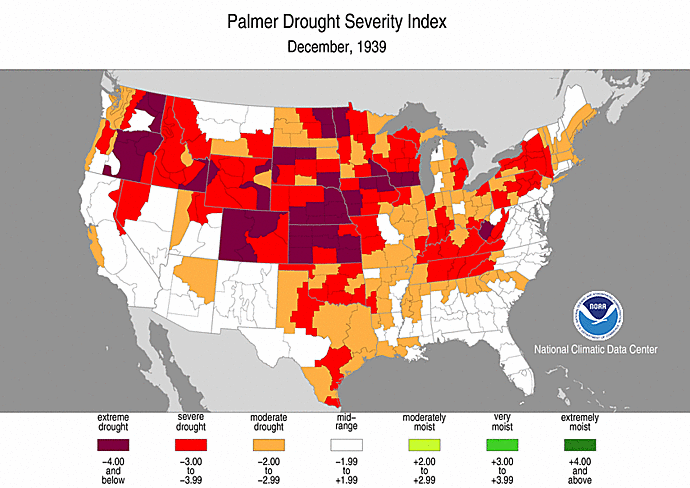
1939 brought historic heat and drought to the US, and record heat and fires to Australia. The glaciers of Greenland and Norway were facing catastrophic collapse.
Logan, Iowa set the state record for most days above 80F.

https://www.ncei.noaa.gov/pub/data/ghcn/daily/all/USC00134894.dly

Mon, Dec 11, 1939 – Page 13
“Greenland’s Glaciers Melting, Scientist Says
STOCKHOLM, Sweden (INS)—
All the glaciers in eastern Greenland are rapidly melting, declared Prof. Hans Ahlmann, Swedish geologist, in a report to the Geographical society here on his recent expedition to the Arctic subcontinent.“Everything points to the fact that the climate in that region has been growing warmer during recent years,” the professor said.
“It may without exaggeration be said that the glaciers—like those in Norway—face the possibility of a catastrophic collapse.”

Dec 11, 1939, page 13 – The Gazette at Newspapers.com
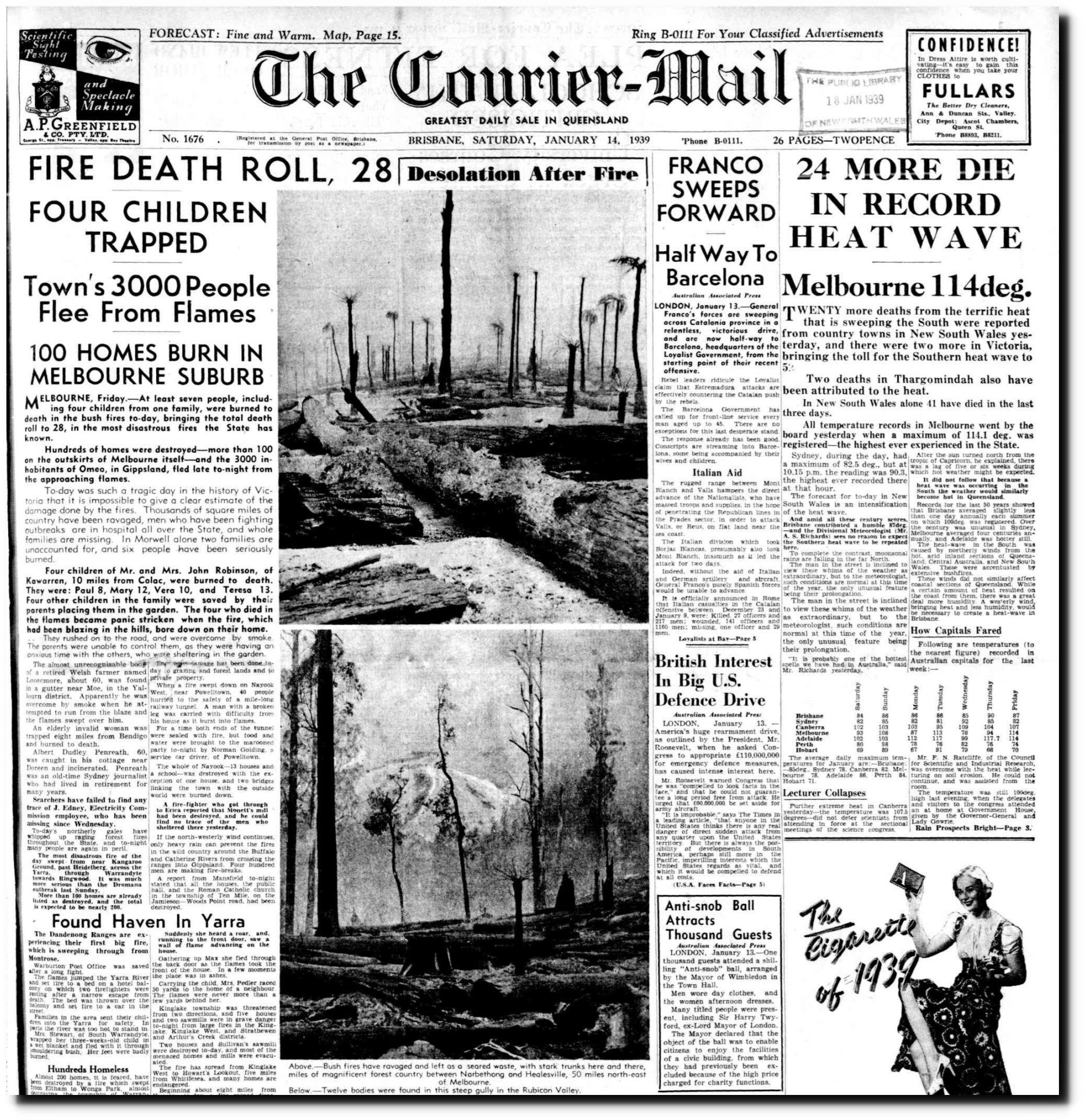
p1 – 14 Jan 1939 – The Courier-Mail (Brisbane, Qld. : 1933 – 1954) – Trove
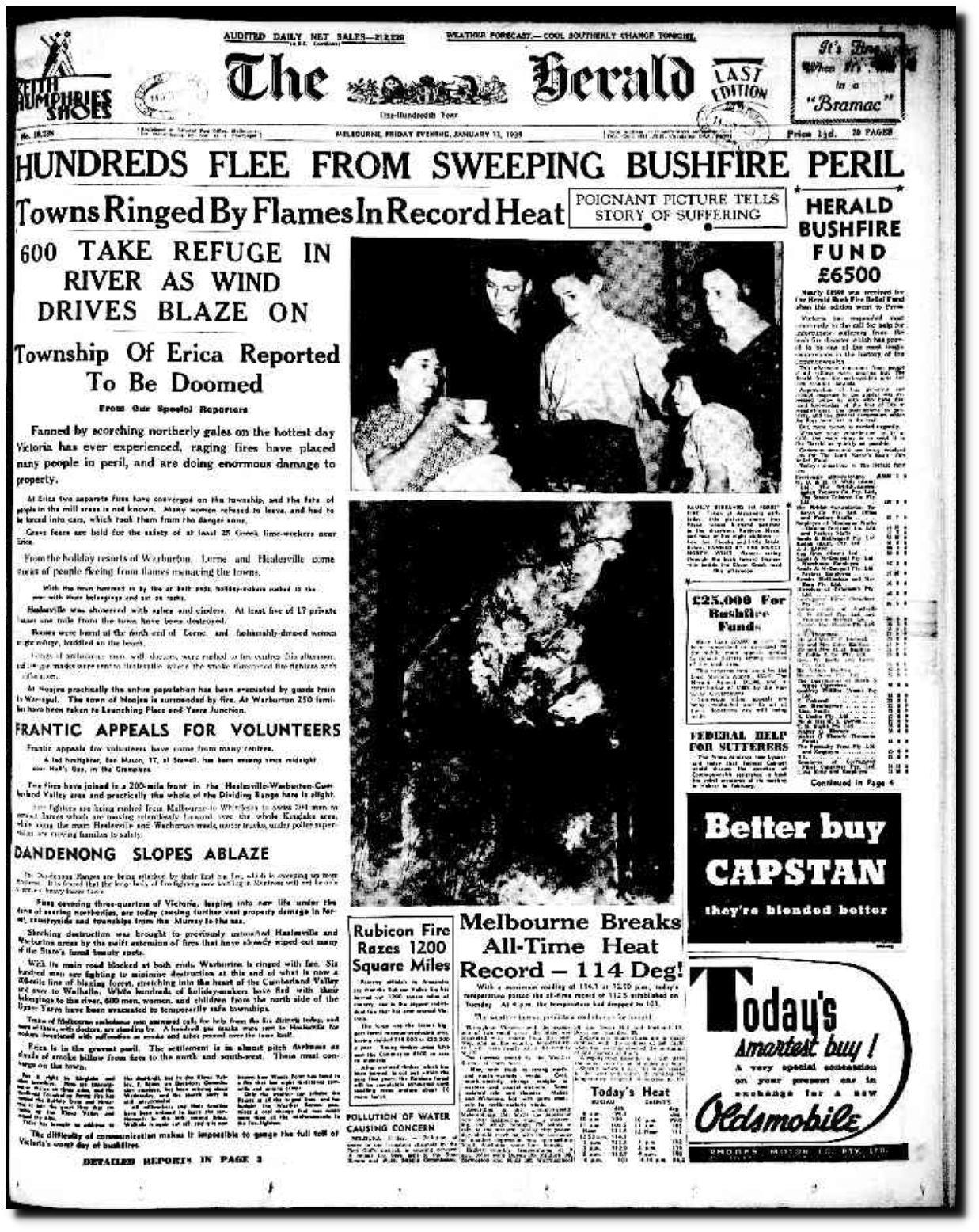
13 Jan 1939 – HUNDREDS FLEE FROM SWEEPING BUSHFIRE PERIL – Trove
According to NASA, 1939 was cold.

Global Temperature | Vital Signs – Climate Change: Vital Signs of the Planet
Academics discover that their Antarctic melting predictions are worthless.
“during most of the LIG, the Ronne Ice Shelf was still in place, and close to its current extent”

USA Today says global warming is going to force mass migrations away from the Gulf of America.
“Where are the winners and losers of the coming great climate migration?”

Climate could force massive losses in property value amid migrations
In 1913, Arrhenius said there would be mass migrations to Siberia to take advantage of global warming.

The Pueblo Leader – Google News Archive Search
In 2004 we had to flee to Antarctica to escape global warming.
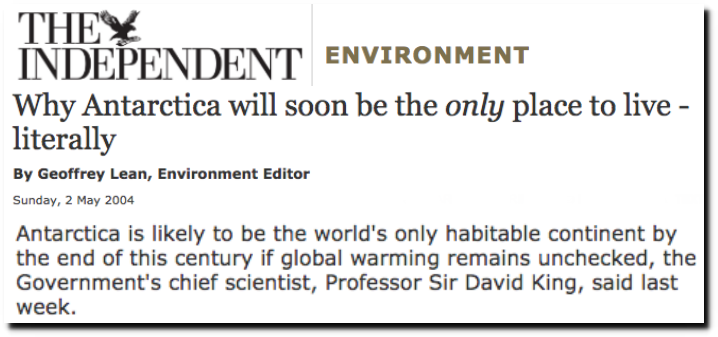
Why Antarctica will soon be the only place to live – literally
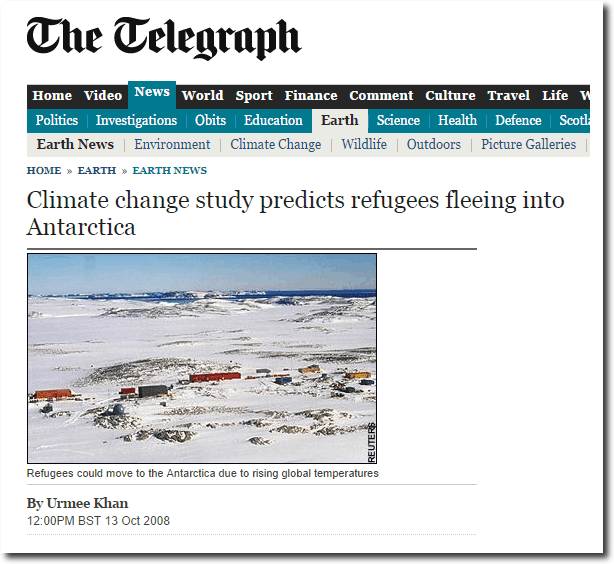
Climate change study predicts refugees fleeing into Antarctica – Telegraph
In 1974, scientists wanted to relocate millions of people because of global cooling.
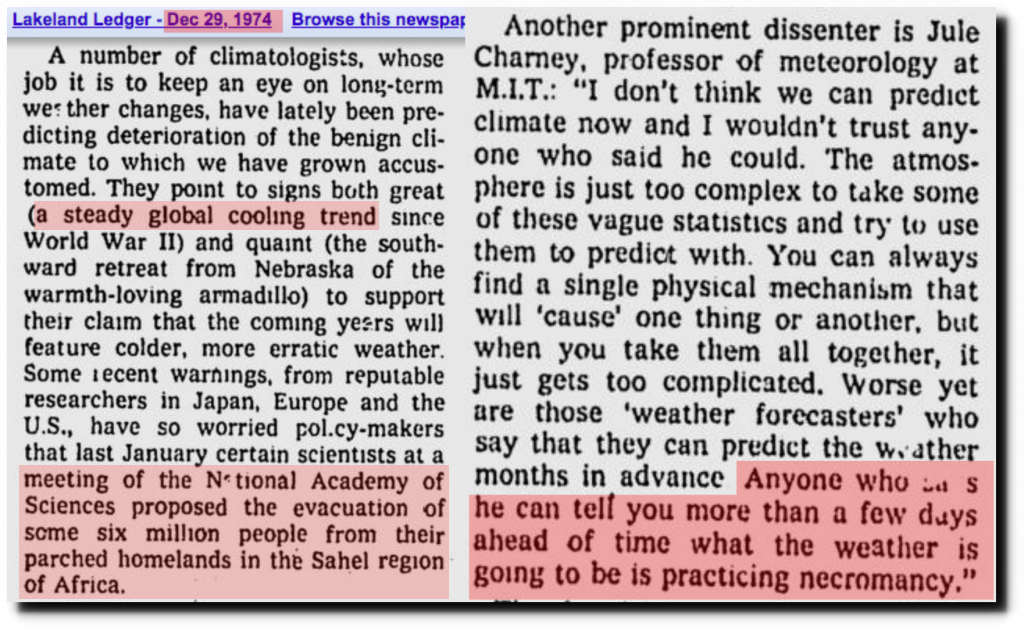
Lakeland Ledger – Google News Archive Search

sim_noaa-national-oceanic-and-atmospheric-administration_1974-10_4_4.pdf
Meanwhile back in the real world, the fastest growing regions of the US are the warmest and most hurricane prone.

1886 was the most active year on record for US hurricanes and it brought lots of other extreme weather – like a tornado outbreak on April 14. According to NASA, 1886 was one of the coldest years on record.
“Perry County Democrat (Wed, April 21, 1886, Page 2):
THE WORK OF THE TORNADO.
Scenes of Devastation and Death in three Minnesota Towns.
Seventy-four Persons Killed and Two Hundred or more Injured in St. Cloud, Sauk Rapids and Rice’s Station—Two of the Towns Nearly Destroyed—Loss of Life and Property in Iowa and Missouri Also.
ST. CLOUD, Minnesota, April 15.—The ghastly effects of the tornado which visited this city and Sauk Rapids yesterday have never been equalled since the harvest of death at New Ulm and Rochester a few years ago. A few minutes after 4 p. m. the skies became overcast with a dark cloud, and a great black mass rose over the hills southwest of the city, and coming with terrible velocity toward the western outskirts, in the direct line for the Manitoba freight yards. The clouds hung low, and rolled over and over like smoke on a battlefield, and were accompanied by a loud roaring and crackling sound that resembled a conflagration. The cloud was funnel-shaped, and the point dragged along the ground like the tail of a huge beast, lashing to pieces everything that came in its path. Citizens had hardly time to flee to their cellars and seek other points of refuge, before the whirlwind was on them, and the air was filled with flying boards, shingles, bricks and other debris. The utmost excitement prevailed.”

Apr 21, 1886, page 2 – The Perry County Democrat at Newspapers.com


“Cyclone Views: Pictures Sauk Rapids Cyclone” by Brown and Riley

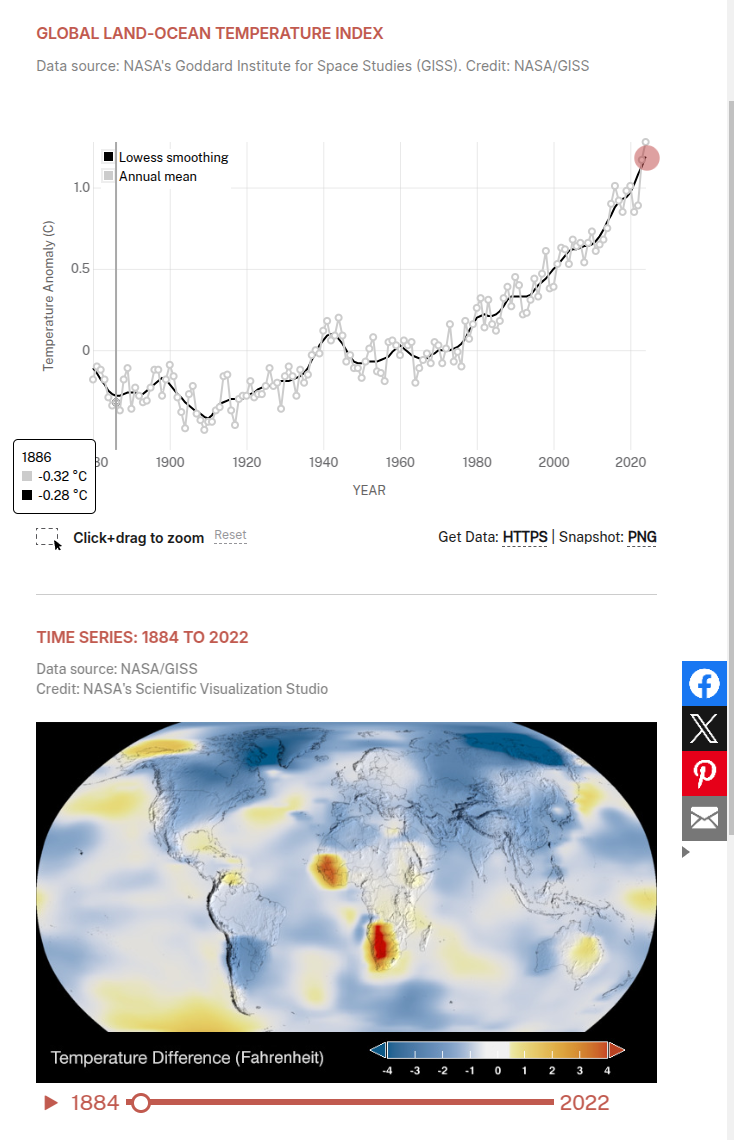
Global Temperature | Vital Signs – Climate Change: Vital Signs of the Planet
The Guardian calls money laundering and taxpayer theft done under the name of climate, “climate science.”

Fifteen years ago, climate.gov showed every year from 1999-2008 cooler than 1998. Now they show half of those years as warm or warmer.

Short-term Cooling on a Warming Planet | NOAA Climate.gov