Due to a disruption of the jet stream, dry turned into wet. Another such disruption could just as easily cause a turn from wet to dry.
Until CO2 reached 350 PPM, rainfall in Australia was always perectly distributed. That fact was withheld from the rest of the world for fear Australia would become overpopulated.
The climate of the SW of Western Australia is Mediterranean, with hot dry summers and cool wet winters. Winter rain comes from frontal systems which blow in from the west, off the Indian Ocean. Declining “evaporation from catchments” isn’t going to have much effect.
This area has seen declining rainfall for decades. I suspect it has something to do with temperature oscillations in the Indian Ocean, but unlike the Pacific and Atlantic Oceans I haven’t found much information. Anyone know of anything? Bob Tisdale perhaps?

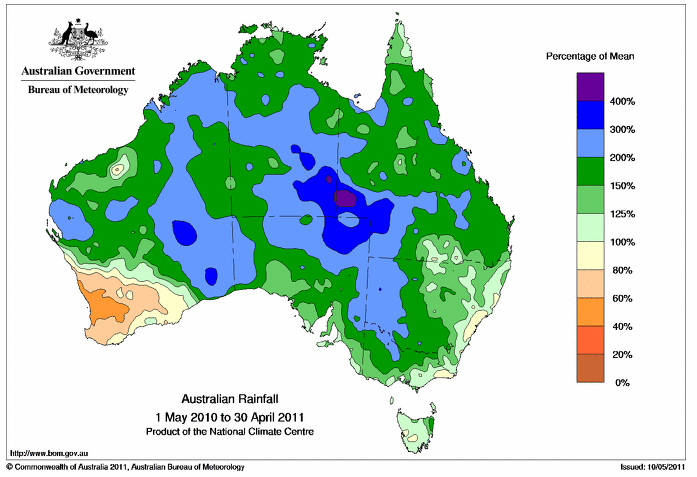


Due to a disruption of the jet stream, dry turned into wet. Another such disruption could just as easily cause a turn from wet to dry.
Until CO2 reached 350 PPM, rainfall in Australia was always perectly distributed. That fact was withheld from the rest of the world for fear Australia would become overpopulated.
Steve,
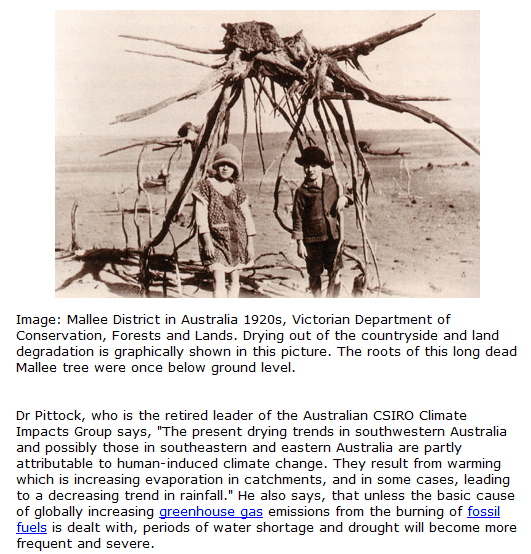
Where did you get that photo of the mulga roots?
Louis Hissink
Louis,
It is contained in the link in the article.
The climate of the SW of Western Australia is Mediterranean, with hot dry summers and cool wet winters. Winter rain comes from frontal systems which blow in from the west, off the Indian Ocean. Declining “evaporation from catchments” isn’t going to have much effect.
This area has seen declining rainfall for decades. I suspect it has something to do with temperature oscillations in the Indian Ocean, but unlike the Pacific and Atlantic Oceans I haven’t found much information. Anyone know of anything? Bob Tisdale perhaps?