
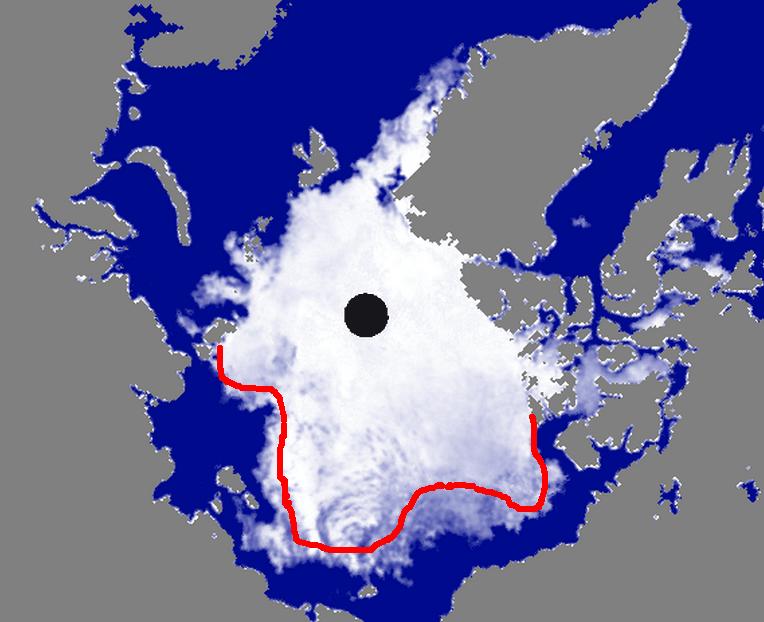
The red line represents the minimum amount of loss likely over the next month. It could melt back further than that, but probably not less.
Disrupting the Borg is expensive and time consuming!
Google Search
-
Recent Posts
- Fact Checking NASA
- Fact Checking Grok
- Fact Checking The New York Times
- New Visitech Features
- Ice-Free Arctic By 2014
- Debt-Free US Treasury Forecast
- Analyzing Big City Crime (Part 2)
- Analyzing Big City Crime
- UK Migration Caused By Global Warming
- Climate Attribution In Greece
- “Brown: ’50 days to save world'”
- The Catastrophic Influence of Bovine Methane Emissions on Extraterrestrial Climate Patterns
- Posting On X
- Seventeen Years Of Fun
- The Importance Of Good Tools
- Temperature Shifts At Blue Hill, MA
- CO2²
- Time Of Observation Bias
- Climate Scamming For Profit
- Back To The Future
- “records going back to 1961”
- Analyzing Rainfall At Asheville
- Historical Weather Analysis With Visitech
- “American Summers Are Starting to Feel Like Winter”
Recent Comments
- Gordon Vigurs on Fact Checking NASA
- Bob G on Fact Checking NASA
- Bob G on Fact Checking The New York Times
- arn on Fact Checking The New York Times
- conrad ziefle on Fact Checking The New York Times
- arn on Fact Checking The New York Times
- Bob G on Fact Checking The New York Times


I assume that line was only drawn wrt the Alaskan side. Presumably, we can expect some losses in the Greenland Sea, for instance. I think it’d be interesting if the Greenland Sea ice remained, however, and I’d be curious as to the implications of having a stronger ice pack there this winter and how it affects flow out of the Fram Strait.
-Scott
Greenland Sea ice is all doomed ice and not really important.