IIRC El Nino and its heat creates massive shear conditions in the Atlantic TC zone which tends to diminish hurricane strength and longevity. La Nina is better but the Modoki (neutral, especially when coming out of the La Nina) conditions such as this year are best.
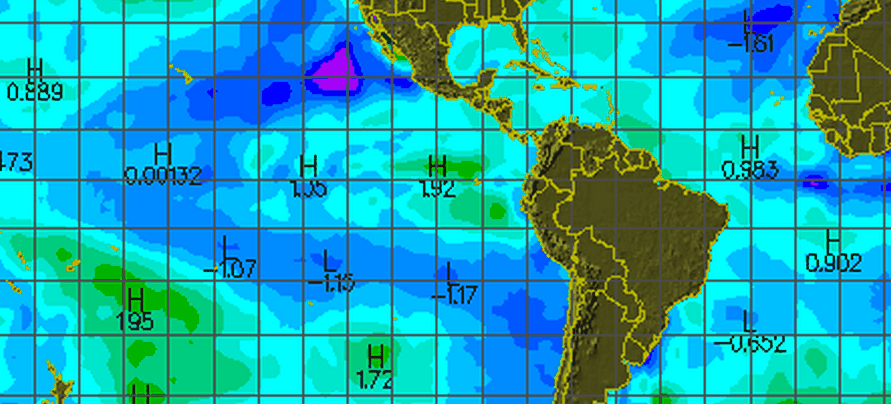
Joe Bastardi writes about the Atlantic “tripole” that exists when hurricanes are at their most prolific. The ITCZ is warm, the sub-tropical Atlantic is anomalously cooler and the northern Atlantic is anomalously warmer. (Pretty much what you see on the Unisys map.)
Since the waves only need about 26C ocean temps to get cyclones going, they are at and above that there now at the Cap Verdes so it should not be an issue.



IIRC El Nino and its heat creates massive shear conditions in the Atlantic TC zone which tends to diminish hurricane strength and longevity. La Nina is better but the Modoki (neutral, especially when coming out of the La Nina) conditions such as this year are best.
I was referring more to the cold water near the Cape Verde Islands
Joe Bastardi writes about the Atlantic “tripole” that exists when hurricanes are at their most prolific. The ITCZ is warm, the sub-tropical Atlantic is anomalously cooler and the northern Atlantic is anomalously warmer. (Pretty much what you see on the Unisys map.)
Since the waves only need about 26C ocean temps to get cyclones going, they are at and above that there now at the Cap Verdes so it should not be an issue.
It must be one of those deep sea (AKA Trenberthian) El Nino’s, found below 700 meters.
Yes, CO2 has done to El Nino what it did to tree rings in 1960.
Maybe the US could fund a research project to send him to the 700m level for study. I know of quite of few lawyers who could be research assistants.