
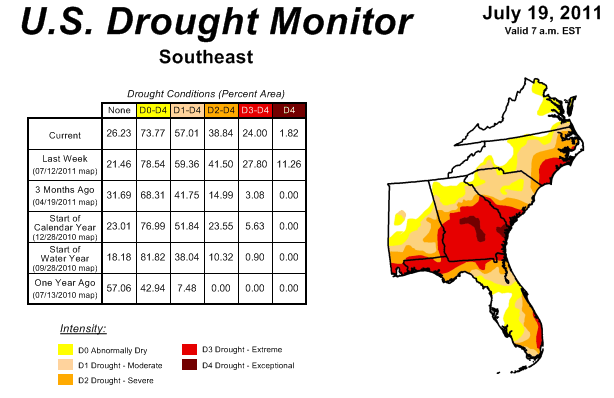
A few days ago the New York Times ran a piece predicting a new dust bowl in Georgia. Since that article came out, the area of exceptional drought in the southeast has dropped by more than 80%.
Disrupting the Borg is expensive and time consuming!
Google Search
-
Recent Posts
- Fact Checking The New York Times
- New Visitech Features
- Ice-Free Arctic By 2014
- Debt-Free US Treasury Forecast
- Analyzing Big City Crime (Part 2)
- Analyzing Big City Crime
- UK Migration Caused By Global Warming
- Climate Attribution In Greece
- “Brown: ’50 days to save world'”
- The Catastrophic Influence of Bovine Methane Emissions on Extraterrestrial Climate Patterns
- Posting On X
- Seventeen Years Of Fun
- The Importance Of Good Tools
- Temperature Shifts At Blue Hill, MA
- CO2²
- Time Of Observation Bias
- Climate Scamming For Profit
- Back To The Future
- “records going back to 1961”
- Analyzing Rainfall At Asheville
- Historical Weather Analysis With Visitech
- “American Summers Are Starting to Feel Like Winter”
- Joker And Midnight Toker
- Cheering Crowds
Recent Comments
- Bob G on Fact Checking The New York Times
- arn on Fact Checking The New York Times
- conrad ziefle on Fact Checking The New York Times
- arn on Fact Checking The New York Times
- Bob G on Fact Checking The New York Times
- conrad ziefle on Fact Checking The New York Times
- Bob G on Fact Checking The New York Times
- czechlist on Fact Checking The New York Times


I believe the Spanish abandoned its colony in Georgia due to severe drought during the little ice age.
My family were early settlers in Ebenezer, we arrived in 1642. The Spanish were run off by the Indians who harrassed them endlessly. The Spanish penetration of Georgia was shallow, they built missions along the coast that were also raided by pirates. Florida was the stronghold of the Spanish in what later became America, and this is where they consolidated settlements in later years.