
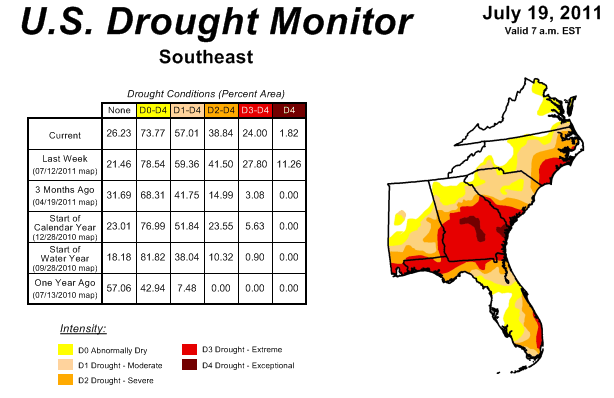
A few days ago the New York Times ran a piece predicting a new dust bowl in Georgia. Since that article came out, the area of exceptional drought in the southeast has dropped by more than 80%.
Disrupting the Borg is expensive and time consuming!
Google Search
-
Recent Posts
- Worst March Drought On Record
- ChartGL Process Control Demo
- The Biggest Money Laundering Scam
- Drought In The Headwaters Of Lake Powell
- Unrealistic Expectations Of Water Availability
- Did Bill Gates Do This?
- Worst March Drought On Record In The US
- The Real Hockey Stick Graph
- Analyzing The Western Water Crisis
- Gaslighting 1924
- “Why Do You Resist?”
- Climate Attribution Model
- Fact Checking NASA
- Fact Checking Grok
- Fact Checking The New York Times
- New Visitech Features
- Ice-Free Arctic By 2014
- Debt-Free US Treasury Forecast
- Analyzing Big City Crime (Part 2)
- Analyzing Big City Crime
- UK Migration Caused By Global Warming
- Climate Attribution In Greece
- “Brown: ’50 days to save world'”
- The Catastrophic Influence of Bovine Methane Emissions on Extraterrestrial Climate Patterns
- Posting On X
Recent Comments
- Gordon Vigurs on Worst March Drought On Record
- Robertvd on Worst March Drought On Record
- Bob G on Worst March Drought On Record
- GW on The Biggest Money Laundering Scam
- Don B on Worst March Drought On Record
- Ulric Lyons on Worst March Drought On Record
- conrad ziefle on The Biggest Money Laundering Scam
- D. Boss on The Biggest Money Laundering Scam
- Bob G on The Biggest Money Laundering Scam


I believe the Spanish abandoned its colony in Georgia due to severe drought during the little ice age.
My family were early settlers in Ebenezer, we arrived in 1642. The Spanish were run off by the Indians who harrassed them endlessly. The Spanish penetration of Georgia was shallow, they built missions along the coast that were also raided by pirates. Florida was the stronghold of the Spanish in what later became America, and this is where they consolidated settlements in later years.