Texas:
, Texas is home to several different climates. There are several distinct regions within the state which have varying climates: Northern Plains, Trans-Pecos Region, Texas Hill Country, Piney Woods, and South Texas. Generally speaking, the eastern half of Texas is humid subtropical, while the western half is semi-arid (with some arid regions). While snowfall is more common across northern Texas than southern sections, large snowfall totals have occurred near and along the middle and upper Texas coasts.
Texas ranks first in tornado occurrence with an average of 139 per year. Tropical cyclones can impact the state from the Gulf of Mexico, or from an overland trajectory originating in the eastern Pacific ocean. Those originating from the Gulf of Mexico are more likely to strike the upper Texas coast than elsewhere. Significant floods have occurred across the state throughout history, both from tropical cyclones and from stalled weather fronts. http://en.wikipedia.org/wiki/Climate_of_Texas
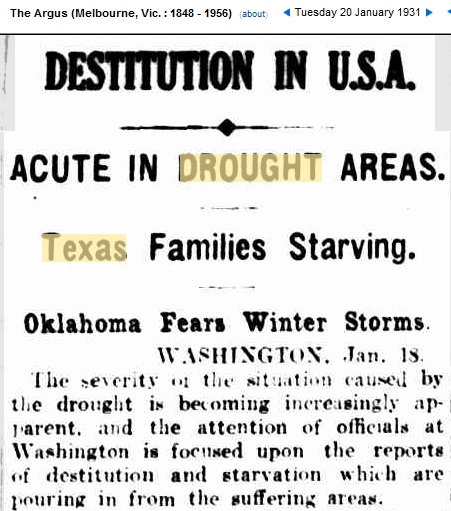
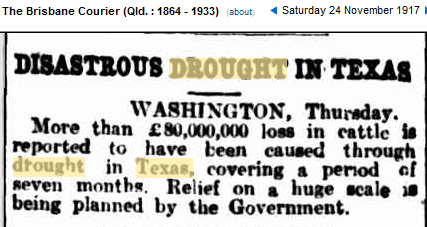
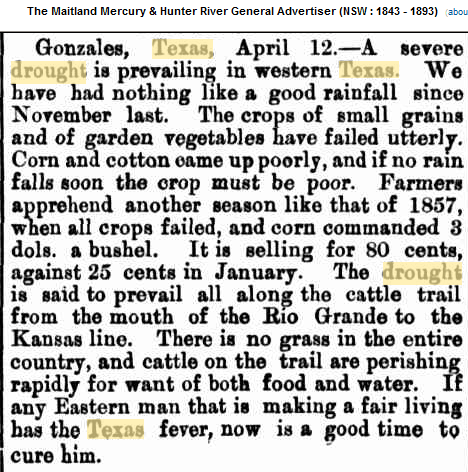
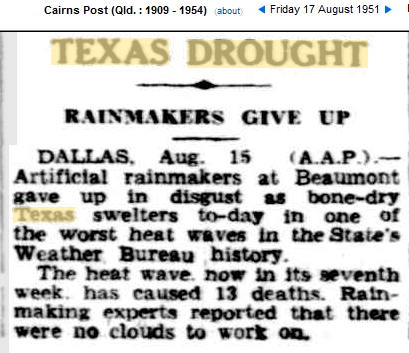
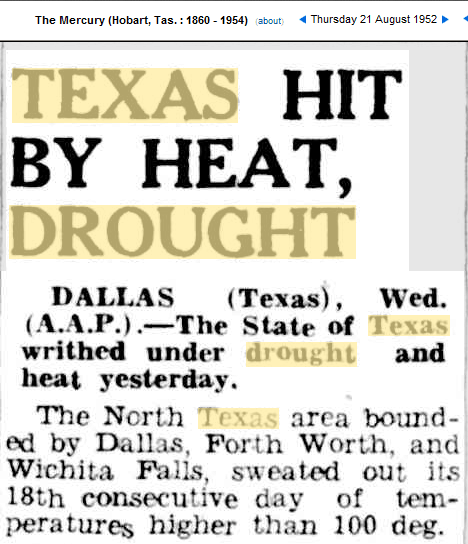
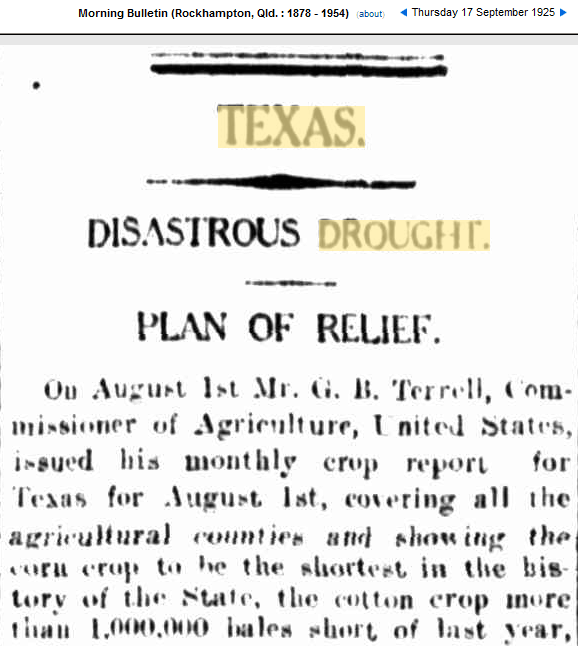
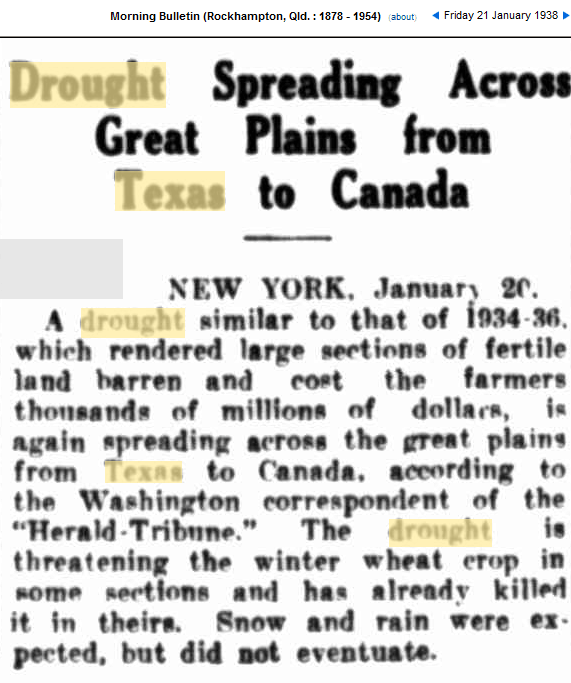
Texas is part of the US region for “Droughts and Floods”. They rely of Tropical Storm activity for a large part of their rain. No land falling Hurricanes and Texas experiences a drought.



Start with a definition:
Arid:
http://en.wikipedia.org/wiki/Arid
Texas:
, Texas is home to several different climates. There are several distinct regions within the state which have varying climates: Northern Plains, Trans-Pecos Region, Texas Hill Country, Piney Woods, and South Texas. Generally speaking, the eastern half of Texas is humid subtropical, while the western half is semi-arid (with some arid regions). While snowfall is more common across northern Texas than southern sections, large snowfall totals have occurred near and along the middle and upper Texas coasts.
Texas ranks first in tornado occurrence with an average of 139 per year. Tropical cyclones can impact the state from the Gulf of Mexico, or from an overland trajectory originating in the eastern Pacific ocean. Those originating from the Gulf of Mexico are more likely to strike the upper Texas coast than elsewhere. Significant floods have occurred across the state throughout history, both from tropical cyclones and from stalled weather fronts.
http://en.wikipedia.org/wiki/Climate_of_Texas
Texas is part of the US region for “Droughts and Floods”. They rely of Tropical Storm activity for a large part of their rain. No land falling Hurricanes and Texas experiences a drought.