New York State is investigating Exxon for telling the truth about CO2 in 1976, but the big story is that NASA and NCAR have known since 1971 that CO2 is not dangerous – yet have lied to the public about this for over 30 years.
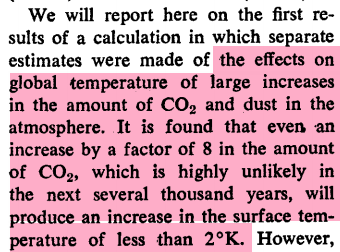
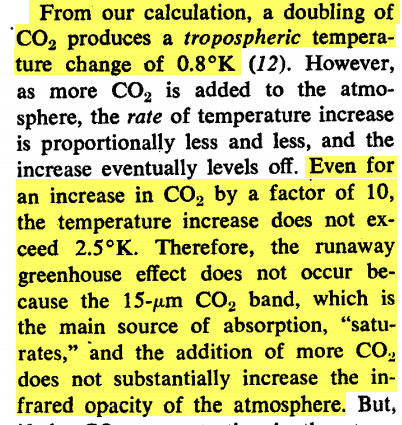
In 1971, the top climatologists at NCAR and NASA reported that a runaway greenhouse effect is not possible, because the CO2 absorption spectra is nearly saturated already.
vademecum.brandenberger.eu/pdf/klima/rasool_schneider_1971.pdf

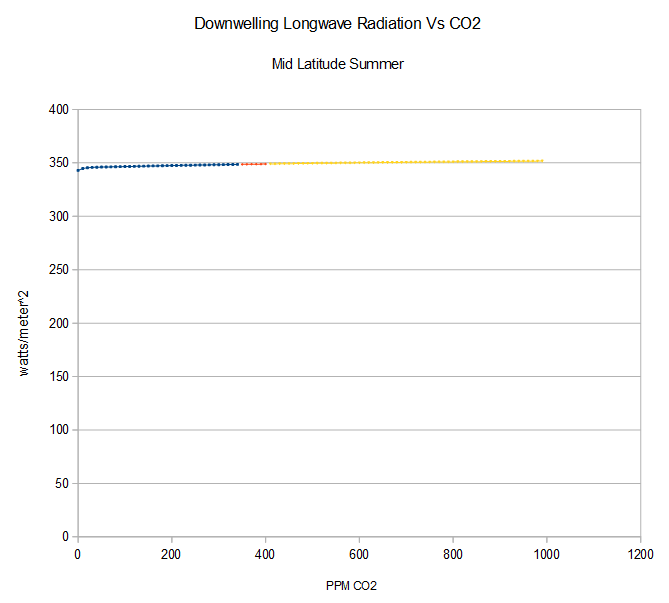
This is exactly what NCAR’s current radiative transfer models show. Adding more CO2 has very little effect on downwelling longwave radiation.
But it is worse than it seems. Scientists have actually known for 115 years that CO2 is not dangerous.
Knut Ångström, asked an assistant to measure the passage of infrared radiation through a tube filled with carbon dioxide. The assistant (“Herr J. Koch,” otherwise unrecorded in history) put in rather less of the gas in total than would be found in a column of air reaching to the top of the atmosphere. The assistant reported that the amount of radiation that got through the tube scarcely changed when he cut the quantity of gas back by a third. Apparently it took only a trace of the gas to “saturate” the absorption — that is, in the bands of the spectrum where CO2 blocked radiation, it did it so thoroughly that more gas could make little difference.
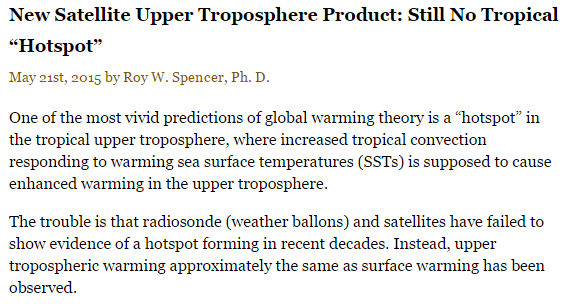
The evidence of fraud is overwhelming. An essential component of greenhouse gas theory is that a hotspot will appear in the upper troposphere. It hasn’t happened.
New Satellite Upper Troposphere Product: Still No Tropical “Hotspot” « Roy Spencer, PhD
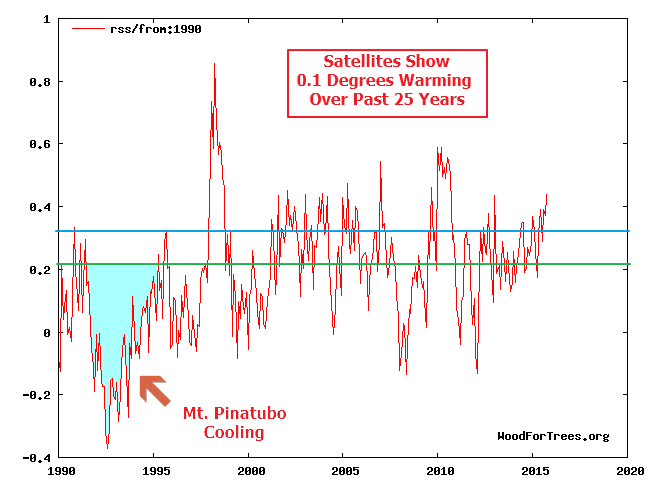
Satellites show that there has been about 0.1C warming over the past 25 years. Even less than the sensitivity calculated by Rasool and Schneider in 1971
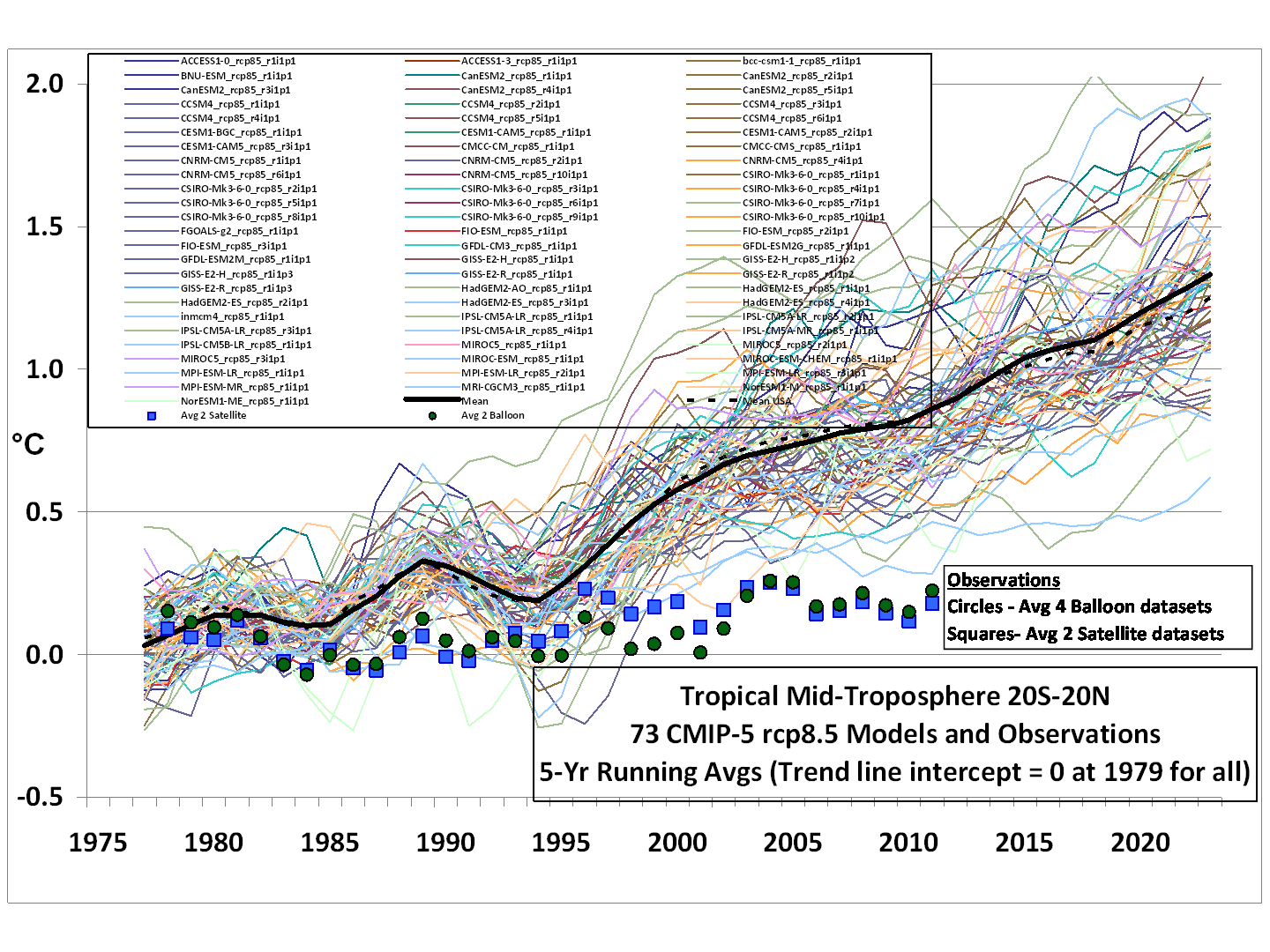
All of the climate models have overestimated warming, many by a large amount.
It doesn’t matter how beautiful your theory is, it doesn’t matter how smart you are. If it doesn’t agree with experiment, it’s wrong.
Richard P. Feynman
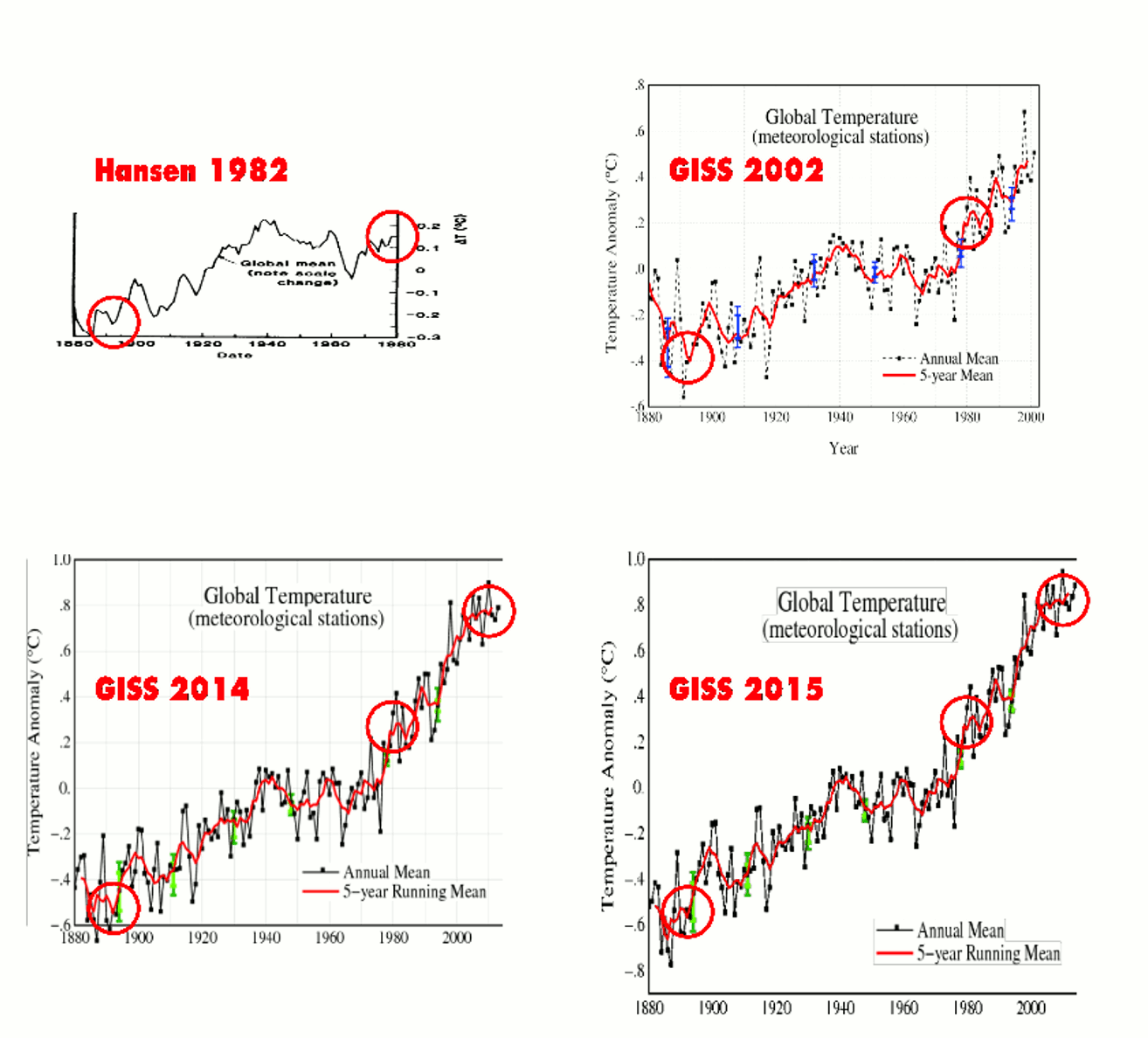
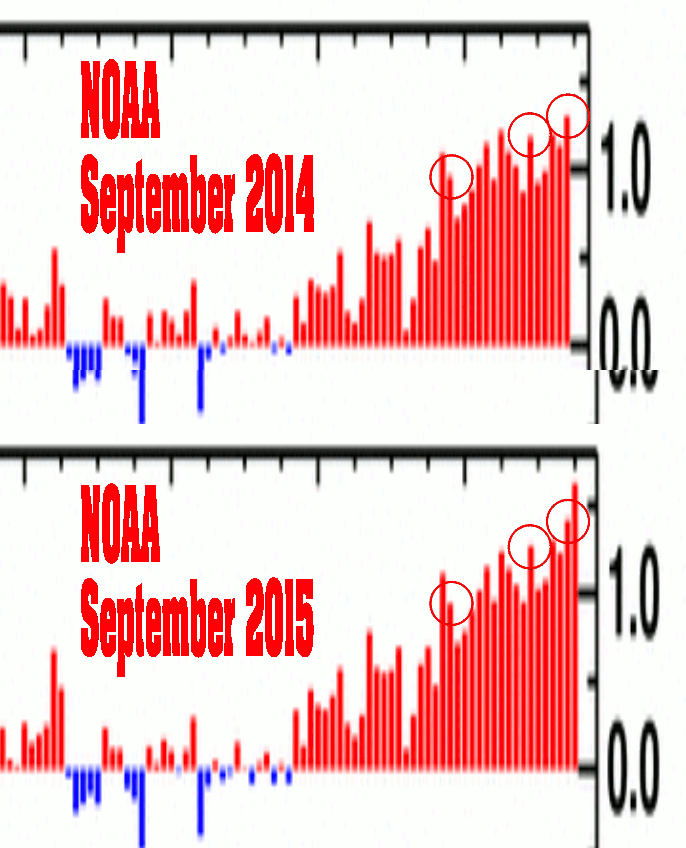
Catastrophic global warming theory has failed. But rather than tell the truth and lose their reputations and funding, NASA and NOAA scientists have chosen to tamper with the data and continue lying to the public about something they have known is not a problem – for 45 years.