
July 31, 1976, thousands of visitors gathered in Colorado’s Front Range to celebrate the state’s centennial weekend. Campers, vacationers, and locals filled cabins, motels, and campsites along Highway 34 in the Big Thompson Canyon.
By midnight, it turned into the site of one of the deadliest flash floods in US history.
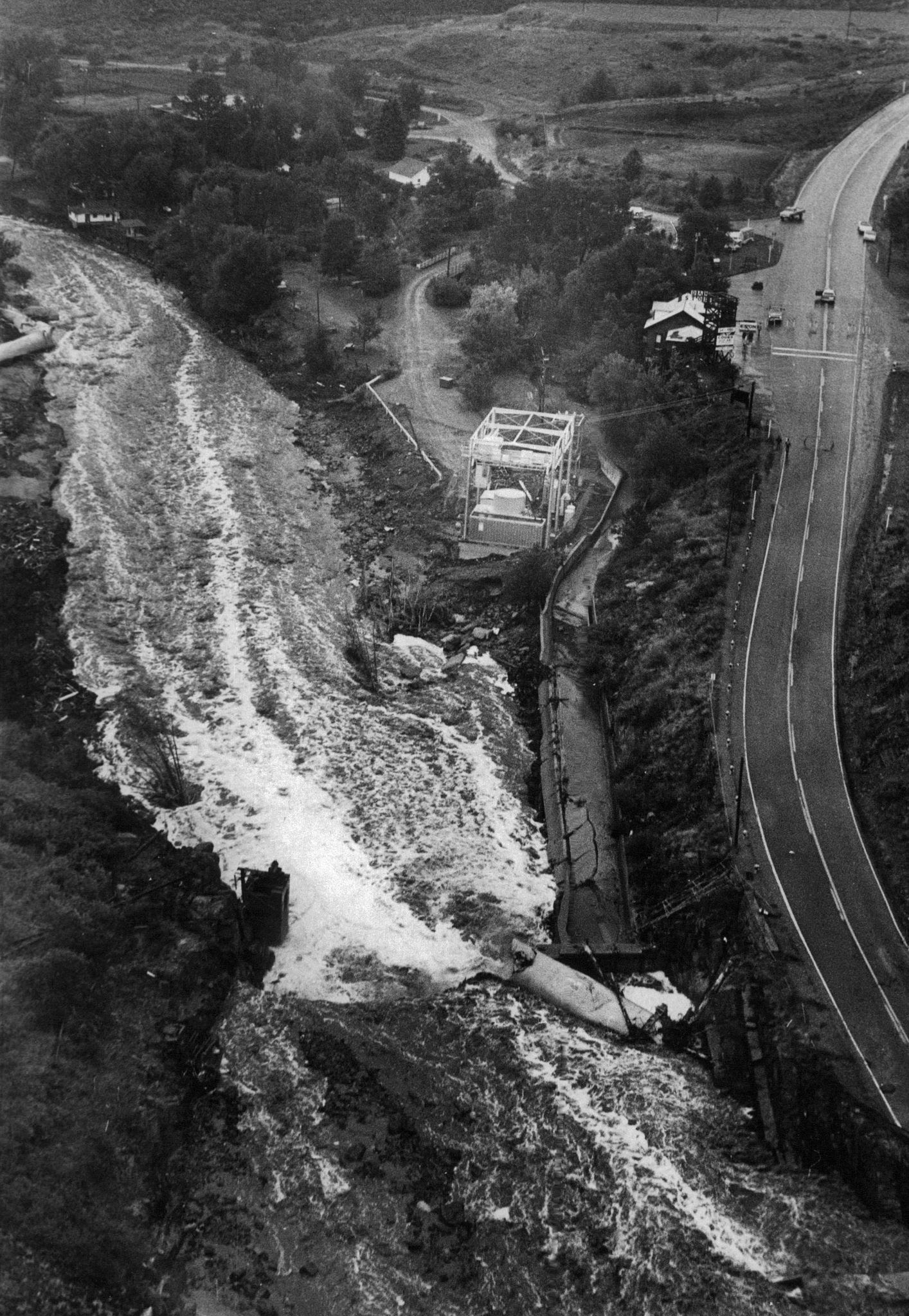
AUG 1 1976; Big Thompson River Canyon (1976 Flood); (Photo By Dave Buresh/The Denver Post via Getty Images)
A slow-moving thunderstorm stalled directly over the upper watershed of the Big Thompson River, anchored by light easterly winds pushing moist air up against the steep mountainside. In less than four hours, the storm dropped 12 to 14 inches of rain near Drake and Estes Park—nearly an entire year’s worth of precipitation for the region.
The steep, narrow granite walls of the canyon offered no outlet for the torrent. The dry soil could not absorb the volume, sending a massive wall of water rushing downstream toward Loveland.
Around 9:00 PM, a wall of water estimated between 19 and 20 feet high tore through the canyon at speeds exceeding 20 miles per hour. The torrent carried heavy debris, full-grown trees, boulders, automobiles, and entire homes along with it.
The disaster struck with minimal warning:
- Casualties: 144 people lost their lives, and 5 victims were never found.
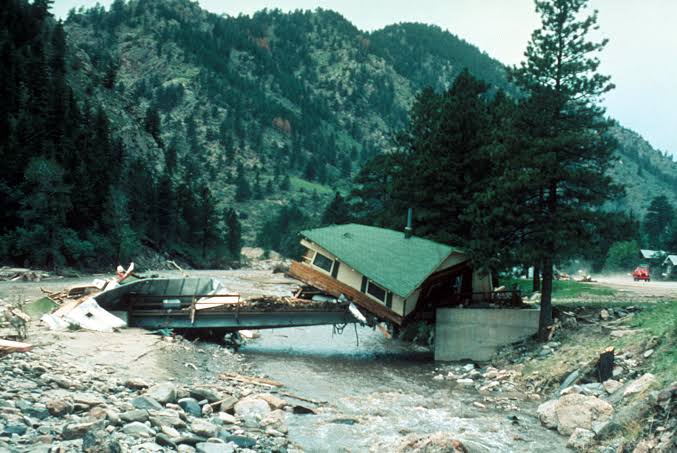
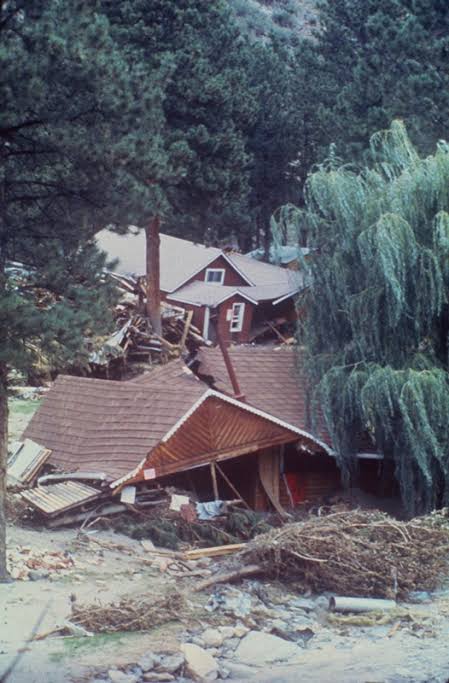
- Destruction: More than 400 homes and cabins were destroyed, alongside 250 commercial structures.
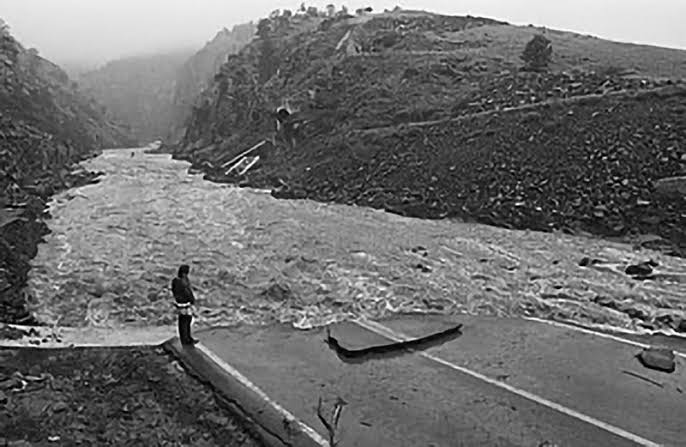
- Infrastructure: Over 23 miles of U.S. Highway 34 were completely washed away, trapping survivors on isolated rock ledges overnight.


I was living in Colorado at the time. The story I heard was slightly different, and was that the slow moving thunderstorm had moved down the canyon, continuously dropping rain into the swell of the river, making something of a tsunami-like wave that increased as it traveled down the canyon. Who told me that, I don’t remember. In either case, it was a rare event that no one had anticipated. I heard a similar story about an event in Sicily where a town build out over the stream bed that ran through its center, provided large culverts for the stream to pass under the streets. Then years later a thunderstorm dumped more water than the culverts could handle and the river ended up running through the center of town, with a massive loss of life and property.
That is similar to the flash flood in the Black Hills in 1972.
exactly. the year was 1972. 230 some… people dead. https://en.wikipedia.org/wiki/1972_Black_Hills_flood. compare that to some floods in China over the past 1,000 years that killed 200,000 people. mother nature has always been a bitch.
That could only happen because of climate change.