Projected Climate Change
As in other areas, the amount of warming in the Northeast will be highly dependent on global emissions of heat-trapping gases. If emissions continue to increase (as in the A2 scenario), warming of 4.5ºF to 10ºF is projected by the 2080s; if global emissions were reduced substantially (as in the B1 scenario), projected warming ranges from about 3ºF to 6ºF by the 2080s.
Under both emissions scenarios, the frequency, intensity, and duration of heat waves is expected to increase, with larger increases under higher emissions (Ch. 2: Our Changing Climate). Much of the southern portion of the region, including the majority of Maryland and Delaware, and southwestern West Virginia and New Jersey, are projected by mid-century to experience many more days per year above 90°F compared to the end of last century under continued increases in emissions (Figure 16.2, A2 scenario). This will affect the region’s vulnerable populations, infrastructure, agriculture, and ecosystems
Northeast | National Climate Assessment
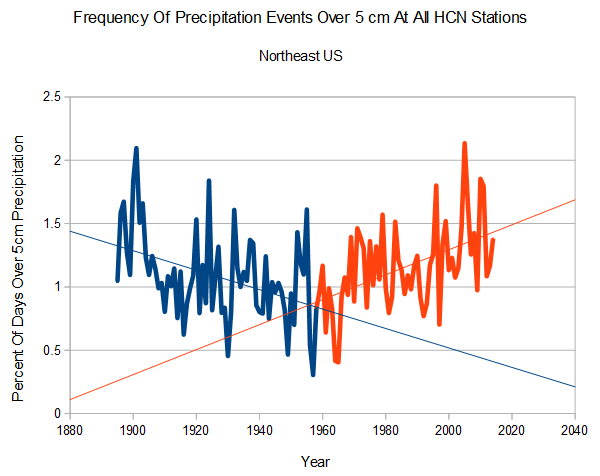
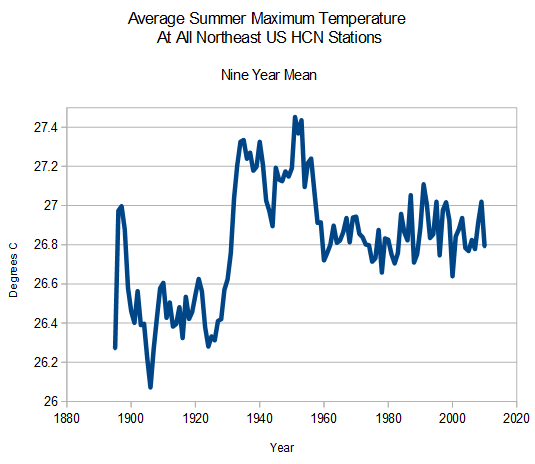
There isn’t one shred of evidence to support any of this. Summer maximum temperatures in the Northeast have been flat for 60 years, and were much higher from the 1930’s to the 1950’s.
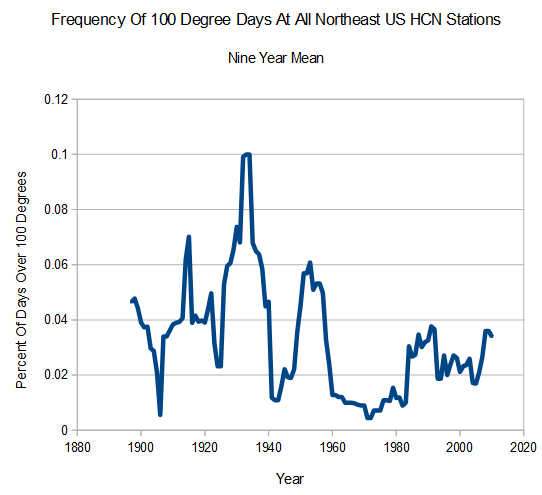
And the frequency and areal coverage of 100 degree weather was much higher prior to 50 years ago.
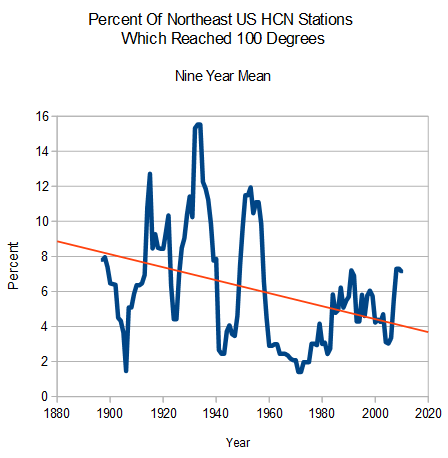
The White House is simply making up propaganda in support of their political agenda.