NOAA claims that 2012 had the largest area of hot temperatures on record in the US, by a wide margin.
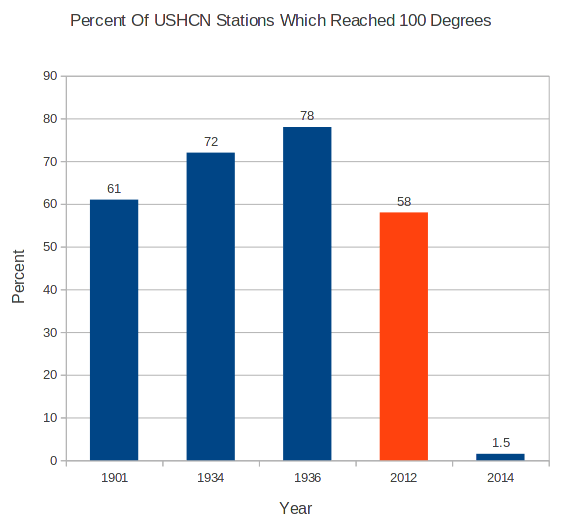
2012 wasn’t even close. 1936 and 1934 both had much more extensive 100 degree coverage than 2012, and 1901 did too.
NOAA claims that 2012 had the largest area of hot temperatures on record in the US, by a wide margin.
2012 wasn’t even close. 1936 and 1934 both had much more extensive 100 degree coverage than 2012, and 1901 did too.
So far this year more than 100 black people have been murdered by other blacks – just in Chicago alone. If you are a white progressive, you don’t talk about that – because it doesn’t give you an opportunity to hate on yourself.
1/3/2014 Ronald Sawyer 1/5/2014 Raymond Galloway 1/8/2014 Joseph Brittman 1/8/2014 Willie Smith 1/12/2014 Marquise Harris 1/15/2014 Kendre Davis 1/16/2014 Lester Jones 1/16/2014 Kevin Baker 1/17/2014 Timothy Travis 1/17/2014 Tremaine Scott 1/22/2014 Jonathan Johnson 1/22/2014 Edward Caridine 1/25/2014 Elsaleem Mannie-El 1/29/2014 Tevin Bryant Continue reading
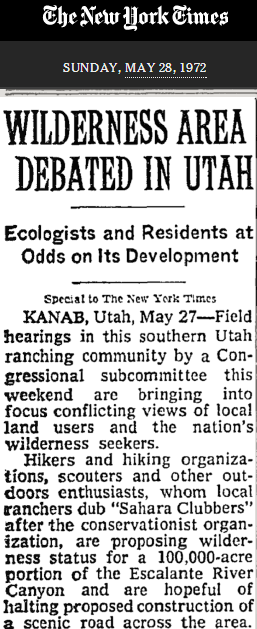
Before I became an evil big tobacco planet destroying climate skeptic, I was one of the “ecologists” testifying in favor of the Escalante Wilderness in 1972.
Roads are a problem for wilderness areas, but the wilderness areas where I worked as a ranger had plenty of cattle.
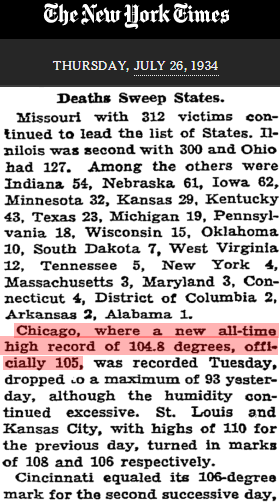
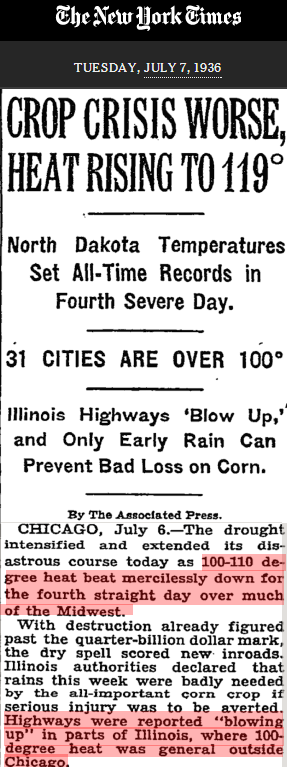
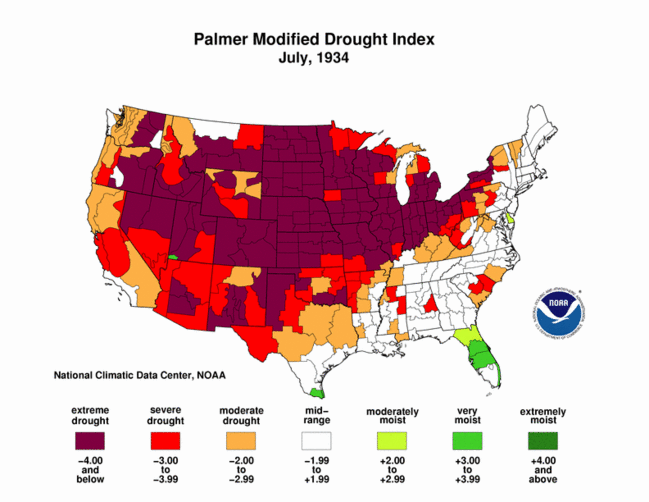
We have gotten used to a very cool, wet Midwestern US – but it wasn’t always like that. Eighty years ago there was blistering heat, and a drought which wrecked almost the entire corn crop.
The family of Whitetails across the street has finally gotten used to me and the dogs, and no longer put their tails up or run away. Some days they let us walk within about 20 feet of them.
I dread Mondays. because it means I can’t be out in the forest during the day anymore.
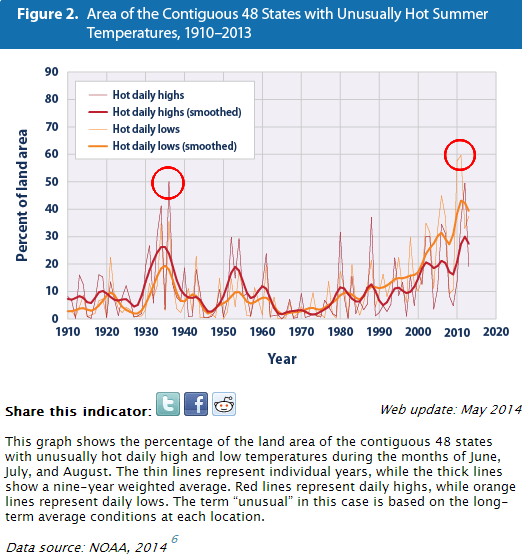
According to this EPA document, only 50% of the US was unusually hot in 1936, and 60% of the US was hot in 2012.
This document was derived from NOAA’s Climate Extremes Index (CEI.) It is trivial to demonstrate that the NOAA CEI is wrong.
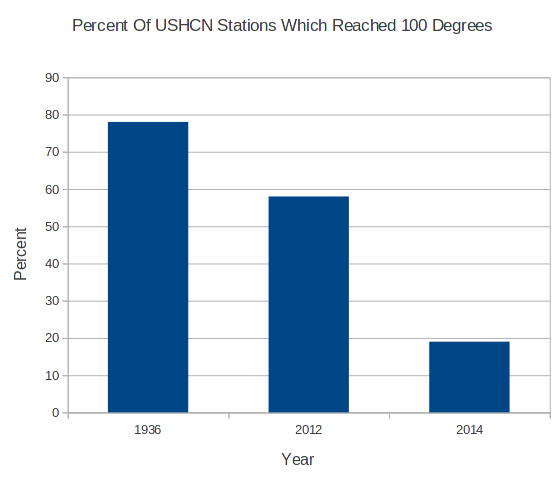
In 1936, 78% of USHCN stations recorded 100 degree temperatures, compared to 58% in 2012. Forty-four states had temperatures over 100 degrees in 1936. The CEI shows accurate numbers for 2012, but the 1936 numbers are massively understated. The average peak temperature of the 78% over 100 degrees in 1936 was an incredible 108 degrees.
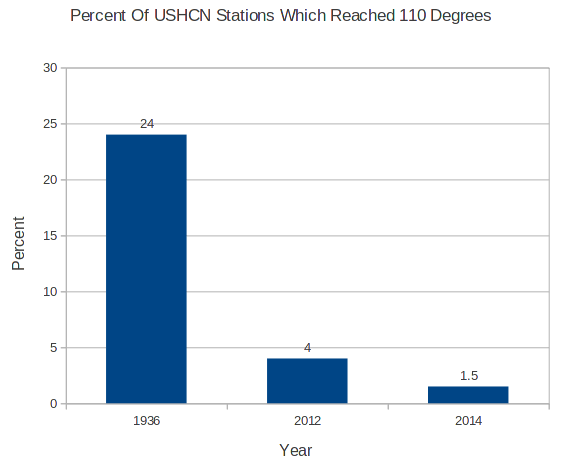
But it is worse than it seems – the 1936 temperatures were not just over 100 degrees, but they were way over 100 degrees. In 1936, 24% of the US reached 110 degrees – compared to only 4% in 2012.
During the summer of 1936, the entire country was hot.
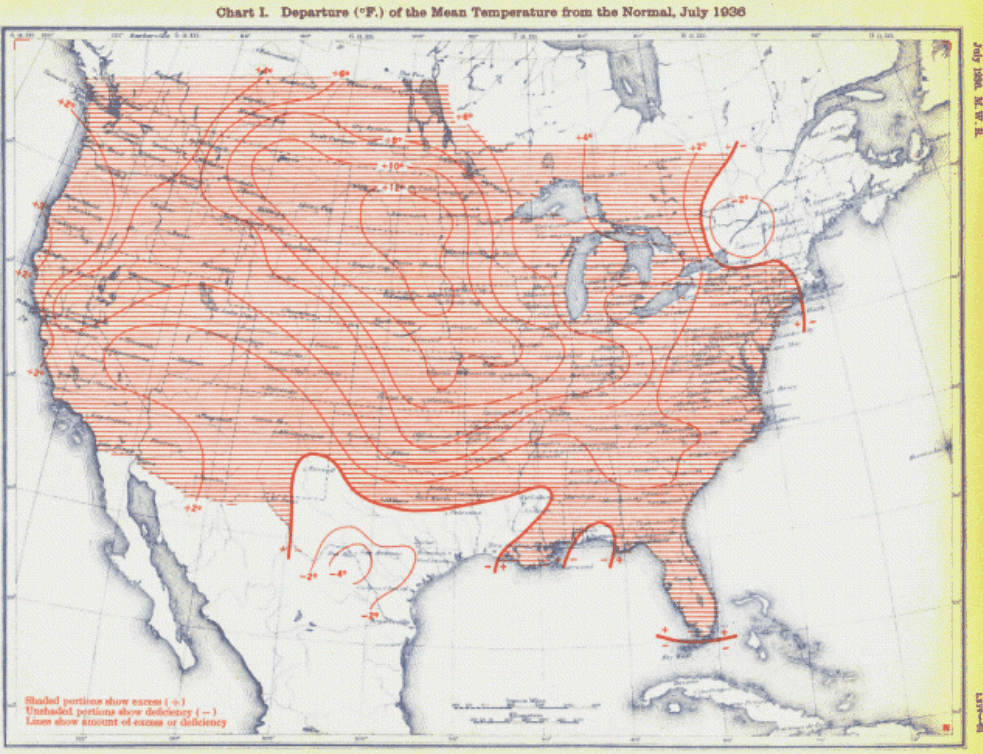
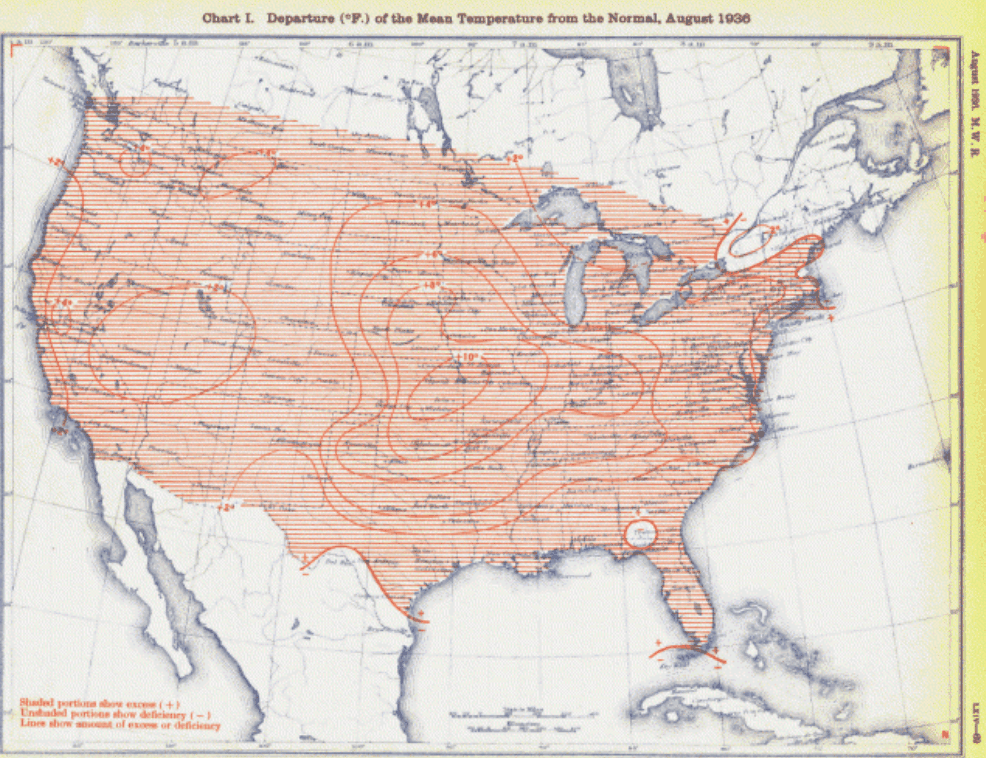
They can’t account for this discrepancy with any of their adjustments. TOBS does not affect the peak temperature for the year. This is flat out fraud or incompetence by NOAA.
Below is a list of the peak temperatures for 1936
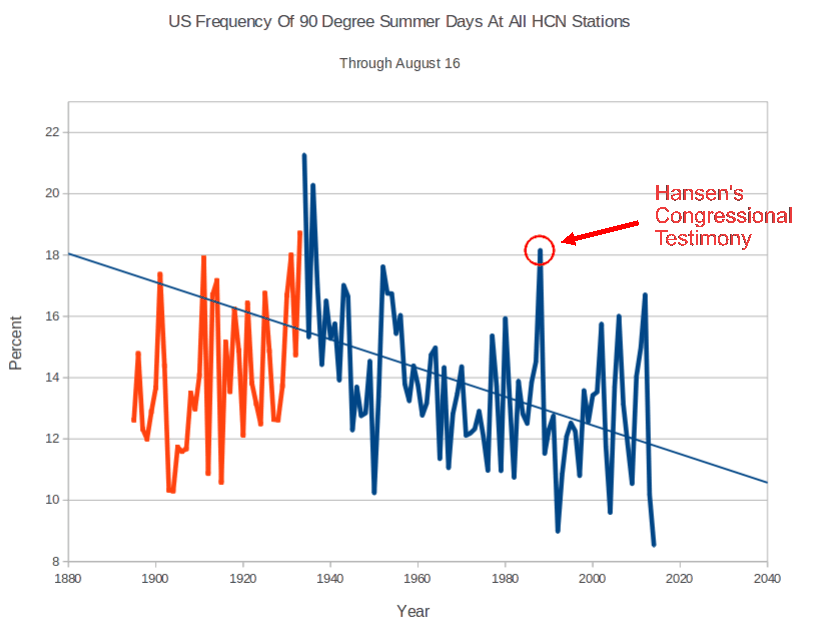
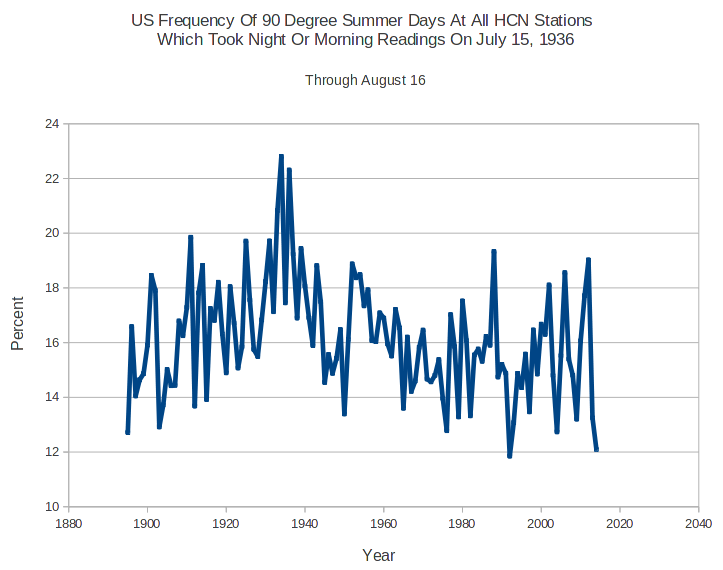
The frequency of 90 degree days in the US has been plummeting for 80 years, and is the lowest on record this summer
Alarmists will try to complain that this trend is due to time of observation bias, but that argument is a non-starter. The graph below shows the identical pattern for stations which took morning or night readings on July 15, 1936.
Conclusion : The US is getting much cooler, and Time of Observation Bias adjustments are incorrect. Below is the list of morning stations from July 15, 1936
August 15 global sea ice area is the highest since 1996, and the sixth highest on record.
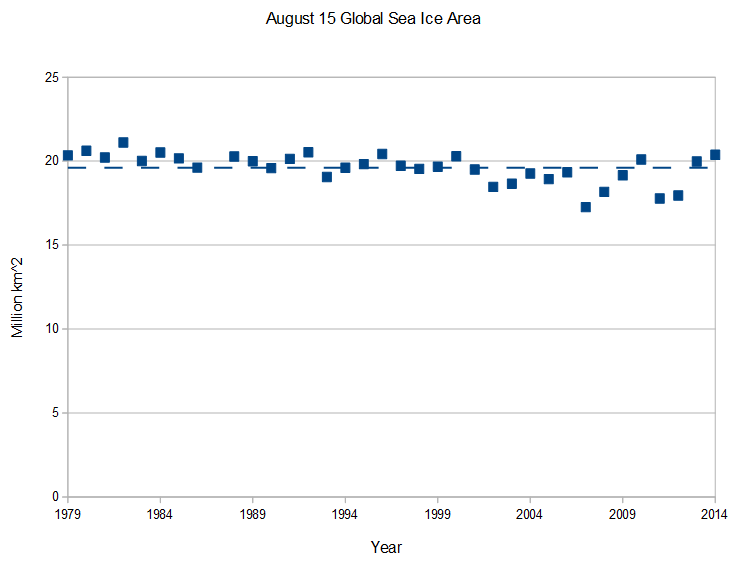
arctic.atmos.uiuc.edu/cryosphere/timeseries.global.anom.1979-2008
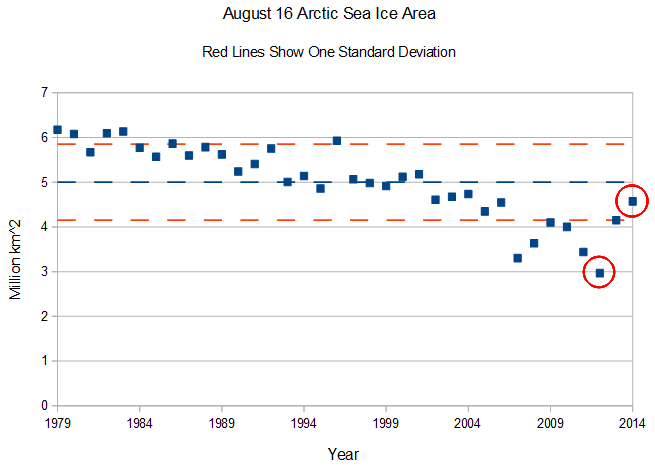
August 16 Arctic sea ice area is the highest in a decade, up 54% from two years ago, and within one standard deviation of the 1979-2014 mean.
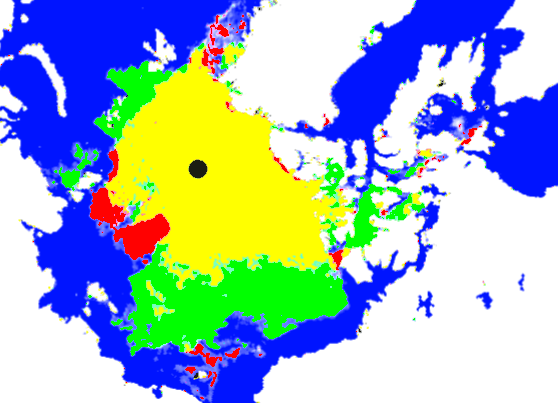
Green shows ice gain since August 16, 2012. Red shows loss.