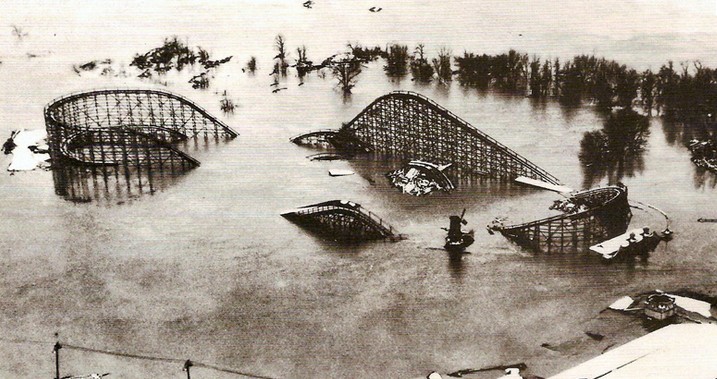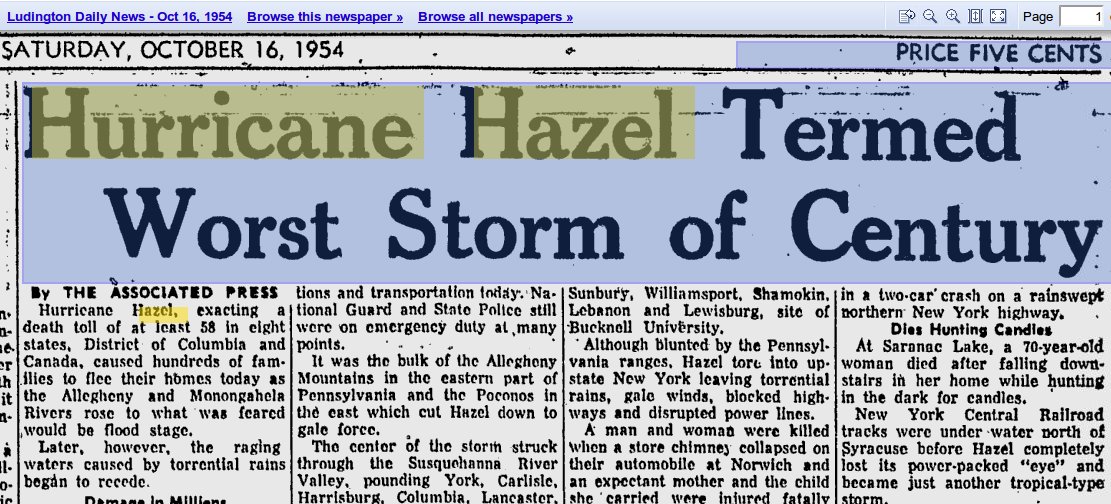
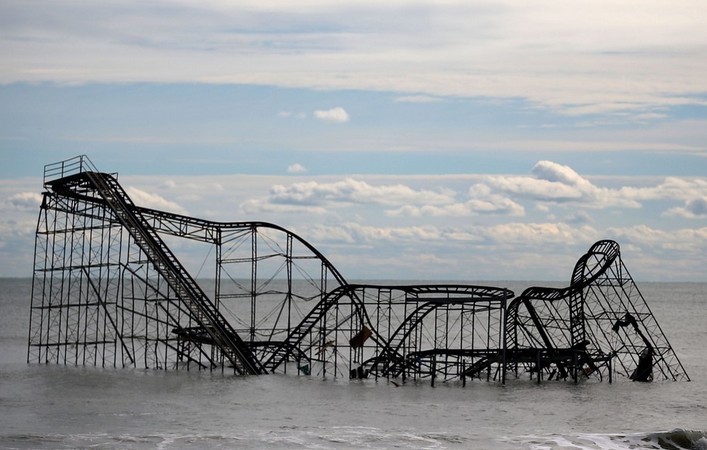
Sandy, 2012 395 PPM CO2
Cincinnati, 1937 310 PPM CO2
Sandy, 2012 395 PPM CO2
Cincinnati, 1937 310 PPM CO2
“If you like your doctor, you will be able to keep your doctor, period,” Obama said in 2009, during an American Medical Association conference. “If you like your health care plan, you’ll be able to keep your health care plan, period. No one will take it away, no matter what.”
But White House Press Secretary Jay Carney claimed Tuesday that Obama did not mislead the American people.
“The president was clear about a basic fact,” Carney said, explaining that those who liked their plan could continue to keep that plan so long as the policy didn’t change.
Top Dem admits ObamaCare could have been ‘more precise’ about people losing health plans | Fox News
h/t to Dave G
Climate used to be defined by 15 years of temperature trend, and they used to lecture us that weather is not climate.
Now “climate change” is defined by any unpleasant weather event, based on the assumption that the target audience is too stupid to know that there has always been bad weather.
James Taylor
Forbes 8:05 a.m. CDT, October 29, 2013
One year ago today Hurricane Sandy made landfall in New Jersey, killing more than 100 people and causing more than $50 billion in damage. Global warming activists and their media allies will spin the anniversary as a wake-up call to impose costly economic restrictions in the name of combating global warming. In reality, we should thank global warming for making hurricanes less frequent and less severe. Indeed, Hurricane Sandy may well have been much more deadly in the absence of global warming.
Beyond the general hurricane trends, it is quite possible global warming had a very direct, beneficial impact on Hurricane Sandy. Scientists have documented that global warming has increased upper-atmospheric wind shear, which rips apart hurricanes before they can grow to major hurricanes. Without the global warming-induced increase in wind shear, Hurricane Sandy may well have grown to a more powerful hurricane with stronger winds and more substantial storm surge.
For global warming activists, uninformed media pundits and the weak of mind, Hurricane Sandy may well provide a convenient opportunity to sell a fictitious global warming hurricane crisis. For the rest of us, we should thank global warming for its beneficial impacts on hurricanes that save countless lives with each passing year.
Thank Global Warming For Softening The Blow Of Hurricane Sandy – chicagotribune.com
Last year was marked by hysterics about a record Arctic sea ice melt down, a completely fake record Greenland meltdown, and a fake record hot year in the US. We were told that this was all proof the Earth was doomed.
This year, we hear nothing about any of those topics, and they have moved on to bush fires in Australia.
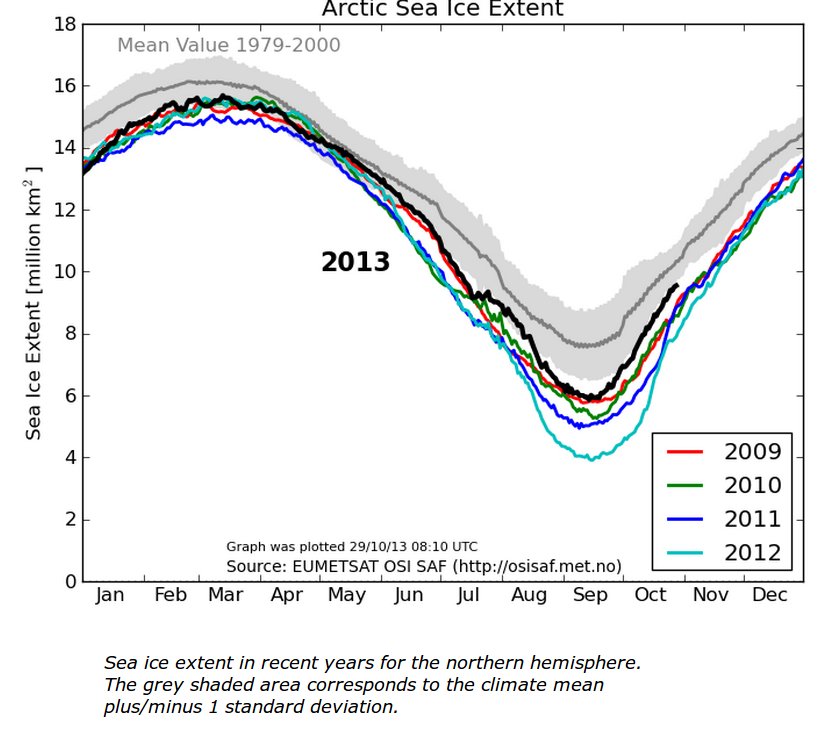
COI | Centre for Ocean and Ice | Danmarks Meteorologiske Institut
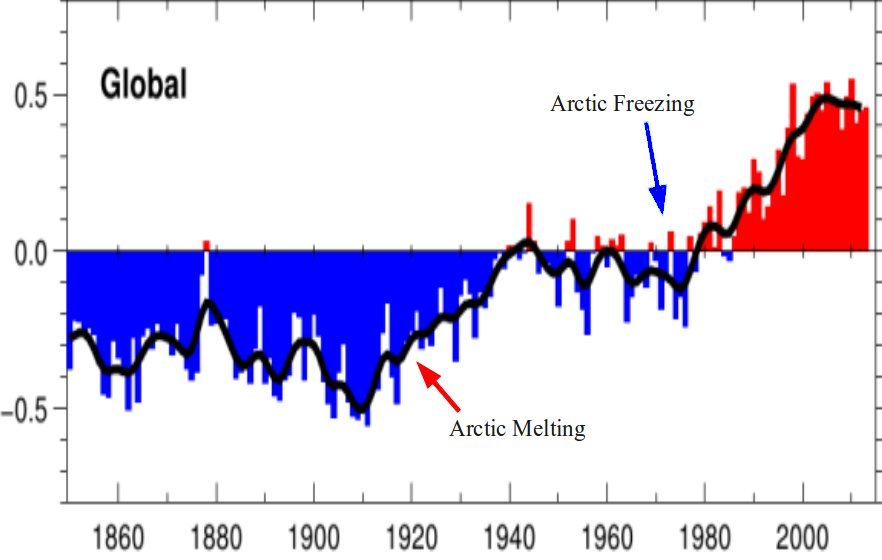
According to GISS, NOAA, and CRU, the 1970’s were much warmer than the 1920’s. Yet we know that the Arctic was rapidly melting in the 1920’s and was rapidly freezing in the 1970’s.
According to global warming theory, the Arctic amplifies warming or cooling, and in fact Arctic temperatures dominate the GISS and Had-Crut v4 temperature record. That makes the claimed relative positioning of the 1920’s and 1970’s temperatures impossible.
NCAR said that the Arctic was freezing up in the 1970’s
Climate Change and its Effect on World Food
by Walter Orr Roberts
National Center for Atmospheric Research, Boulder, ColoradoIn February of 1972 earth-orbiting artificial satellites revealed the existence of a greatly increased area of the snow and ice cover of the north polar cap as compared to all previous years of space age observations ….. The Earth may have entered a new “little ice age”.
www.iaea.org/Publications/Magazines/Bulletin/Bull165/16505796265.pdf
The CIA said that the Arctic was freezing up in the 1970’s
Early in the 1970s, a series of adverse climatic anomalies occurred. …. The world’s snow and ice cover increased by 10-15%.
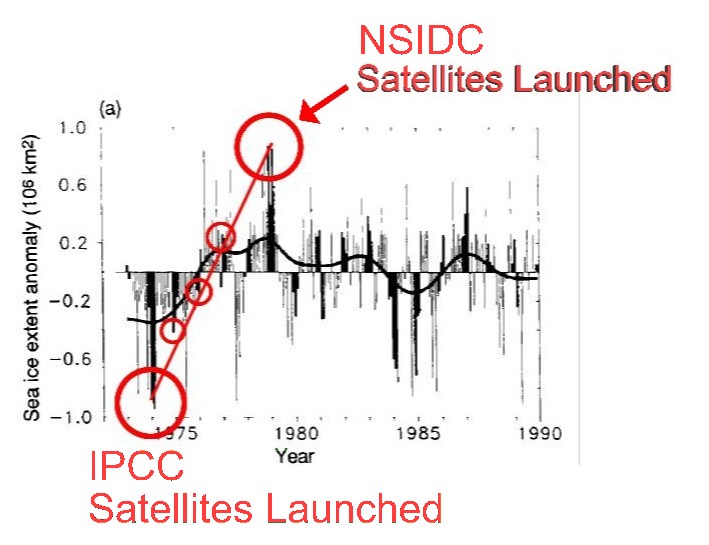
The IPCC said that the Arctic was freezing up in the 1970’s. The graph below is from the 1990 IPCC report, and shows Arctic sea ice satellite data which is conveniently omitted from NSIDC graphs that start at the 1979 peak.
www.ipcc.ch/ipccreports/far/wg_I/ipcc_far_wg_I_full_report.pdf
Climatologists were so worried about the expanding Arctic ice in the 1970s, that they wanted to melt it.
Climatologists are pessimistic that political leaders will take any positive action to compensate for the climatic change, or even to allay its effects. They concede that some of the more spectacular solutions proposed, such as melting the Arctic ice cap by covering it with black soot or diverting arctic rivers, might create problems far greater than those they solve.
The Cooling World Newsweek, April 28, 1975
By contrast, The Weather Bureau said that the Arctic was melting down in the 1920’s.
NOVEMBER, 1922. MONTHLY WEATHER REVIEW
THE CHANGING ARCTIC.
The Arctic seems to be warming up. Reports from fishermen, seal hunters, and explorers who sail the seas about Spitsbergen and the eastern Arctic, all point to a radical change in climatic conditions, and hitherto unheard-of high temperatures in that part of the earth’s surface.
Many old landmarks are so changed as to be unrecognizable- Where formerly great masses of ice were found, there ore now often moraines, accumulations of earth and stones. At many points where glaciers formerly extended far into the sea they have entirely disappeared.
The change in temperature, says Captain Ingebrigtsen, has also brought about great change in the flora and fauna of the Arctic. This summer he sought for white fish in Spitsbergen waters. Formerly great shoals of them were found there. This year he saw none, although he visited all the old fishing grounds.
There were few seal in Spitsbergen waters this year, the catch being far under the average. This, however, did not surprise the captain- He pointed out that formerly the waters about Spitsbergen held an even summer temperature of about 3 Celsius; this year recorded temperatures up to 15, and last winter the ocean did not freeze over even on the north coast of Spitsbergen.
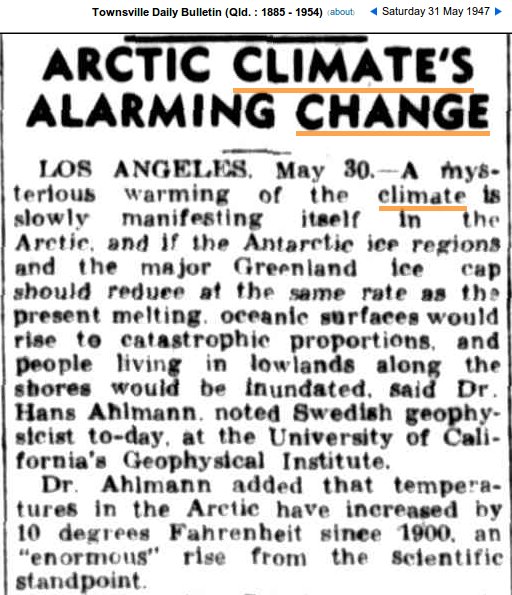
This meltdown continued until the early 1950’s. By 1947, the Arctic had warmed ten degrees and was melting “catastrophically.”
http://trove.nla.gov.au/ndp/del/article/62904258
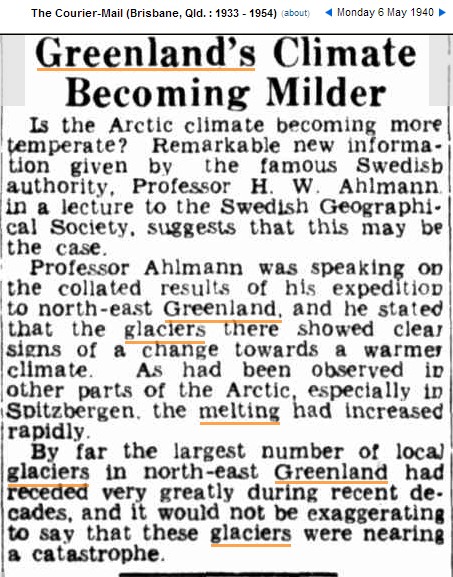
May, 1940
By far the largest number of local glaciers in north-east Greenland had receded very greatly during recent decades, and it would not be exaggerating to say that these glaciers were nearing a catastrophe.
Arctic sea ice was disappearing
The CIA reported that climate change (global cooling) began in 1960.
August 1974
The climate change began in 1960, but no one including the climatologists recognized it.
That was also the year when Briffa’s trees were cooling and Mann truncated the proxy record because it didn’t show the warming he wanted it to show. Instead, Mann switched to Hansen’s fake temperature record, which showed a non-existent warming trend after 1960.
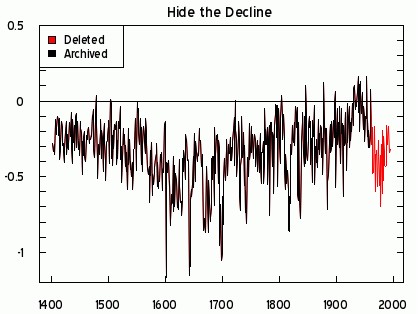
The Deleted Portion of the Briffa Reconstruction « Climate Audit