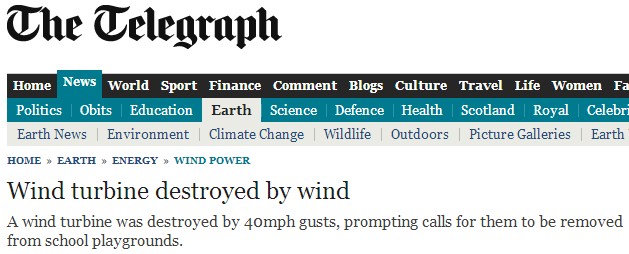
In George Orwell’s Animal Farm, a central part of the story involves the politics surrounding a windmill collapse during a storm.
h/t to Dave G
In George Orwell’s Animal Farm, a central part of the story involves the politics surrounding a windmill collapse during a storm.
h/t to Dave G
Last September 21, as the Northern Hemisphere tilted away from the sun, scientists reported with unprecedented distress that the North Polar ice cap is “falling off a cliff.” One study estimated that it could be completely gone during summer in less than 22 years. Another new study, to be presented by U.S. Navy researchers later this week, warns it could happen in as little as 7 years.
Seven years from now.
More like the junk science climate scam has fallen off a cliff, and Al Gore sold out for $500 million to big middle east oil.
Obama has as President created a new climate in international politics. Multilateral diplomacy has regained a central position, with emphasis on the role that the United Nations and other international institutions can play. Dialogue and negotiations are preferred as instruments for resolving even the most difficult international conflicts.
The Nobel Peace Prize for 2009 to President Barack Obama – Press Release
Winston Smith, works in the Ministry of Truth rewriting and falsifying history. Big Brother, who controls the State of Oceania, uses “thought police” to ensure that people in the inner and outer Party are kept under control. Oceania is at perpetual war with either Eurasia or Eastasia.
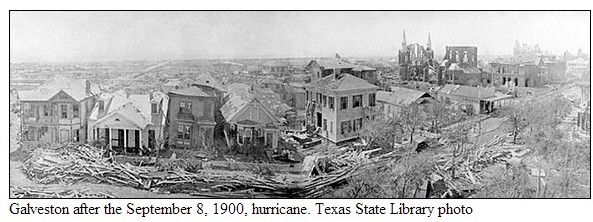
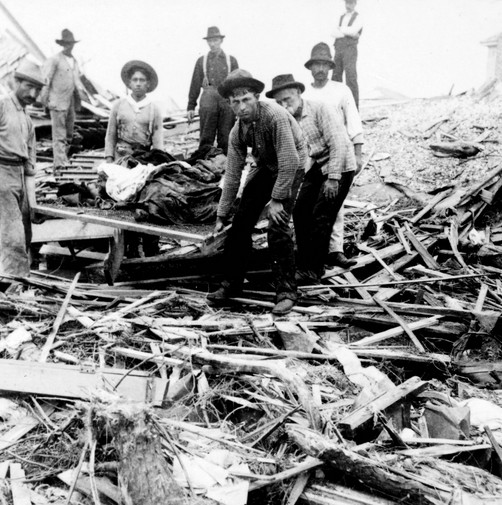
This week in the year 1900, a low CO2 hurricane produced 145 MPH winds and a 15 foot storm surge in Galveston, TX – which destroyed the city and killed 10,000 people
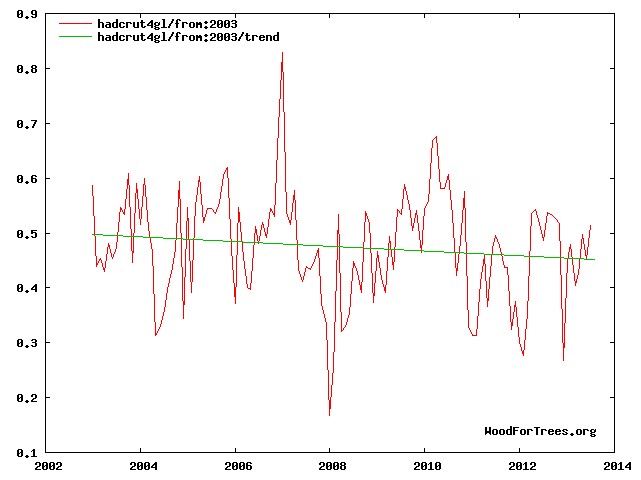
The term “temperatures have risen more slowly over the last decade” is how climate scum describe the downwards trend.
Climate experts explain that two Hiroshima bombs worth of heat are moving into the ocean every second, causing it to cool.
Cooling Pacific has dampened global warming, research shows
By Fiona HarveyCooling waters in the tropical Pacific Ocean appear to be a major factor in dampening global warming in recent years, scientists said on Wednesday.
Their work is a big step forward in helping to solve the greatest puzzle of current climate change research — why global average surface temperatures, while still on an upward trend, have risen more slowly in the past 10 to 15 years than previously.
Cooling Pacific has dampened global warming, research shows | Grist
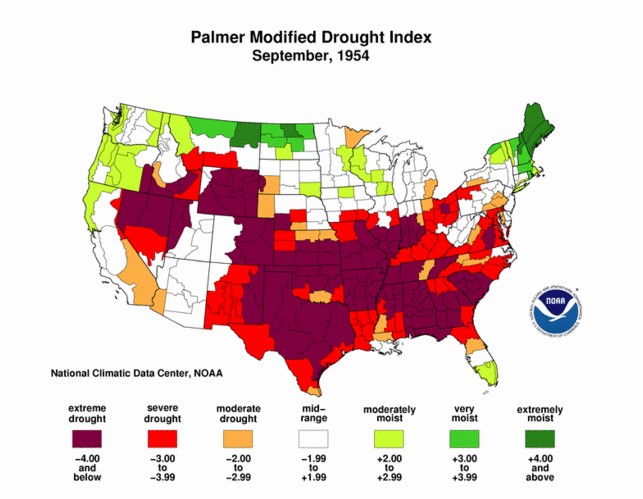
The very low CO2 summer of 1954 brought severe drought to most of the US, and two major hurricanes to New England within ten days of each other, plus a third major hurricane which was one of the most destructive in US history.
If weather this extreme happened now, it would be viewed by progressives as proof that witch burning needs to be immediately resumed.
Hurricane Carol was among the worst tropical cyclones on record to affect the New England region of the United States. It developed from a tropical wave near the Bahamas on August 25, 1954, and slowly strengthened as it moved northwestward. On August 27, Carol intensified to reach winds of 105 mph (170 km/h), but weakened as its motion turned to a northwest drift. A strong trough of low pressure turned the hurricane northeastward, and Carol later intensified into a major hurricane.[nb 1] While paralleling the Mid-Atlantic and Southeastern United States, the storm produced strong winds and rough seas that caused minor coastal flooding and slight damage to houses in North Carolina, Virginia, Washington, D.C., Delaware, and New Jersey. The well-organized hurricane accelerated north-northeastward and made landfall on Long Island, New York, and Connecticut on August 31 near peak intensity. Early on the following day, Carol transitioned into an extratropical cyclone over New Hampshire. In New York, strong winds on Long Island damaged about 1,000 houses, left 275,000 people without electricity, downed many trees, and resulted in heavy crop losses. Storm surge flooded LaGuardia Airport and inundated the Montauk Highway, which left the eastern portion of Long Island isolated. Carol also brought strong winds and rough seas to New England. Throughout the region, about 150,000 people were left without electricity and telephone service. 1,545 houses were destroyed and another 9,720 were damaged. Approximately 3,500 cars and 3,000 boats were destroyed. There were 65 deaths and 1,000 injuries in New England. Overall, Carol caused 68 fatalities and damage totaled about $460 million (1954 USD),[nb 2] making it the costliest hurricane in the history of the United States, at the time. Following the storm, Carol was retired, becoming the first name to be removed from the naming lists in the Atlantic basin.
Hurricane Carol – Wikipedia, the free encyclopedia
Hurricane Edna was a deadly and destructive major hurricane that impacted the United States East Coast in September of the 1954 Atlantic hurricane season. It was one of two hurricanes to strike Massachusetts in that year, the other being Hurricane Carol. The fifth tropical cyclone and storm of the season, as well as the fourth hurricane and second major hurricane, Edna developed from a tropical wave on September 2. Moving towards the north-northwest, Edna skirted the northern Leeward Islands as a tropical depression before turning more towards the west. The depression attained tropical storm status to the east of Puerto Rico and strengthened further to reach hurricane status by September 7. The storm rapidly intensified and reached its peak intensity of 120 mph (195 km/h) north of the Bahamas before weakening to Category 1 status near landfall in Massachusetts on September 11. Edna transitioned into an extratropical cyclone in Atlantic Canada before its remnants dissipated in the northern Atlantic. Edna caused 20 fatalities throughout its lifetime as a tropical cyclone, as well as a moderate amount of damage. It first caused rainfall-induced flooding in Puerto Rico, and it later brushed the Bahamas. High waves affected the coastline of North Carolina. Edna resulted in the heaviest day of rainfall in New York City in 45 years, while strong waves cut off Montauk from the remainder of Long Island. There were six highway deaths in the state, and $1.5 million in crop damage. There were widespread evacuations in southern New England, after Hurricane Carol struck the same area only 11 days prior. Strong winds caused extensive power outages for 260,000 people, including nearly all of Cape Cod. Edna became the costliest hurricane in the history of Maine, where the hurricane caused flooding that washed out roads and rail lines. There were 21 deaths in New England, eight of whom in Maine due to drownings. Later, high winds severely damaged crops in Atlantic Canada.
Hurricane Edna – Wikipedia, the free encyclopedia
Hurricane Hazel was the deadliest and costliest hurricane of the 1954 Atlantic hurricane season. The storm killed as many as 1,000 people in Haiti before striking the United States near the border between North and South Carolina, as a Category 4 hurricane. After causing 95 fatalities in the US, Hazel struck Canada as an extratropical storm, raising the death toll by 81 people, mostly in Toronto. As a result of the high death toll and the damage Hazel caused, its name was retired from use for North Atlantic hurricanes. In Haiti, Hazel destroyed 40% of the coffee trees and 50% of the cacao crop, affecting the economy for several years to come. The hurricane made landfall in the Carolinas, and destroyed most waterfront dwellings near its point of impact. From Carolina, it traveled north along the Atlantic coast. Hazel affected Virginia, West Virginia, Maryland, Delaware, New Jersey, Pennsylvania, and New York; it brought gusts near 160 km/h (100 mph) and caused $308 million (1954 USD) in damage. When it was over Pennsylvannia, Hazel consolidated with a cold front, and turned northwest towards Canada. When it hit Ontario as an extratropical storm, rivers and streams in and around Toronto, Ontario overflowed their banks, which caused severe flooding. As a result, many residential areas located in the local floodplains, such as the Raymore Drive area, were subsequently converted to parkland. In Canada alone, over C$135 million (2009: $1.1 billion) of damage was incurred.