Remembering The Winter That Wasn’t

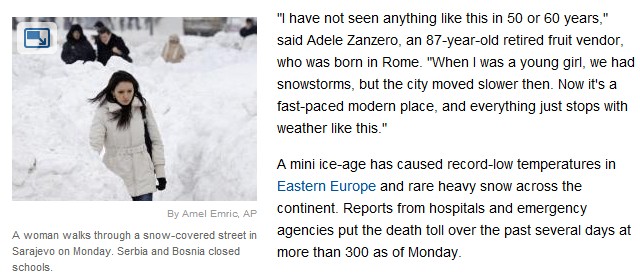
Last winter brought record snow and cold to much of Europe, Asia and Alaska. But because it was warm in Washington D.C.  US climate experts determined that it was proof of global warming. The could see Russia from the window of their house.

Deadly freeze, heavy snow keep slamming Europe – USATODAY.com

This winter is forecast to be cold in the eastern US, and US climate scientists are already sandbagging by claiming that it will be due to low Arctic ice extent. This despite the fact that the coldest US winters occurred in the late 1970s – when Arctic ice was at its peak.

There seems to be no limit to how much nonsense US climate scientists are willing to produce to protect their jobs and funding.

Posted in Uncategorized | 7 Comments

Antarctic Ice Area Sets Another Record – NSIDC Is Silent

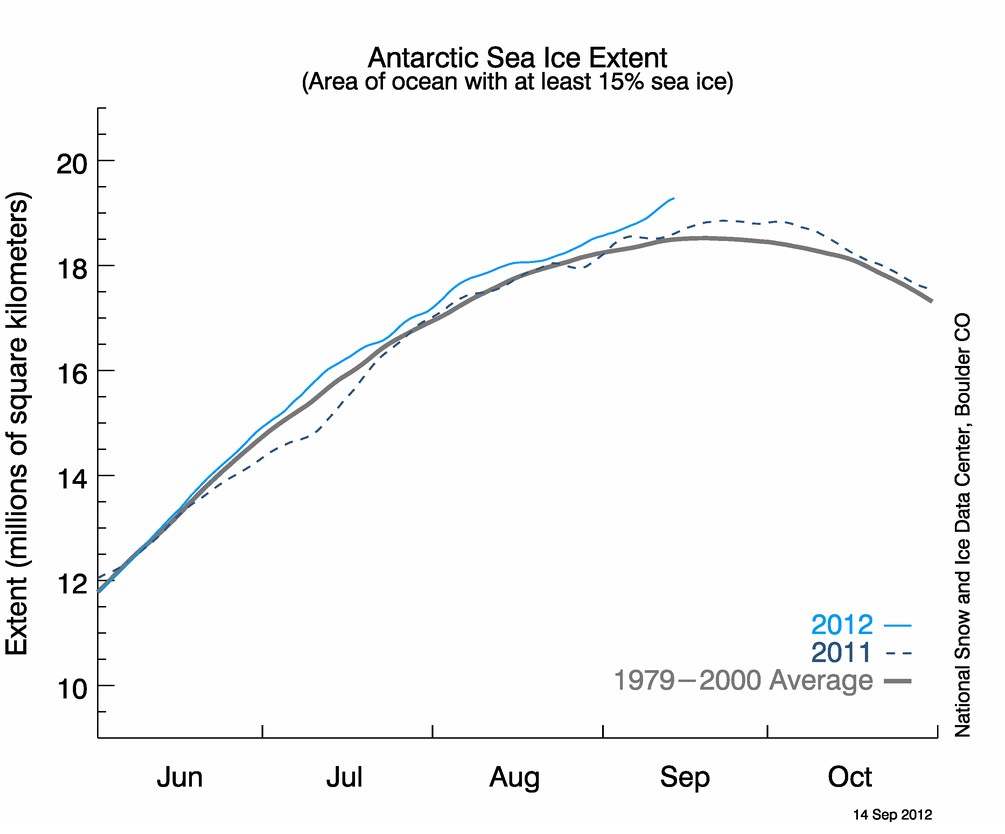
Day 256 Antarctic ice is the highest ever for the date, and the eighth highest daily reading ever recorded. All seven higher readings occurred during the third week of September, 2007 – the week of the previous Arctic record minimum.
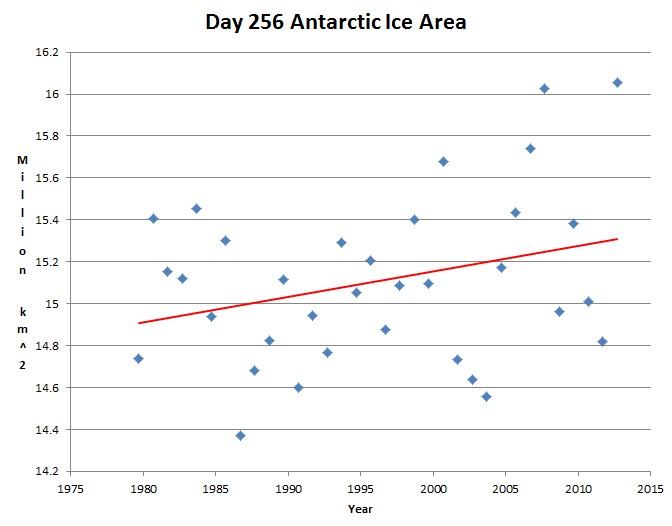
arctic.atmos.uiuc.edu/cryosphere/timeseries.south.anom.1979-2008

NSIDC does not mention the record Antarctic cold or ice on their web site, choosing inside to feature an article about global warming threatening penguins.
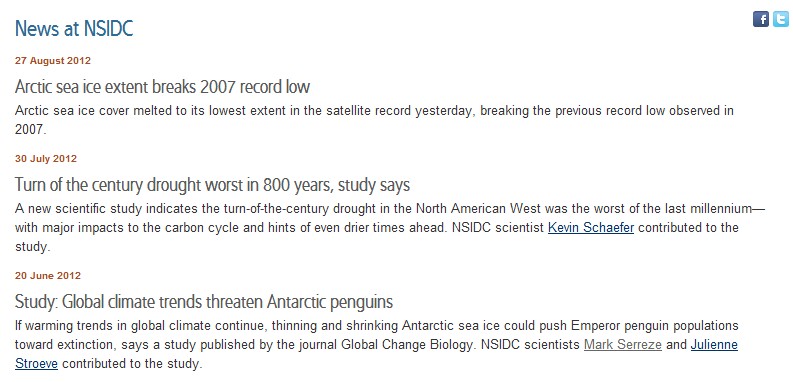
National Snow and Ice Data Center (NSIDC)

NSIDC does have a completely nonsensical discussion page explaining why Antarctic ice does not affect the climate.

Scientists monitor both Arctic and Antarctic sea ice, but Arctic sea ice is more significant to understanding global climate because much more Arctic ice remains through the summer months, reflecting sunlight and cooling the planet.

Nonsense. There is very little sunlight reaching the Arctic Ocean in September, and much more reaching Antarctic ice – because it is located at lower latitudes. Arctic ice took its big decline in mid-August, after the sun was already low in the sky.

Sea ice near the Antarctic Peninsula, south of the tip of South America, has recently experienced a significant decline. The rest of Antarctica has experienced a small increase in Antarctic sea ice.

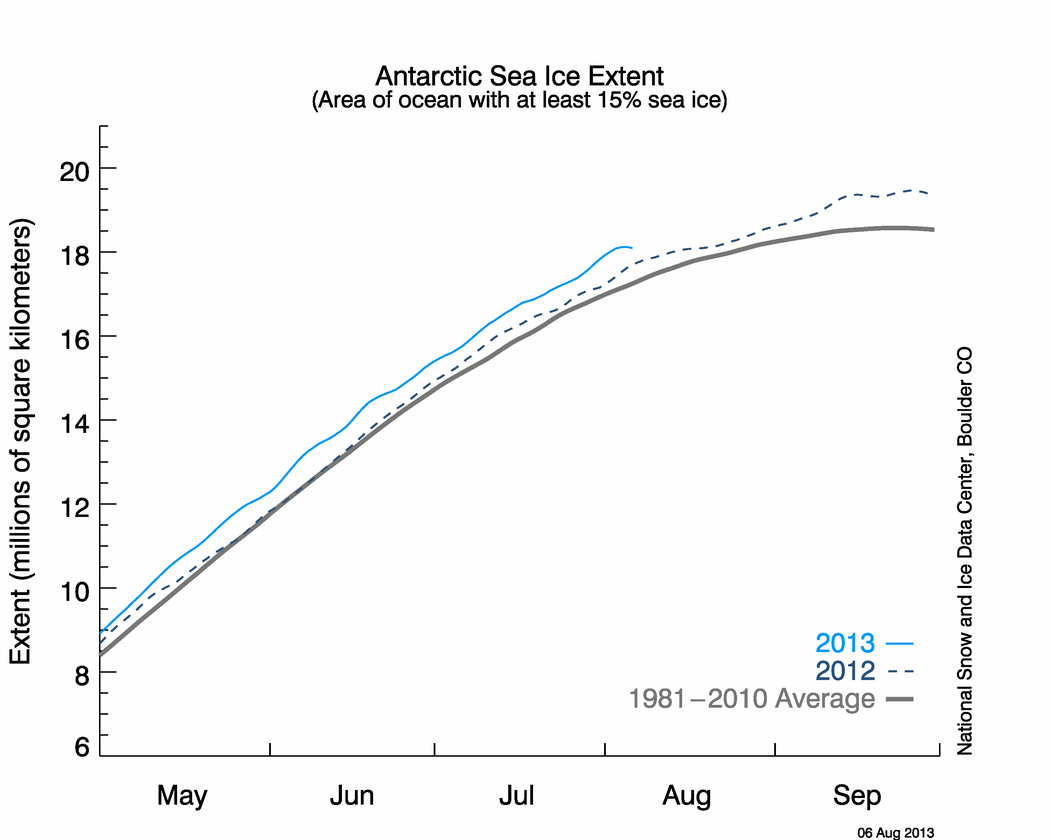
Antarctic ice is nearing an all-time record high, and is above average everywhere.

Antarctica and the Arctic are reacting differently to climate change partly because of geographical differences. Antarctica is a continent surrounded by water, while the Arctic is an ocean surrounded by land. Wind and ocean currents around Antarctica isolate the continent from global weather patterns, keeping it cold. In contrast, the Arctic Ocean is intimately linked with the climate systems around it, making it more sensitive to changes in climate.

Antarctic and Arctic ice move opposite each other. NSIDC`s dissonance about this is astonishing.

Quick Facts on Sea Ice

Posted in Uncategorized | 93 Comments

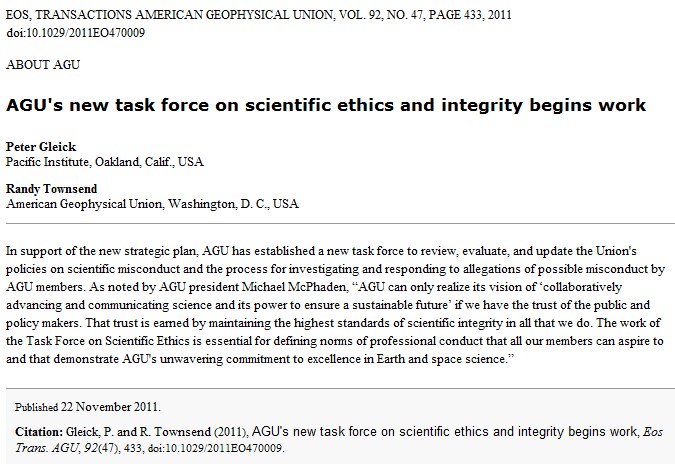
Ten Months Since Peter Gleick Named Head Of AGU Ethics And Integrity

Fraudster, thief, liar and likely forger Peter Gleick, was named head of AGU ethics almost ten months ago.

AGU’s new task force on scientific ethics and integrity begins work

Peter Gleick Pacific Institute, Oakland, Calif., USA

AGU has established a new task force to review, evaluate, and update the Union’s policies on scientific misconduct and the process for investigating and responding to allegations of possible misconduct by AGU members.

AGU’s new task force on scientific ethics and integrity begins work

Posted in Uncategorized | 9 Comments

Unprecedented Cold And Snow In Iceland

Snow in North Iceland in early September is not unheard of but snowfall of two to three meters overnight at this time of year—when the sheep are still in highland pastures—is highly unusual.  Coupled with blackouts across the region, from Blönduós in the west to Þórshöfn in the east, due to icing of power lines and we’re looking at an unprecedented situation.

Winter Strikes (ESA) – Iceland Review Online

Posted in Uncategorized | 12 Comments

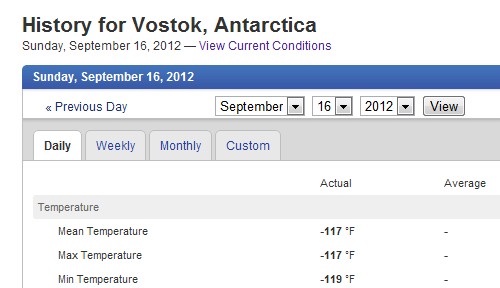
-119F : Coldest September Temperature Ever Recorded On Earth?

The temperature today at Vostok, Antarctica is -119F, which may be the coldest September surface temperature ever recorded on this planet.

History | Weather Underground

The all time coldest temperature was -129F during July of 1983.

Posted in Uncategorized | 18 Comments

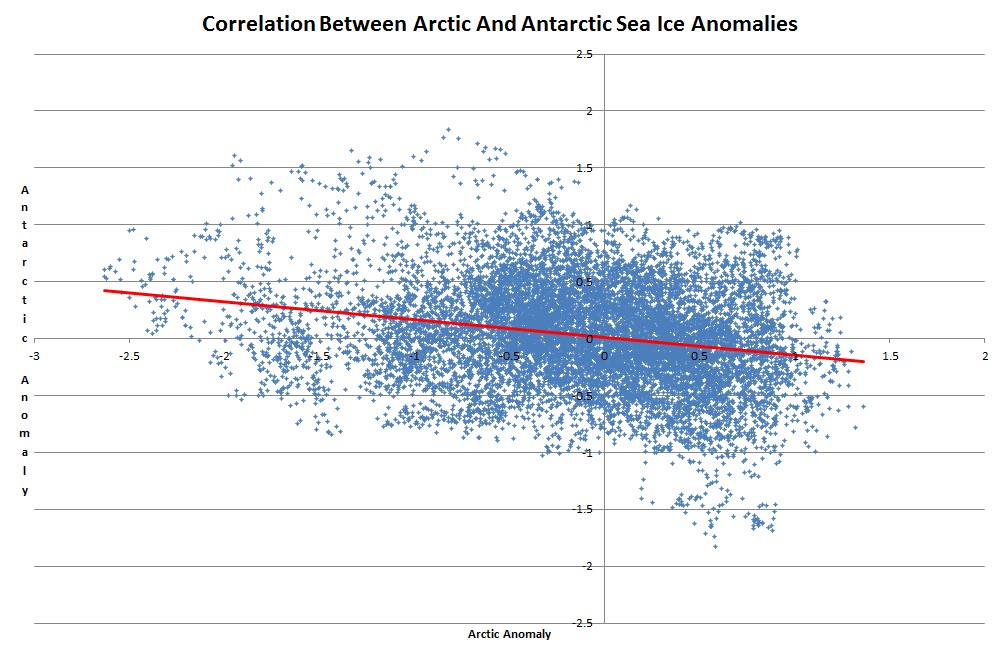
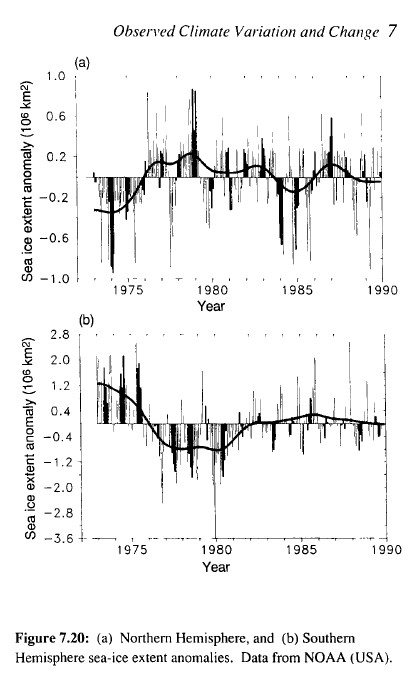
Correlation Between Arctic And Antarctic Sea Ice Anomalies

1979-2012

arctic.atmos.uiuc.edu/cryosphere/timeseries.anom.1979-2008

arctic.atmos.uiuc.edu/cryosphere/timeseries.south.anom.1979-2008

When Arctic ice is strongly negative, Antarctic ice is strongly positive, and vice-versa.  r² = 0.05

There is also a very good correlation before 1979

First IPCC report

Posted in Uncategorized | 31 Comments

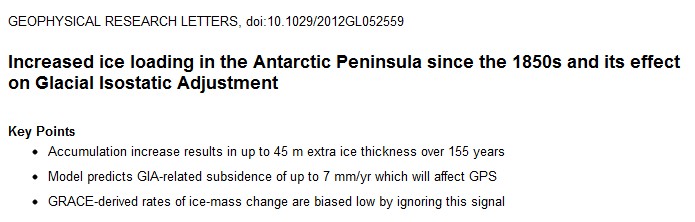
Another Nail In The Mindless GRACE Interpretation Coffin

Increased ice loading in the Antarctic Peninsula since the 1850s and its effect on Glacial Isostatic Adjustment

Posted in Uncategorized | 11 Comments

Suppose The Poles Were Reversed?

S_timeseries.png (1050×840)

What if the North Pole was gaining sea ice, and the South Pole was losing sea ice?

Alarmists would come up with an ad hoc theory explaining how it confirms the models, and proves global warming.

Junk ad hoc climate science has no rules other than confirmation bias, and keeping the funding stream alive.

Posted in Uncategorized | 13 Comments

Berbatov Unleashed

Berbatov finally escapes a year of Fergie hell, and ravages West Brom.

Posted in Uncategorized | 1 Comment

Julienne Schmoozing On The Greenpeace Cruise

The record minimum extent is now likely to be formally called on Monday by the US National Snow and Ice Data Centre (NSIDC) in Colorado.

No doubt they will also make a huge hoopla about the Antarctic record maximum, where most of the world’s sea ice is located.

The staggering decline of sea ice at the frontline of climate change Scientists on board Greenpeace’s vessel exploring the minimum extent of the ice cap are shocked at the speed of the melt

The staggering increase in BS triggered by the August winter storm.

“In the 1970s we had 8m sq km of sea ice. That has been halved. We need it in the summer. It has never decreased like this before”.  “We knew the ice was getting thinner but I did not expect we’d lose this much this year. We broke the record by a lot”, says the NSIDC scientist Julienne Stroeve.

“The acceleration of the loss of the extent of the ice is mostly because the ice has been so thin. This would explain why it has melted so much this year. By June the ice edge had pulled back to where it normally is in September,” she says.

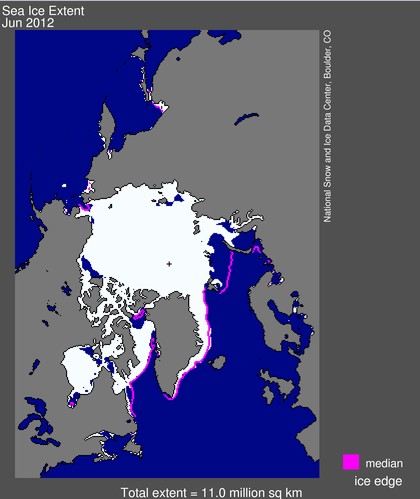
Very naughty – NSIDC maps show that ice extent in the western Arctic was “normal” in June. Julienne knows perfectly well that the big drop occurred in mid-August after the storm. She posted the information here.

N_201206_extn.png (420×500)

Sea ice extent has varied naturally over the decades with some Russian data suggesting similar or even greater ice loss in some local areas in the 1930s. But the models are clear, says Stroeve. If you omit the observed records, keeping CO2 levels at pre-industrial levels, then none show a decline of ice cover. When you do put CO2 into the models, they all show a decline, she says.

The staggering decline of sea ice at the frontline of climate change | Environment | guardian.co.uk

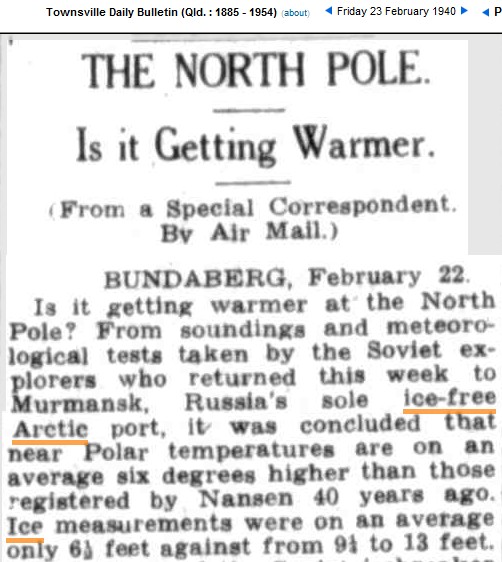
Russian data shows that the ice was just as thin in 1940 as it is now. Models did not predict the record amount of Antarctic sea ice.

http://trove.nla.gov.au/

Posted in Uncategorized | 23 Comments