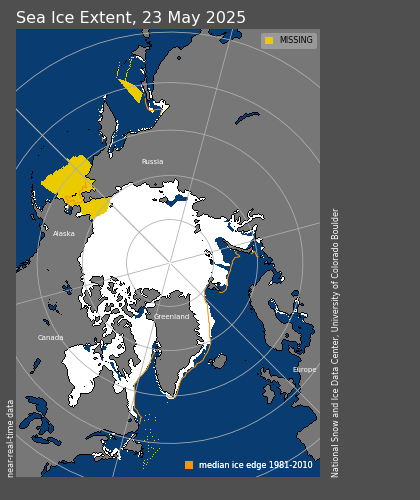
I was just watching Animal Planet and heard this remarkable statement – quoted exactly.
“An increasingly small population of Polar Bears. Only 25,000 are left in the world.“
I was just watching Animal Planet and heard this remarkable statement – quoted exactly.
“An increasingly small population of Polar Bears. Only 25,000 are left in the world.“
President Barack Obama warned Tuesday there could be another global financial crisis if the U.S. Congress fails to raise the national debt ceiling.
But in an interview with NBC’s “Today” show, Obama also said he took Republican leaders at their word that they want to avoid such a situation and he expects a deal to increase the debt limit “in a sensible way.”
“The full faith and credit of the United States is the underpinning not only of our way of life, it’s also the underpinning of a global financial system. We could actually have a reprise of a financial crisis, if we play this too close to the line. So we’re going be working hard over the next month,” he said.

The koalas are disappearing. Fast.
But despite a number of factors threatening the small marsupial, it seems the Australian government is hesitant to place it on the endangered species list, according to Le Monde. The problem is getting so bad that in some places in Australia the population has been reduced to 20% of what it once was.
But what’s killing the koala is a bit surprising. While climate change and urban development have perhaps had the biggest impact on the animal, a third factor is also pushing it towards extinction, according to the Telegraph — chlamydia.
| New York | Watertown | 49.0 in. | November 14-15, 1900 |
| Wisconsin | Neillsville | 26.0 in. | December 26-27, 1904 |
| Ohio | Warren 3S | 30.0 in. | April 20, 1901 |
| New Jersey | Charlotteburg Reservoir | 32.0 in. | December 14, 1915 |
http://www.weatherquestions.com/What_are_the_record_snowfalls_by_state.htm
Reading the press coverage, it is quite clear that this year’s tornadoes, fires and floods are the new norm due to CO2.
Record snowpack, lack of drought, and lack of hurricanes are a fluke to be ignored.
Next year the signs may switch polarity – and the claims will reverse direction. Whatever happens, it is due to CO2.
Lake Powell is gaining more than a foot of elevation per day, with remaining snowpack almost 300% of normal.
A new interim report released this week by the federal government, Colorado and six other states along the river suggests that “by mid-century the average yield of the Colorado River could be reduced by 10-20 percent due to climate change. Meanwhile, the Basin States include some of the fastest growing urban and industrial areas in the United States. Increasing demands coupled with decreasing supplies will exacerbate imbalances throughout the Basin in the future.”
Sobering stats from non-hysterical sources like the U.S. Bureau of Reclamation and the major stakeholders along the river. The full report will be released in digestible chunks over the next year or so and is aimed at coming up with some collaborative approaches to solving inevitable conflicts among the various user groups. For instance, energy production versus agriculture versus residential development versus outdoor recreation versus wildlife and riparian habitat.
Some will no doubt say such a report is a waste of federal and state funding and that scenarios suggesting global climate change will be a factor are politically motivated. But the climate change model is one of just four possible scenarios contemplated in the report, and an ongoing drought that has depleted Lake Powell and other major reservoirs along the Colorado is factually impossible to deny.