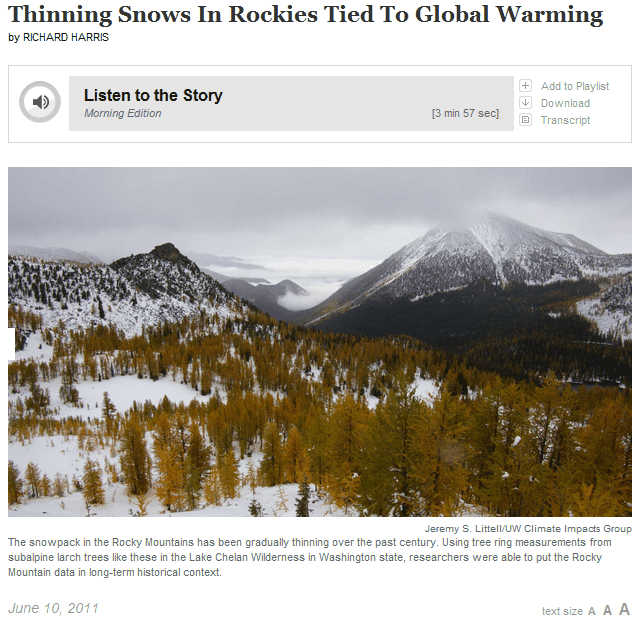
NPR Says Snow In The Rockies Is Thinning

Actually, the Rockies have the most snow ever recorded in mid-June.

http://www.npr.org/

Then they go on to claim that this year is somehow different.

December 28, 2007

Aspen flirts with powder record
Only December 1983 tops this month.

ASPEN — This month is shaping up as the second snowiest December in Aspen since someone started keeping records in 1934.

http://www.aspentimes.com/

Dec 26, 2008

Good News! Record Snow, It’s DEEPcember On Slopes Again in Aspen

http://www.estinaspen.com/

May 5, 2010

ASPEN, Colorado — If it felt like the snow never stopped in April it wasn’t just your imagination.

Aspen appears to have set a record with 36.35 inches of snow for April, barely eclipsing the old mark of 36 inches in 1970, according to Charlie Bailey, water treatment supervisor with the Aspen Water Department.

http://www.postindependent.com/

Thursday, March 31st, 2011

Aspen Snowfall Records were beaten this week as the best Powder Skiing in the history of Spring Skiing was enjoyed by the Jet-Set New York crowd who flies West each season for their own special blend of “March Madness”. Meanwhile, back in NYC, unwelcome snow was just causing a big mess for those not so fortunate, back on the grind for the 1st day of April…

http://www.blueandcream.com/


Posted in Uncategorized | 75 Comments

LA/Santa Barbara Was Wonderful

We had a great time, except for one thing – the traffic. Cars are the bane of our society’s existence. We wasted an unbelievable amount of time traveling 10MPH or less during the week.

Posted in Uncategorized | 13 Comments

Being An Expert Means Never Having To Admit You Were Wrong

What is a “global warming expert?” Almost every prediction they have made has been wrong, and even a stopped clock is correct twice a day.

Victoria global warming expert turns his attention to the future -youth

Andrew Weaver apologizes for being late for the interview but explains he was giving a lecture to his daughter’s class at Lambrick Park secondary school in Victoria.

“It may be a provocative statement, but I’ll say it anyways: I’m fed up speaking with the stereotypical angry, retired, grey-haired engineer,” explained the University of Victoria professor and global warming guru.

“They’re stuck in their ways and think everything can be fixed and that this is not a big problem.”

Since 1989 Weaver has been studying climate issues and, more recently, trying to get governments to act decisively to reduce greenhouse gas emissions, largely from burning of fossil fuels. He’s now come to the conclusion that the federal government isn’t interested, and that it’s time to concentrate on Canada’s youth -the next generation of leaders.

“Leadership will have to be grassroots, starting with the consumer and the youth of today,” he said, citing public demand for organic food and fuel-efficient vehicles as two encouraging examples. “I have absolutely given up on Ottawa ever showing any leadership on this.”

Weaver, a research chair in climate modelling and analysis, was a lead author in the United Nations Intergovernmental Panel on Climate Change, and, as such, a co-recipient of the Nobel Peace Prize in 2007.

http://www.vancouversun.com/

Posted in Uncategorized | 14 Comments

Richard Nixon 1960 : “I’m not going to be the one to bring up the subject of Kennedy’s religion”

The Obama propaganda machine wants to pick another Republican candidate who can’t win.

Posted in Uncategorized | 49 Comments

One-Fifth Of New Brunswick’s Forests Burned In 1825

The Great Miramichi Fire refers to a massive forest fire (or series of fires) which devastated forests and communities throughout much of northern New Brunswick in October 1825. It ranks among the three largest forest fires ever recorded in North America. About 1/3 of the homes in Fredericton were destroyed, but the main devastation was 100 miles (160 km) to the northeast. On the evening of October 7, 1825, the firestorm roared through Newcastle, New Brunswick (now part of the City of Miramichi), and in less than 3 hours reduced the town of 1,000 people to ruins – of 260 original buildings, only 12 remained. Only 6 of 70 buildings survived in the adjacent village of Douglastown. The fire similarly destroyed other communities, including Moorefield, Napan, and Black River. Chatham, Nelson, and Doaktown escaped the fire. The cause of the blaze is not known, but was likely of human origin.[1]

To escape the blaze many residents took refuge with livestock and wildlife in the Miramichi River – about 160 people died in and around Newcastle, including prisoners in the Newcastle Jail. Elsewhere, the totals were likely higher, given the number of lumbermen in the forests at the time (about 3000).[2]

In total the fire(s) consumed almost 16,000 km² (about 1/5 of New Brunswick’s forests). The blaze has been partly attributed to unusually hot weather in the fall and summer of 1825, coupled with outdoor fires by settlers and loggers.[2

http://en.wikipedia.org/wiki/Miramichi_Fire

Posted in Uncategorized | 4 Comments

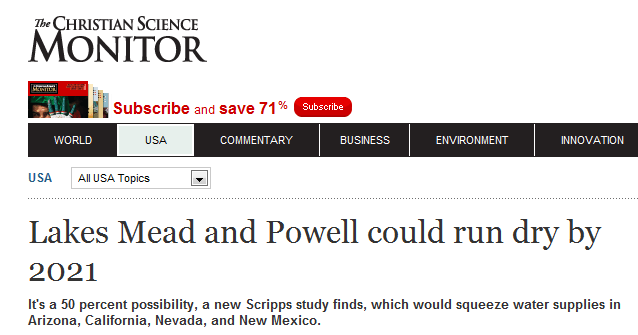
Scripps 2008 : Lake Powell May Run Dry By 2021

http://www.csmonitor.com/USA/2008/0213/p25s05-usgn.html

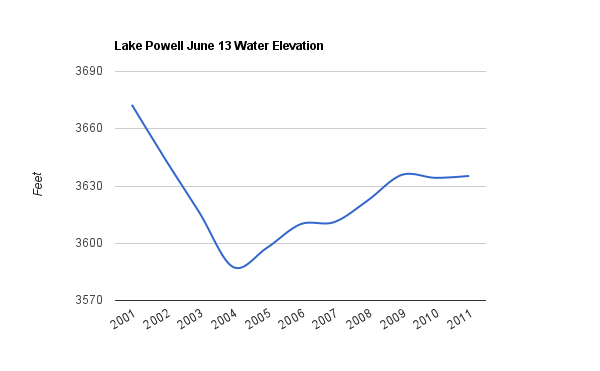
http://lakepowell.water-data.com/

The decline in Lake Powell water levels ended in 2004, and the lake is currently gaining more than one foot elevation per day – with record snowpack remaining in the mountains upstream.

Posted in Uncategorized | 9 Comments

Pay No Attention To The Man Behind The Curtain

Never mind that we have had record or near record snow four out of the last five years and that the river is flooding, we have a preconceived notion we have to fit …..

It’s the middle of June and the snowpack in Northern Colorado’s mountains is still thick and full of water.But a new U.S. Geological Survey study released Thursday shows that this year’s robust snowpack across the region is not normal in the context of the past three decades, when anthropogenic, or human-caused, climate change has been causing Colorado’s snowpack to progressively shrink.

http://www.coloradoan.com/

Posted in Uncategorized | 11 Comments

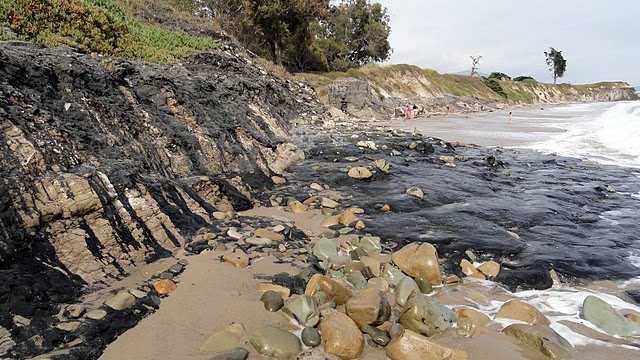
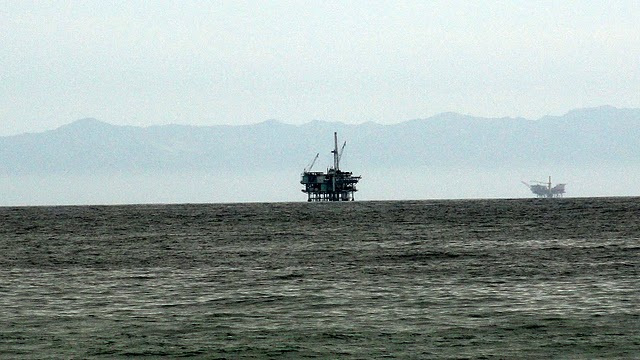
Oil In Carpenteria, California

The oil pours out of the rocks, flooding the beach here.

Offshore rigs with the Channel Islands in the background.

Posted in Uncategorized | 27 Comments

“I have skied for 72 years, and I’ve never skied snow like this in June,”

LITTLE COTTONWOOD CANYON, Utah — At the base of a slope that at this time of year usually tests the skills of mountain bikers, roughly 60 skiers and snowboarders, hoping to get first tracks on the mountain, waited for the 8 a.m. opening of the tram at Snowbird resort.

These were not bitter-enders hoping to eke out runs on a thin swatch of snow. At this northern Utah resort, it is still winter. There is hardly a bare spot on the mountain. Piles of snow line the vast parking lot. With much of the country in the grip of record-high temperatures, it was 31 degrees here Friday morning. Snowbird has announced that it will be open for snow sports three days a week until July 4. And it could stay open even later.

An unusually heavy winter snowfall and a cold, wet spring have resulted in a record snowpack in much of the mountain regions of the West. Bob Bonar, the general manager at Snowbird, said the mountain received more than 775 inches of snow this season, well above its average of 500.

“We even got 20 inches of powder over Memorial Day weekend, and our current average base is more than 15 feet,” Bonar said. “The holiday may not even be the end. We may stay open a few weekends longer if the snow stays good.”

But if the giant snowpack remains a boon to skiers at Snowbird and at Snowbasin Resort about 70 miles to the north, it has been problematic to others.

Ed Chauner, director of the Intermountain Cup Mountain Bike Racing Series, said he had to change the site of a race last month because the original site, Sundance Resort, still had 10 feet of snow. A race planned at Snowbird on July 2 is also in jeopardy because, Chauner says, “there’s still 20 feet of snow on parts of the course.”

“All this weather is killing us,” Chauner said. “No one can get out and train during the week, because it’s been so cold and wet. If they can’t train, they don’t come out to race. Our rider numbers have been way down.”

The La Niña phenomenon is behind the weather anomaly, said Lindsay Storrs, a meteorologist at KUTV in Salt Lake City. In a La Niña year, she said, cooler than normal water temperatures in the Pacific off the coast of Chile leads to cooler and wetter weather in winter and spring in the western United States.

“Troughs develop along the West Coast of the U.S. when this occurs,” Storrs said. “That allows storms to continuously drop out of the Gulf of Alaska, giving the western U.S. above average precipitation.”

Snowbird’s full parking lot is testimony to the attraction of this season’s late snow.

“I have skied for 72 years, and I’ve never skied snow like this in June,” said Eric Jucker, 75, a Swiss citizen who travels back and forth from Laguna Beach, Calif., to Salt Lake City.

http://www.nytimes.com/

Posted in Uncategorized | 25 Comments

Obama Administration Warns That The West Is Doomed!

Report: Climate change worsens Western water woes

By John Flesher (Associated Press) – April 28, 2011

Climate change is likely to diminish already scarce water supplies in the Western United States, exacerbating problems for millions of water users in the West, according to a new government report.

A report released Monday by the Interior Department said annual flows in three prominent river basins — the Colorado, Rio Grande and San Joaquin — could decline by as much 8 percent to 14 percent over the next four decades. The three rivers provide water to eight states, from Wyoming to Texas and California, as well as to parts of Mexico.

The declining water supply comes as the West and Southwest, already among the fastest-growing parts of the country, continue to gain population.

Interior Secretary Ken Salazar called water the region’s “lifeblood” and said small changes in snowpack and rainfall levels could have a major effect on tens of millions of people.

The report will help officials understand the long-term effects of climate change on Western water supplies, Salazar said, and will be the foundation for efforts to develop strategies for sustainable water resource management.

The report notes that projected changes in temperature and precipitation are likely to alter the timing and quantity of stream flows in all Western river basins, with increased flooding possible in the winter due to early snowmelt and water shortages in the summer due to reductions in spring and summer runoffs. Changes in climate could affect water supplies to a range of users, from farms and cities to hydropower plants, fish, wildlife and recreation, the report said.

http://www.stopglobalwarming.org/

Posted in Uncategorized | 9 Comments