Spring is here and highly respected journalists tell us that the ice is rapidly melting at -25C
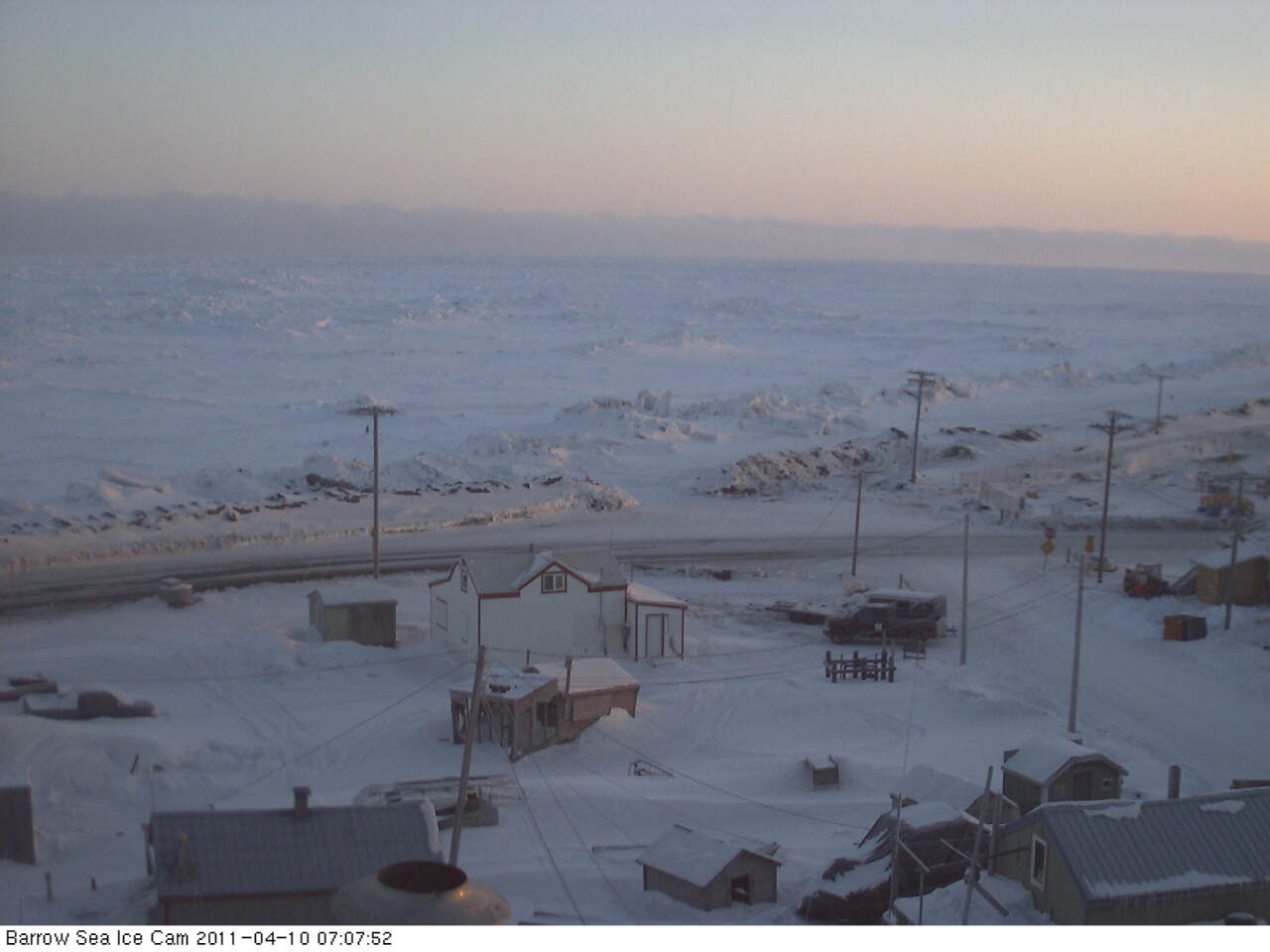
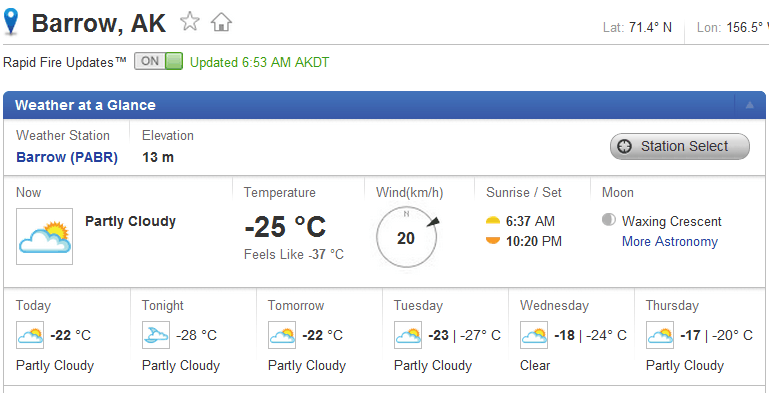
http://www.wunderground.com/cgi-bin/findweather/getForecast?query=71.29,-156.77
Spring is here and highly respected journalists tell us that the ice is rapidly melting at -25C
http://www.wunderground.com/cgi-bin/findweather/getForecast?query=71.29,-156.77
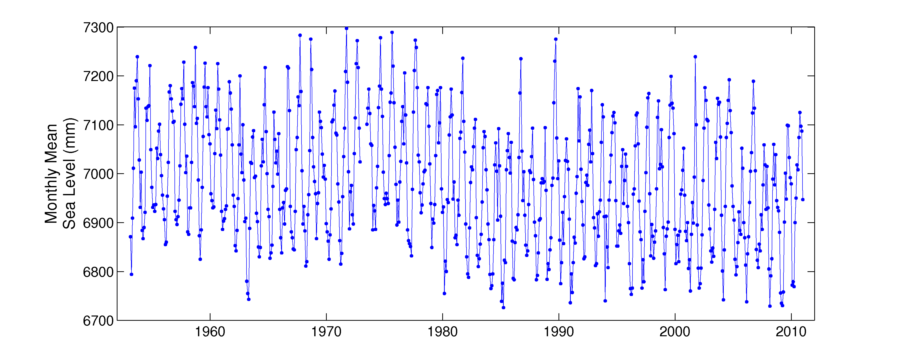
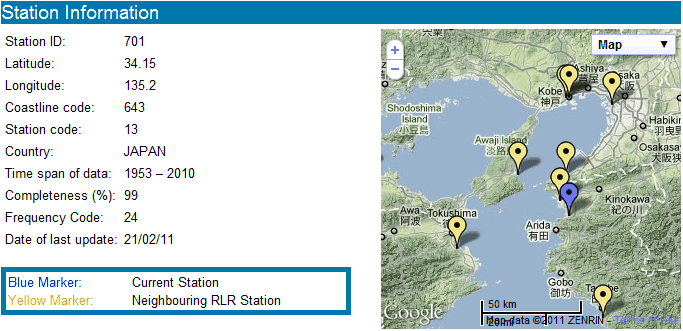
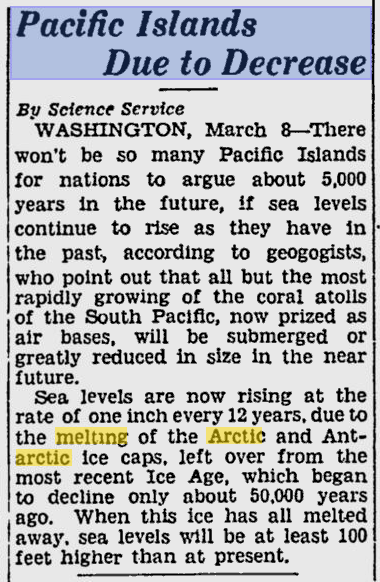
At current rates of sea level rise, Japan will be submerged in only infinity years.
Even CO2 levels of 300 ppm can’t keep us safe. We are doomed to die a fiery death.
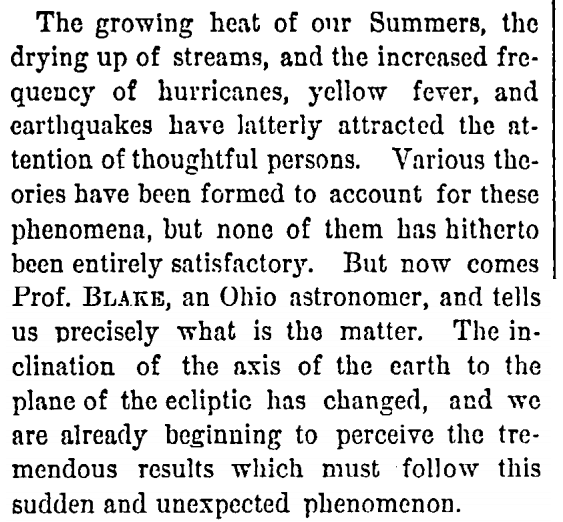

The world’s leading climate scientists tell us that we need to reduce atmospheric CO2 to 350 ppm to stop the polar ice caps from melting. But will that work?
310 ppm is obviously too high.

http://news.google.com/newspapers
300 ppm is also too high
In grade school, we learned about geographical maps – and political maps.
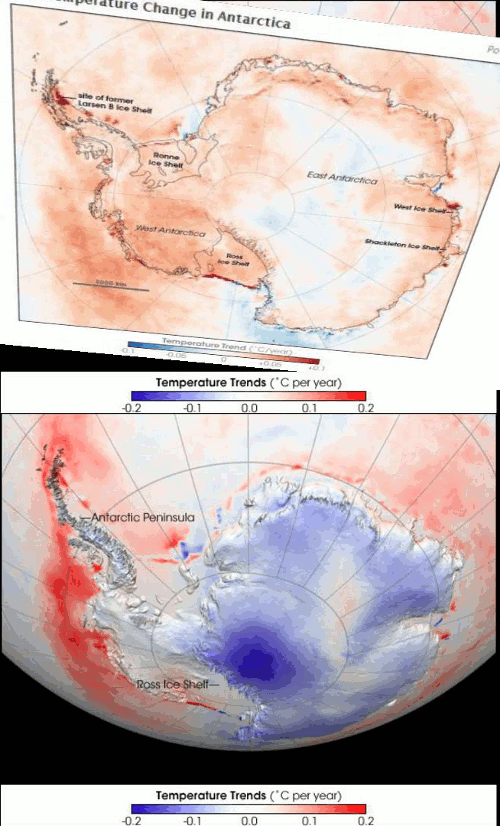
In 2004, NASA showed Antarctica in a long-term cooling trend. But Gavin forecast the future.
Antarctic cooling, global warming? …. the continent and in the interior appear to have cooled slightly …… we fully expect Antarctica to warm up in the future.
Sure enough, in 2007 NASA flipped the long-term trend from cooling to warming.
Did Antarctica suddenly heat up between 2004 and 2007? No.
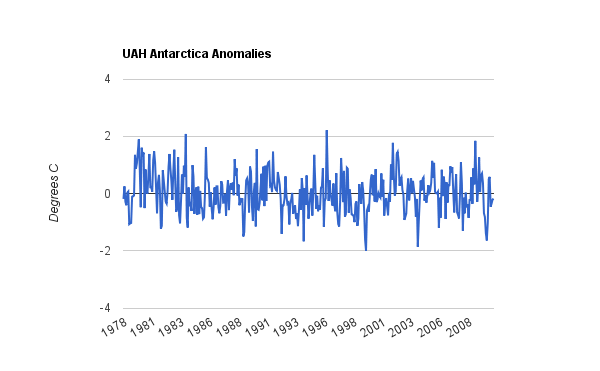
http://vortex.nsstc.uah.edu/data/msu/t2lt/uahncdc.lt
Nobel laureate warns COP15 that ice melts during the summer.
[youtube=http://www.youtube.com/watch?v=MsioIw4bvzI]
1910	50.55
2007	48.44
2004	48.23
1946	47.91
1921	47.59
1986	47.14
2000	47.04
1918	46.8
1907	46.69
1945	46.68
1905	46.25
1938	46.13
1990	45.67
1992	45.62
1997	45.54
1973	45.47
1994	45.43
1974	45.42
1925	45.26
1911	45.14
1972	45.02
1908	44.92
1953	44.84
1963	44.84
1929	44.73
1967	44.66
1968	44.66
1935	44.64
1961	44.57
1985	44.53
1936	44.5
2010	44.48
1991	44.44
1995	44.39
1977	44.33
2003	44.22
1928	44.16
1966	44.03
2011	43.95

http://www.ncdc.noaa.gov/oa/climate/research/cag3/na.html
two kilometers or so down in most places there are these incredibly hot rocks, ’cause the interior of the earth is extremely hot, several million degrees
– Al Gore (Nobel Laureate)
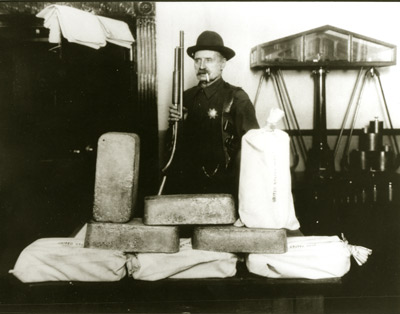
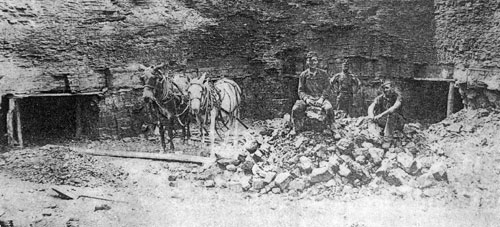
Before its closing in 2002 Homestake Gold Mine was the oldest, largest and deepest mine in the Western Hemisphere, reaching more than 8000 feet below the town of Lead.
http://www.homestakevisitorcenter.com/
Turns out there hasn’t been any polar amplification after all.
Working on a year-long research project in a polar station in the Antarctica, Franzisca Nehring, feels global warming hasn’t really affected the ice Surrounded by snow and ice for 14 months, seals and penguins for company and an indomitable spirit to survive against all odds, German Air Chemist, Dr. Franziska Nehring, who was part of a research team at a polar station in the Antarctica, came back with valuable data, incredible images and, more importantly, as a better individual. Dr. Franziska, who hails from a small town in north eastern Germany, lived and worked at the air chemistry laboratory of the polar station of the German Alfred-Wegener Institute for Polar and Marine Research Neumayer II, under extreme cold conditions between one summer and the next, without once developing cold feet. On her brief visit to Muscat, she discloses that temperatures in Antarctica have not really increased significantly enough to cause the ice to start melting. The published readings by some scientists could be wrongly recorded decades ago when technology wasn’t as advanced as it now is, so there may not actually be any increase in temperatures so as to cause global concern, she concludes in a discussion with the author a fornight ago in Muscat where she shared her experiences at Antarctica. Excerpts from a chat with the author:
Let’s begin with a key concern: What is your opinion about the Antarctic ice melting due to global warming and the threat it would pose in coming years.
I would the say the situation is not as critical as it is made out. But, at some places in the Antarctica, we do find the ice breaking away and falling but its only in isolated spots. At the German base, we don’t really see any rise in temperature, in fact, it might be the other way round. So at this base we don’t see any global warming effect at all. But, this is a big discussion because you never know how accurate the measurements taken much earlier were because technology was not as advanced as it is now. It’s too easy to say that Antarctica is warmed by 1-2 degrees but, I’d infer, that is not really true.”
h/t to Marc Morano