Truman wanted to end the war quickly before Stalin could make any claim to Japan.

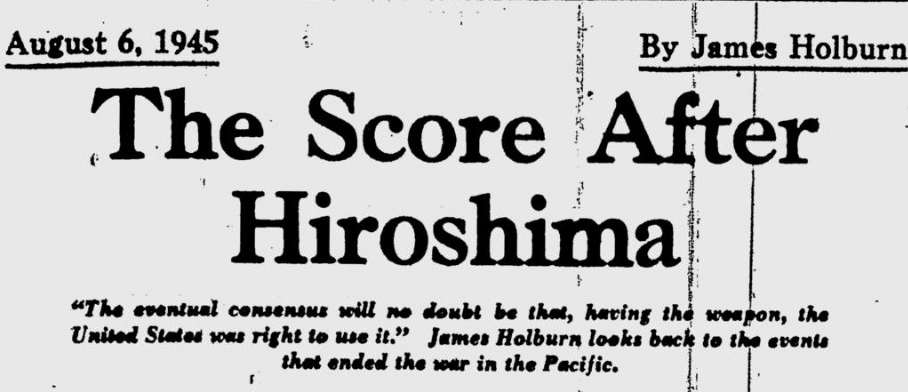
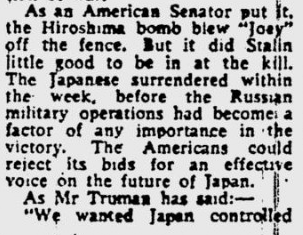
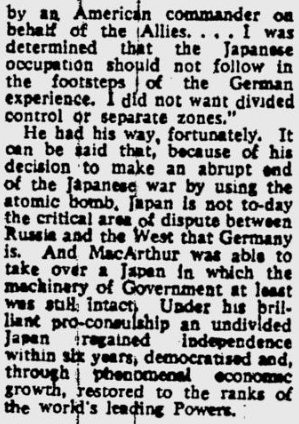
Truman wanted to end the war quickly before Stalin could make any claim to Japan.
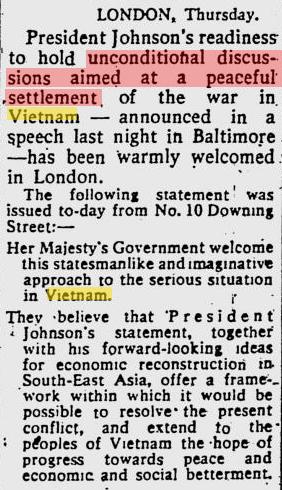
Obama has adopted the foreign policy approach President Johnson used in Vietnam in 1965. We all know how well that that turned out.

These morons now believe that local CO2 generation directly harms people. WTF are these people smoking?
An environmental justice group which has won a court ruling on Thursday said California’s entire landmark climate change law may be put on hold after talks with regulators broke down.
The suit threatens the most aggressive climate change policy in the nation, California’s 2006 omnibus law which covers vehicle pollution, generation of clean energy such as solar and wind, and even building policy as well as a carbon market, which is the core of the court case. Fans and foes of attempts to stop global warming around the globe are watching California’s efforts.
The fate of the law, including the outlook for new vehicle fuel standards and clean energy targets, is still in the hands of a San Francisco judge who has asked the environmental group to draft a detailed order. The state says it will appeal.
A market for greenhouse gases called cap-and-trade is due to begin on January 1, 2012, but the initial March 18 ruling has led some to believe it may be delayed.
The Association of Irritated Residents who brought the case fear the oldest, highest polluting facilities in California could continue or increase their pollution, harming the least affluent parts of the state even if better-off areas prosper.
I forecast that Dr. Muller will continue to play the role of neutral observer, and will continue to shock us with revelations that climate change is “worse than he expected.”
On behalf of the wine industry in Napa Valley, we need to take a moment to help clarify several of the points noted in your article “Sustainable growth: Weathering climate change with Napa Valley’s grapegrowers” in the Sunday, March 20, 2011, paper. There are a number of topics touched on and intertwined that provided a lot of confusion for the reader.
In the introduction, the vineyard manager is talking about the 2010 growing season and the writer interprets the comments made to that unique site as indicative of the entire appellation. The 2010 vintage overall was cooler than normal, and except for a three-day heat spike, a “typical” vintage appellation-wide. The challenges presented by the hot spell stemmed from the overall season being cooler in that growers had purposefully thinned the vine canopies (thinned leaves) to open the vines up to better ripen the grape clusters. With the grapes exposed, without shading from the leaves, there was some sunburn of clusters in some vineyards around the valley. But clearly not all, as the grapes that made it to the valley’s wineries are largely viewed as quality vintage. Napa growers typically thin at least half the crop and the 2010 harvest still ended being one of the three largest of the decade. So the notion that this sunburn problem was wide-spread and devastating as noted at this Treasury vineyard is not true
Secondly, the writer talks about climate change as being the reason for this hot spell. The recent growing season had just three days over 100 degrees compared to a typical growing season having between 10 and 14 days over 100. While we appreciate the writer noting that the Napa Valley Vintners commissioned the most extensive climate research in the industry and writing that the research team has not found rising temperatures outside of some winter to early summer increase of just one degree in overnight temperatures to date, the science proves that climate change that would change grape phenology has not happened. We are not being “deniers,” but simply put, those who enjoy wine cannot be tasting climate change in Napa Valley wines.
And finally, I would like to offer thanks for making readers aware of many of the great attributes of the Napa Green land and winery programs that make them the most comprehensive and stringent in wine industry. But, just to clarify — cover crops for soil conservation and evolved chemical management, to name just a couple of the Napa Green best practices — these practices are preserving and protecting the Napa Valley today and are not in response to climate change (since it is yet to occur), but to make sure the Napa Valley continues to be the premier winegrowing capital in America and a leader in the world in producing innovative, quality-driven wines.
Bruce Cakebread is president, of Cakebread Cellars in Rutherford.