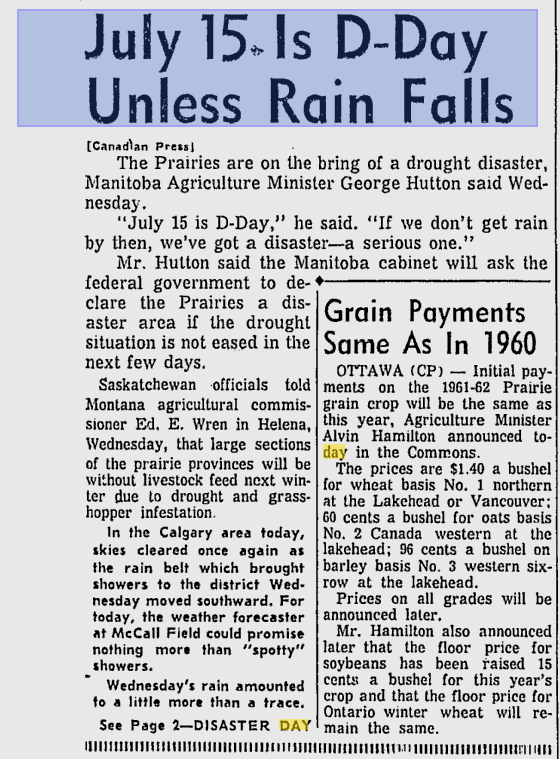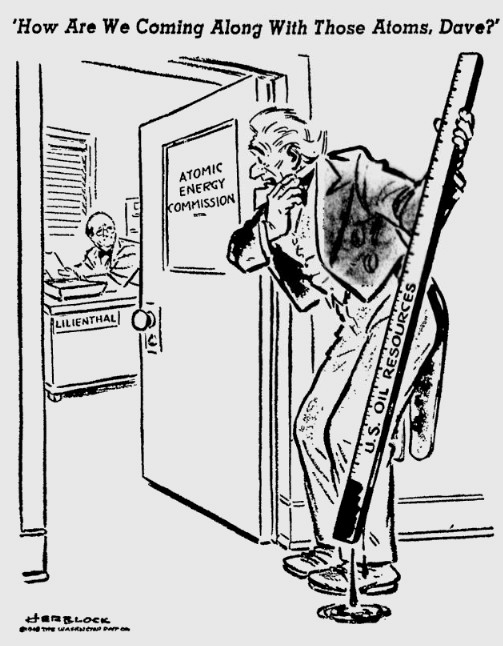
My elementary school teacher must have been wrong when she taught me that plants can’t grow without CO2.
My elementary school teacher must have been wrong when she taught me that plants can’t grow without CO2.
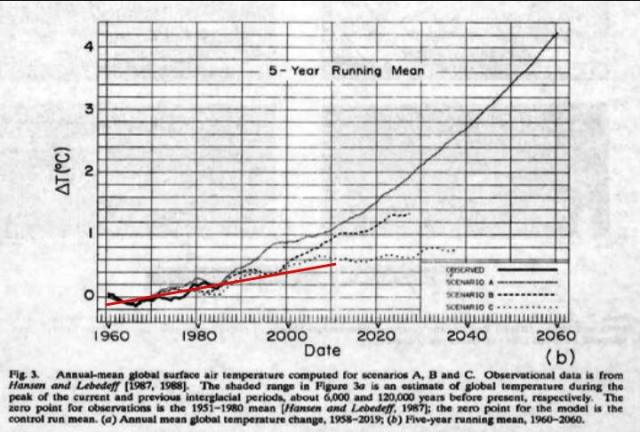
Hansen has been warning us for years that warming will hyper-accelerate as CO2 increases.
Now the argument suddenly switches to decelerated warming and scenario B, because CO2 increments have decreasing effect at higher concentrations. This argument is needed to partially explain the failure of his 1988 forecasts.
Next week he will no doubt go back to accelerated warming as CO2 increases. Whatever story fits the needs of the current narrative.
And his faithful followers still think the Emperor is clothed.
…………………………………………
Apparently he was just kidding about scenario A. It can’t actually happen.
Founded in 1988, the I.P.C.C. is a joint venture of the United Nations Environment Programme and the World Meteorological Organization. Every four or five years, it conducts an exhaustive survey of the available data and issues a multi-volume assessment of the state of the climate. By the time the I.P.C.C. publishes an assessment, it has been vetted by thousands of scientists, as well as by the organization’s hundred and ninety-odd participating governments. The process guarantees that I.P.C.C. reports are conservative—indeed, frequently out of date—since every statement has had to pass review not just in Paris and London but also in Riyadh and Washington. The first I.P.C.C. assessment, issued in 1990, was noncommittal on the source of the warming that had been observed up to that point. In each subsequent report, the organization has moved cautiously but inexorably toward assigning responsibility. Last week’s assessment, the fourth, put the likelihood that human beings are the cause of global warming—now evident from “increases in global average air and ocean temperatures, widespread melting of snow and ice, and rising global mean sea level”—at ninety per cent. It went on to note that temperatures will continue to climb for decades, that heat waves and floods will become more frequent, and that the last time the Arctic and the Antarctic were warmer than they are today for an extended period—before the start of the last Ice Age—global sea levels were at least thirteen feet higher.
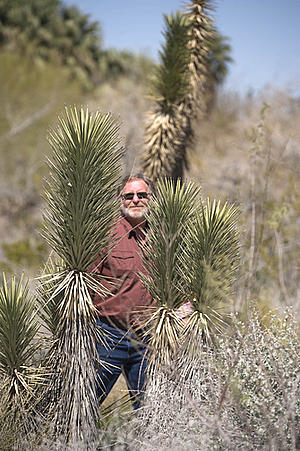
In all, the citizen scientists found 800 baby Joshua trees. They narrowed the field to about 80 of the newest plants that were a foot tall or less, so Barrows could chart their distribution in relation to rising temperatures.
Barrows was not surprised to find evidence that Joshua trees have stopped reproducing in the hotter areas of the park, where yearly low temperatures in the south have increased 3.2 degrees in the past 36 years. But enough recent offspring were found to give him hope for the future.
“What this indicates is more of a hopeful scenario, in that if we as a world of people who consume carbon and expel it, start living more sustainably, then things like protecting Joshua trees in the boundaries of Joshua Tree National Park are possible,” said Barrows, a research ecologist at UC Riverside’s Palm Desert campus.
His findings veer from a 2005 study by Ken Cole of the U.S. Geological Survey showing that Joshua trees likely will be gone from 90 percent of their current range in the next 60 to 90 years.
The spiky trees, plentiful throughout the Southwest and Mexico in the Ice Age, now are limited to Joshua Tree National Park; eastern San Bernardino, Los Angeles and Kern counties; Inyo County; southern Nevada; extreme southwestern Utah; and northwest Arizona.
Cole predicts that all of the Joshua trees in San Bernardino and Riverside counties will migrate to Nevada and the higher elevations of Death Valley by the next century.
The difference, Barrows said, is that Cole’s work covered the entire southwestern United States, while Barrows looked specifically at Joshua Tree National Park.
The park’s location at the southern boundary of their habitat has allowed the plants there to better adapt to drought and high temperatures than those living in less extreme climates, he said.
TUCSON, Ariz., March 28, 2011 /PRNewswire-USNewswire/ — U.S. and European policy to increase production of ethanol and other biofuels to displace fossil fuels is supposed to help human health by reducing “global warming.” Instead it has added to the global burden of death and disease.
Increased production of biofuels increases the price of food worldwide by diverting crops and cropland from feeding people to feeding motor vehicles. Higher food prices, in turn, condemn more people to chronic hunger and “absolute poverty” (defined as income less than $1.25 per day). But hunger and poverty are leading causes of premature death and excess disease worldwide. Therefore, higher biofuel production would increase death and disease.
Research by the World Bank indicates that the increase in biofuels production over 2004 levels would push more than 35 million additional people into absolute poverty in 2010 in developing countries. Using statistics from the World Health Organization (WHO), Dr. Indur Goklany estimates that this would lead to at least 192,000 excess deaths per year, plus disease resulting in the loss of 6.7 million disability-adjusted life-years (DALYs) per year. These exceed the estimated annual toll of 141,000 deaths and 5.4 million lost DALYs that the World Health Organization attributes to global warming. Thus, developed world policies intended to mitigate global warming probably have increased death and disease in developing countries rather than reducing them. Goklany also notes that death and disease from poverty are a fact, whereas death and disease from global warming are hypothetical.
Thus, the biofuel remedy for global warming may be worse than the disease it purports to alleviate.
Ayacucho, had fallen by 1100, in part due to a severe drought that afflicted the Andes for a century or more. In the ensuing turmoil, local chiefs across the Peruvian highlands battled over scarce water and led raiders into neighboring villages in search of food. Hordes of refugees fled to frigid, windswept hideouts above 13,000 feet.
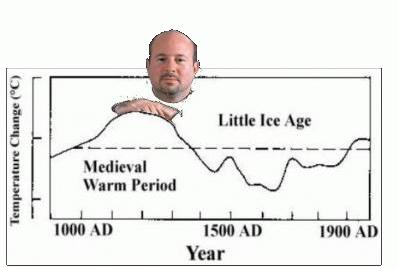
But in the fertile, well-watered valley around Cusco, Inca farmers stood their ground. Instead of splintering apart and warring among themselves, Inca villages united into a small state capable of mounting an organized defense. And between 1150 and 1300, the Inca around Cusco began to capitalize on a major warming trend in the Andes.
As temperatures climbed, Inca farmers moved up the slopes by 800 to 1,000 feet, building tiers of agricultural terraces, irrigating their fields, and reaping record corn harvests. “These surpluses,” says Alex Chepstow-Lusty, a paleoecologist at the French Institute for Andean Studies in Lima who has been studying the region’s ancient climate, allowed the Inca to “free up many people for other roles, whether building roads or maintaining a large army.” In time Inca rulers could call up more conscripts and supply a larger army than any neighboring chief.
http://ngm.nationalgeographic.com/2011/04/inca-empire/pringle-text
h/t to reader Ivan
Compiled by reader Jimbo
Amazon dry season greener
Amazon dry season browner
Avalanches may increase
Avalanches may decrease – wet snow more though
Bird migrations longer
Bird migrations shorter
Bird migrations out of fashion
Boreal forest fires may increase
Boreal forest fires may continue decreasing
Chinese locusts swarm when warmer
Chinese locusts swarm when cooler
Columbia spotted frogs decline
Columbia spotted frogs thrive in warming world
Coral island atolls to sink
Coral island atolls to rise
Earth’s rotation to slow down
Earth’s rotation to speed up
East Africa to get less rain
East Africa to get more rain – pdf
Great Lakes less snow
Great Lakes more snow
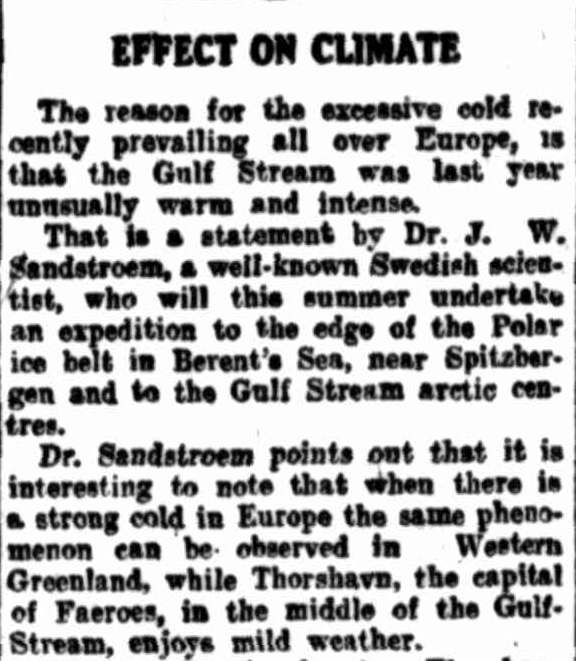
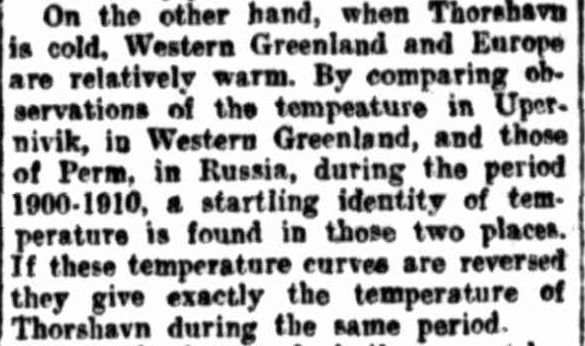
Gulf stream slows down
Gulf stream speeds up a little
Indian monsoons to be drier
Indian monsoons to be wetter
Indian rice yields to decrease – full paper
Indian rice yields to increase
Latin American forests may decline
Latin American forests have thrived in warmer world with more co2!
Leaf area index reduced [1990s]
Leaf area index increased [1981-2006]
Malaria may increase
Malaria may continue decreasing
Malaria in Burundi to increase
Malaria in Burundi to decrease
North Atlantic cod to decline
North Atlantic cod to thrive
North Atlantic cyclone frequency to increase
North Atlantic cyclone frequency to decrease – full pdf
North Atlantic Ocean less salty
North Atlantic Ocean more salty
Northern Hemisphere ice sheets to decline
Northern Hemisphere ice sheets to grow
Plant methane emissions significant
Plant methane emissions insignificant
Plants move uphill
Plants move downhill
Sahel to get less rain
Sahel to get more rain
Sahel may get more or less rain
San Francisco less foggy
San Francisco more foggy
Sea level rise accelerated
Sea level rise decelerated – full pdf
Soil moisture less
Soil moisture more
Squids get smaller
Squids get larger
Stone age hunters may have triggered past warming
Stone age hunters may have triggered past cooling
Swiss mountain debris flow may increase
Swiss mountain debris flow may decrease
Swiss mountain debris flow may decrease then increase in volume
UK may get more droughts
UK may get more rain
Wind speed to go up
Wind speed slows down
Wind speed to speed up then slow down