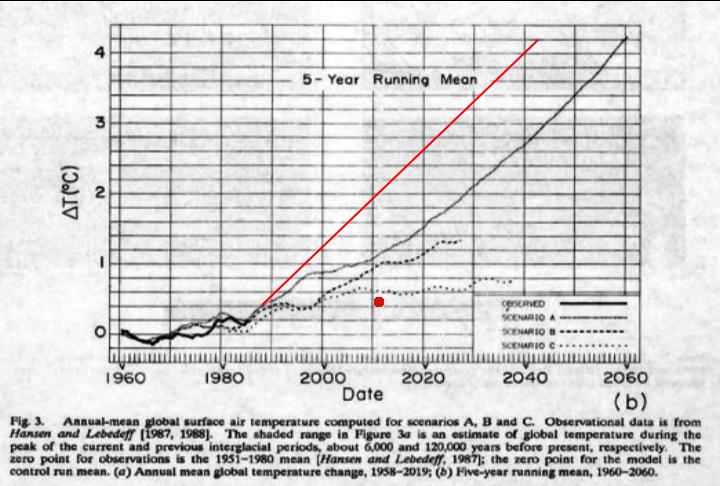
So much for Gavin’s claim of scenario B. These guys should talk to each other and get their story straight.
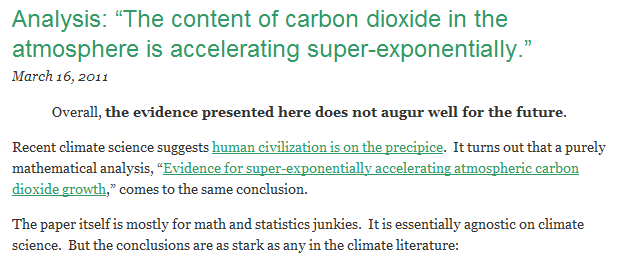
So much for Gavin’s claim of scenario B. These guys should talk to each other and get their story straight.
Now we know that cold fronts have warm air behind them.
When the reflective ice and snow layer is stripped away, it leaves a dark blue sea which absorbs the sun’s rays and aids the heating process. As the ocean gets warmer it is in marked contrast with the polar air above. The heat from the ocean flows up into the polar air, creating a high pressure system. This forces the polar air to move and then pushes frigid air down into Europe and across the globe.
This is a new global warming concept – seawater is wetdry, and freshwater now sinks into a column of denser seawater.
Could global warming be causing recent earthquakes?
These scientists theorize, however, that glacier melts could cause shallower quakes.
Andrew Hynes, a tectonics expert at McGill University, said the issue is not so much the load shift on the Earth’s crust, but rather the increased fluid pressure in the fault that lubricates the rock, allowing the plate to slide.
“All earthquakes, except those produced by volcanic activity, are essentially the unsticking of faults,” he said.
In other words, if you pump fluid into a fault, it can reduce the friction and allow the rock to slide.
Could the stress transfers and the added melt from glaciers inject more fluid into the rocks, creating earthquakes?
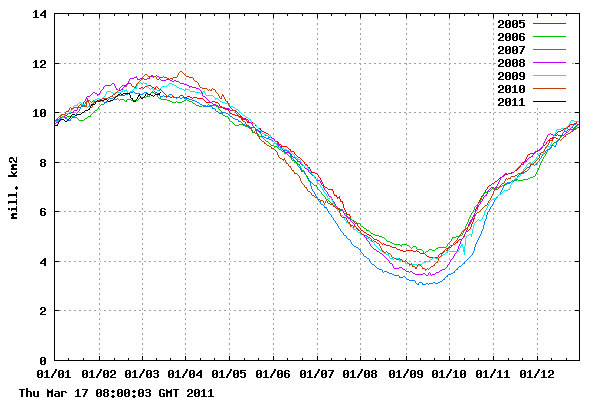
http://ocean.dmi.dk/arctic/icecover.uk.php
In the DMI record, there is an anti-correlation between March ice extent and September ice extent. The three highest years in March (2008 2009 2010) had lower summer minimums, while two of the lowest March extent years (2005 and 2006) had the highest summer minimums. 2011 is in the middle of the group.
In other words, you can’t judge ice/weather conditions in the Arctic based on what is happening in Quebec.