Just pulled up one of my old photos from 1973. Brings back memories of hiking up to Perley Rock in Glacier National Park. The photo overlooks the toe of said Illecellewaet Glacier. I searched for a more recent photo taken from the same vantage point. The recent photo show the glacier has retreated somewhat from the 1973 extent but the toe is still in the more recent photo. Not knowing the scale in the photos, I can’t say how much the retreat is. Old anecdotes and photos from the late 19th century show that the glacier was rapidly retreating in that era.
I know that area very well. That glacier definitely has continued to retreat since the 1970s. And with photographs of it dating back to the 1890s it is one of the best recorded. That is what happens when Little Ice Ages end.
Not sure of its exact status at the moment but the Columbia Icefields in the adjacent Rockies, which has a similarly well documented shrinkage, seems to have stalled in the past few years so maybe the I Glacier has too. Given the snowpack in the region this year so far, I wouldn’t expect any shrinkage this year barring some outbreak of extreme planetary fever this summer.

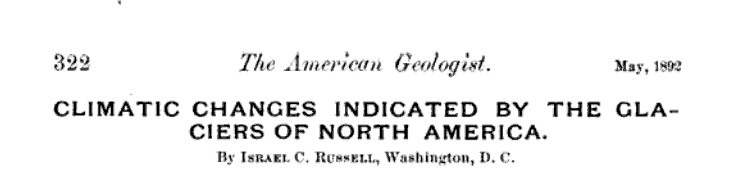
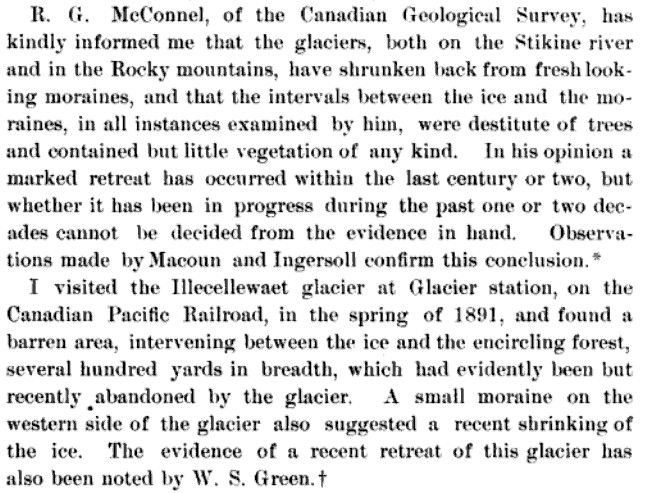


Just pulled up one of my old photos from 1973. Brings back memories of hiking up to Perley Rock in Glacier National Park. The photo overlooks the toe of said Illecellewaet Glacier. I searched for a more recent photo taken from the same vantage point. The recent photo show the glacier has retreated somewhat from the 1973 extent but the toe is still in the more recent photo. Not knowing the scale in the photos, I can’t say how much the retreat is. Old anecdotes and photos from the late 19th century show that the glacier was rapidly retreating in that era.
I know that area very well. That glacier definitely has continued to retreat since the 1970s. And with photographs of it dating back to the 1890s it is one of the best recorded. That is what happens when Little Ice Ages end.
Not sure of its exact status at the moment but the Columbia Icefields in the adjacent Rockies, which has a similarly well documented shrinkage, seems to have stalled in the past few years so maybe the I Glacier has too. Given the snowpack in the region this year so far, I wouldn’t expect any shrinkage this year barring some outbreak of extreme planetary fever this summer.