Random number generators form the basis of much of science and engineering.
For example, you can’t design a nuclear weapon by modeling the behavior of each particle. Rather, they use very sophisticated random number generators to model the average behavior of the particles.
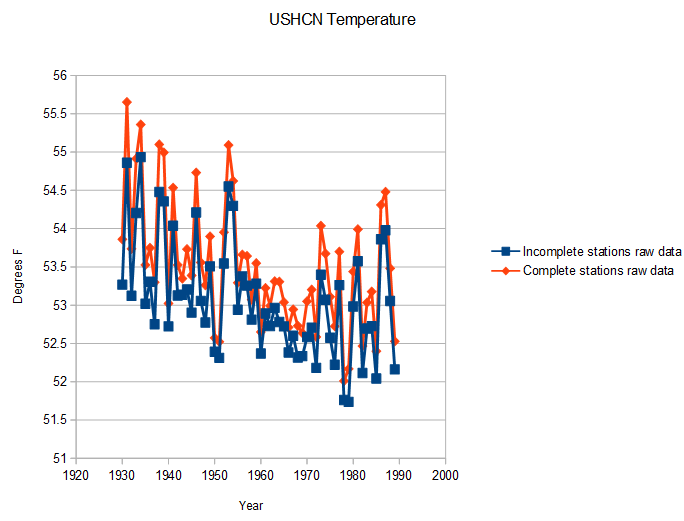
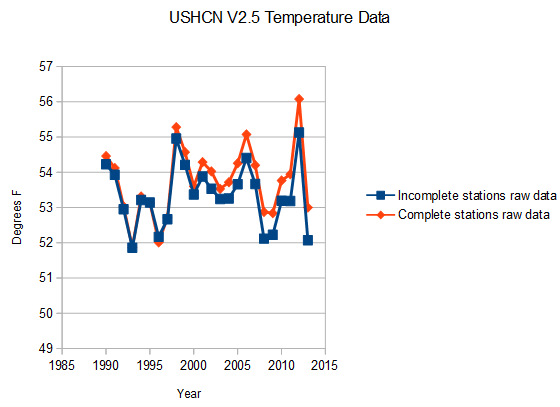
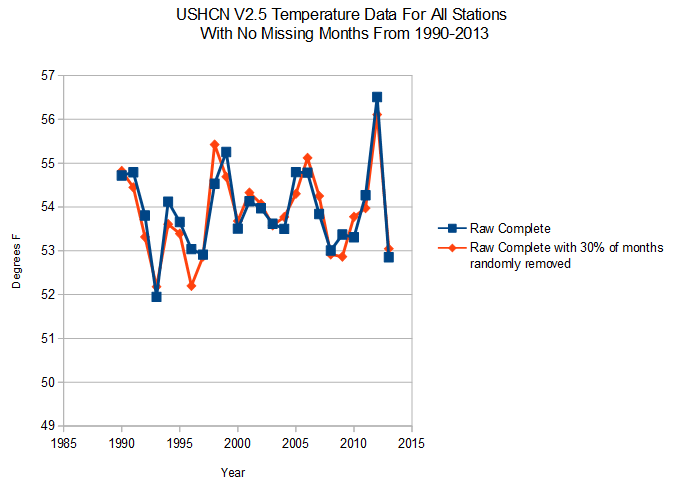
My approach to calculating temperatures from large data sets uses the same principle – I assume that the errors in the data set are distributed randomly and thus do not bias the absolute temperature or trend. That is the normal way which scientists deal with large data sets which have no systematic bias.
Zeke apparently can’t comprehend this, and believes that absolute temperatures can’t be calculated with data sets which have missing data. His approach is to hide the missing data by calculating anomalies for each month. In doing this, he loses vast amounts of important information – like what I have been uncovering.
Zeke and Mosher think I should the same grossly flawed methodology which they use, and thus come up with the same wrong numbers which they do.
If there is a systematic human bias behind the post-1990 station data loss, their approach will not find it – and will in fact cover it up.