Ancient Climate Change: When Palm Trees Gave Way To Spruce Trees
ScienceDaily (June 17, 2009) — For climatologists, part of the challenge in predicting the future is figuring out exactly what happened during previous periods of global climate change.
One long-standing climate puzzle relates to a sequence of events 33.5 million years ago in the Late Eocene and Early Oligocene. Profound changes were underway. Globally, carbon dioxide levels were falling and the hothouse warmth of the dinosaur age and Eocene Period was waning. In Antarctica, ice sheets had formed and covered much of the southern polar continent.
Apparently Dinosaur farts were actually keeping them alive.
But what exactly was happening on land, in northern latitudes? When and how did Northern glaciation begin, and what does this knowledge add to the understanding of the relationship between carbon dioxide levels and today’s climate?
An international team that included Dr. David Greenwood, an NSERC-funded researcher at Brandon University, now provides some of the very first detailed answers, and they come from an unusual source.
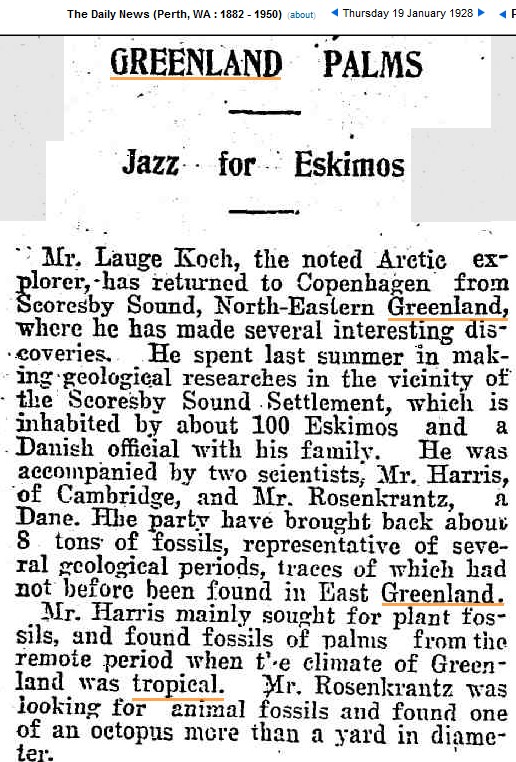
“Fossils of land plants are excellent indicators of past climates,” said Dr. Greenwood. “But the fossil plant localities from the Canadian Arctic and Greenland don’t appear to record this major climate change, and pose problems for precisely dating their age, so we needed to look elsewhere.“
Sucks when the data doesn’t fit the theory.
Ancient Climate Change: When Palm Trees Gave Way To Spruce Trees