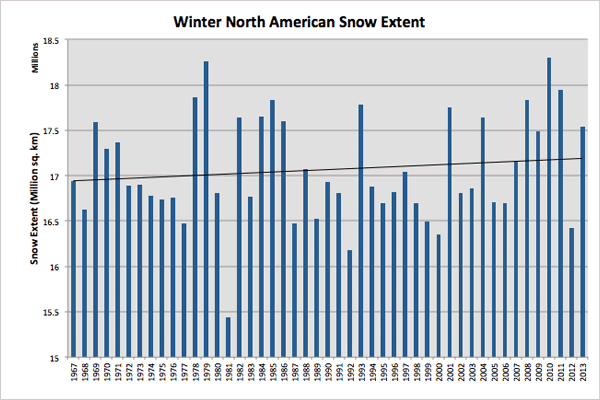

http://climate.rutgers.edu/snowcover/images/namgnld_season1.gif
The long term trend is also upwards. Note the two peaks in the late 1970s and at present.
http://climate.rutgers.edu/snowcover/images/namgnld_season1.gif
The long term trend is also upwards. Note the two peaks in the late 1970s and at present.
Some people imagine Antarctica to be like this :
[youtube=http://www.youtube.com/watch?v=W1wpiduHWbo]
They visualize that either through man caused global warming, or man caused global cooling, the ice sheet is going to slide down a steep slope into the ocean and flood the entire planet.
A different form of global climate disruption – he was warning us of a human induced ice age.
[youtube=http://www.youtube.com/watch?v=pG41xDxrzI8]

NSIDC released the map above in early August, showing ice older than one year as turquoise or green. Any of that ice which survives the winter will be classified as multi-year ice next spring (MYI.)
But there was a large reduction in extent between release of that map and now. How did that affect the potential for MYI?
It has been more than two years since any hurricane (Ike) made landfall in the US – one of the longest periods on record without a strike.
But the 1880s (before global climate disruption) were very different – twenty-six hurricanes made landfall.

Reader “Hal” posted this comment in response to my “Coldest Summer in Chicago” article :
OOOOO a cold summer. How about looking at overall trends. You might see that it is warming. Don’t do big oils bidding. Educate yourself.
Fair enough – let’s do that.
Since the start of the NCDC record, summer temperatures in Illinois are falling at a rate of 0.2 degrees F per century.


I superimposed the NCEP temperature forecast map on the NHC Igor forecast map. It looks like Igor will be stalled in Baffin Bay for several days, and may produce large amounts of snow in Greenland and the Eastern Canadian Arctic.

There is a lot of concern being voiced by lawmakers who voted to control the climate through higher taxes.
http://articles.latimes.com/2010/sep/21/nation/la-na-environmental-election-20100921
Key donors, citing the fate of the global warming legislation, are not contributing as much money as they did in 2008. “One of them said, ‘I thought our side won the last election, and it doesn’t seem to make any difference,’ ” said Rodger Schlickeisen, president and chief executive of the Defenders of Wildlife Action Fund. At the same time, some Democratic leaders accuse environmentalists of failing to back members in tough districts who took a risk voting for controversial legislation to cap carbon emissions.