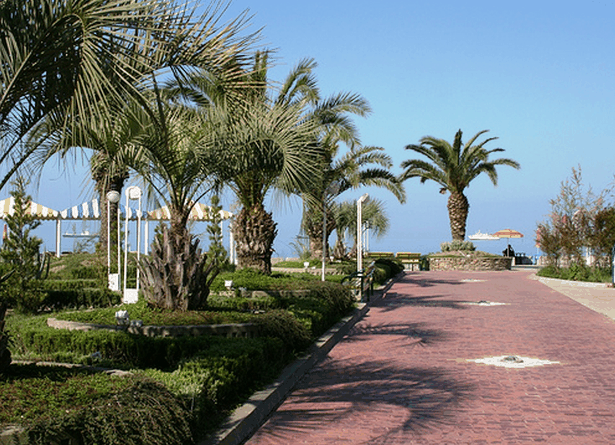
Climate experts were expecting to see snow on Soch’s palm trees
The lack of snow convinced them that skiing is a thing of the past
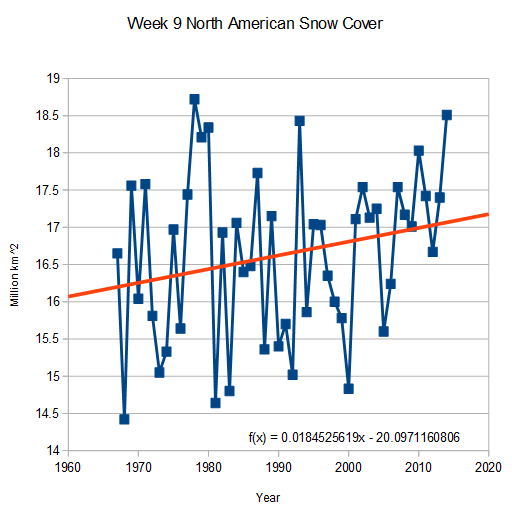
Experts also determined that a warm week in Sochi in February was indicative of a climate heating out of control.
Climate experts were expecting to see snow on Soch’s palm trees
The lack of snow convinced them that skiing is a thing of the past
Experts also determined that a warm week in Sochi in February was indicative of a climate heating out of control.
The conversation on the Venus thread has gone way past my tolerance for stupid.
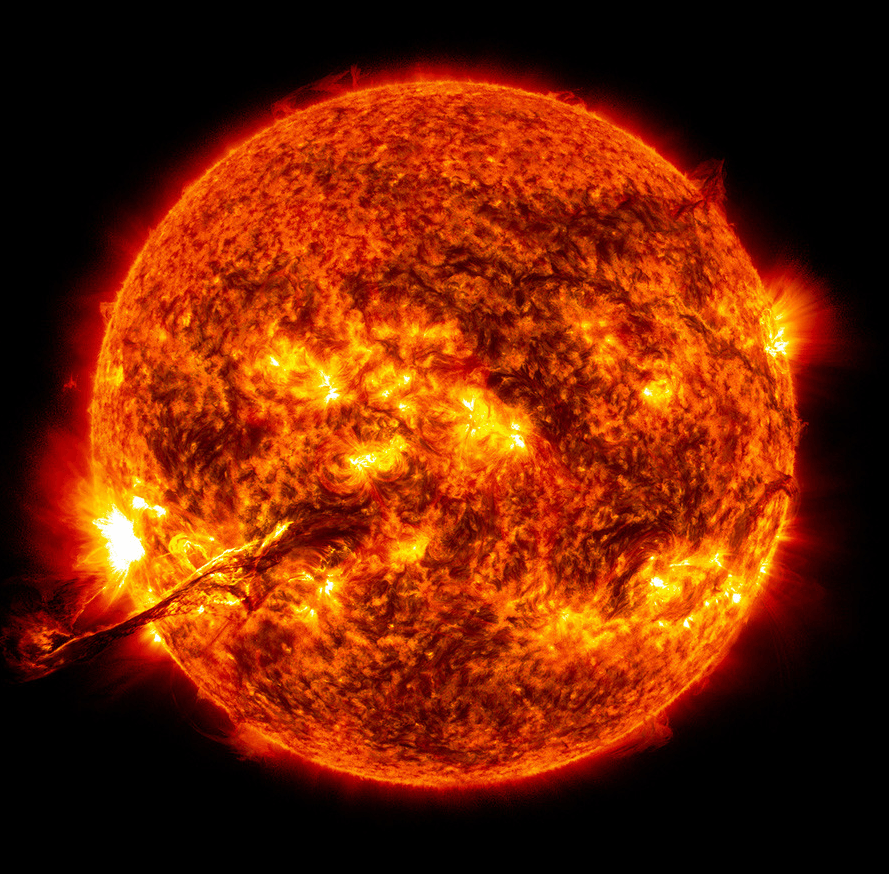
Venus is not a closed system. It is located near this object – which provides a steady stream of shortwave radiation to the top of the Venusian atmosphere.
The ideal gas law is PV=nRT . R is a constant. P(ressure) and n(umber of molecules) are essentially constants, because the n(umber) of molecules in the atmosphere and Venusian gravity doesn’t change much over short time periods. The atmospheric P(ressure) is fixed by the weight of the atmosphere, which doesn’t change.
The only things that can change in the Venusian system are V and T. V(olume) is determined by the height of the atmosphere, which remains fixed due to the steady stream of solar radiation that keeps the molecules in the atmosphere vibrating. So T(emperature) at the surface remains constant. During the long Venusian night (thousands of hours) the temperature doesn’t drop. It behaves nothing like a greenhouse.
If the Sun turned off, the height of the atmosphere would shrink, as would the temperature. Eventually the atmosphere would freeze, so there would be no gas volume and the temperature would approach absolute zero.
It is similar on Earth. Our average surface temperature remains relatively constant because we receive a steady stream of solar radiation and the number of molecules in the atmosphere doesn’t change much over short time periods. What makes Earth different is that we have much less cloud cover, and we have oceans with a large heat capacity. Unlike Venus, the albedo of Earth can change due to variations in snow/ice and cloudiness. Ocean circulation also has an effect on temperature, so Earth’s average surface temperature can vary +/- 10C.
Comment from Omnologos :
What would be the temperature at the bottom of the Mediterranean if the sea evaporated again, as it has done in the past?
As every student of planetary atmospheres know, the existence of a lapse rate is a property of every troposphere – it even applies deep down in the Jupiter’s hydrogen ‘ocean’. This has nothing to do with the presence of greenhouse gases.
Therefore once the Cytherean tropopause is determined, together with the average lapse rate, the temperature at the surface can be computed, with or without CO2.
If the GHGs have any effect, it has to be seen in the height of the tropopause.
In fact one could think heat as exchanged via conduction (in the planet), convection (in the troposphere) and radiation (above the troposphere). Even pierrehumbert’s planetary atmospherics book says that radiation is in first approximation irrelevant when studying the troposphere.
JANUARY 18, 2013
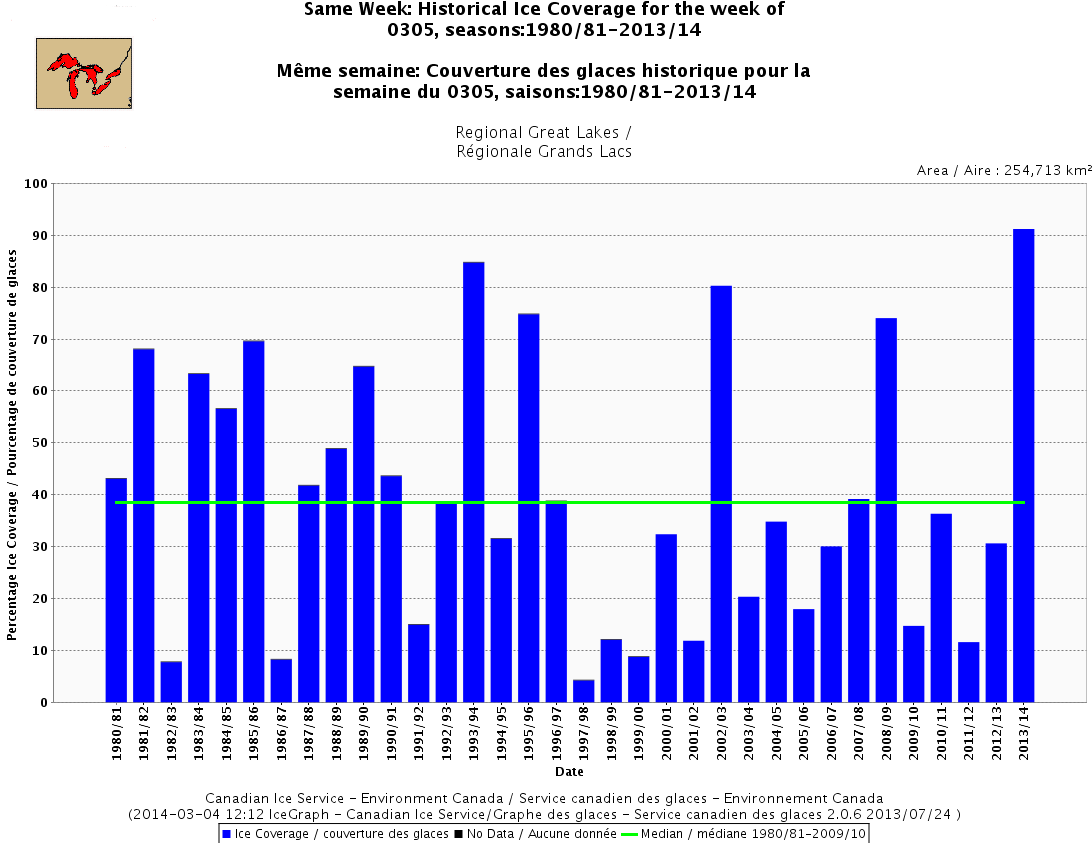
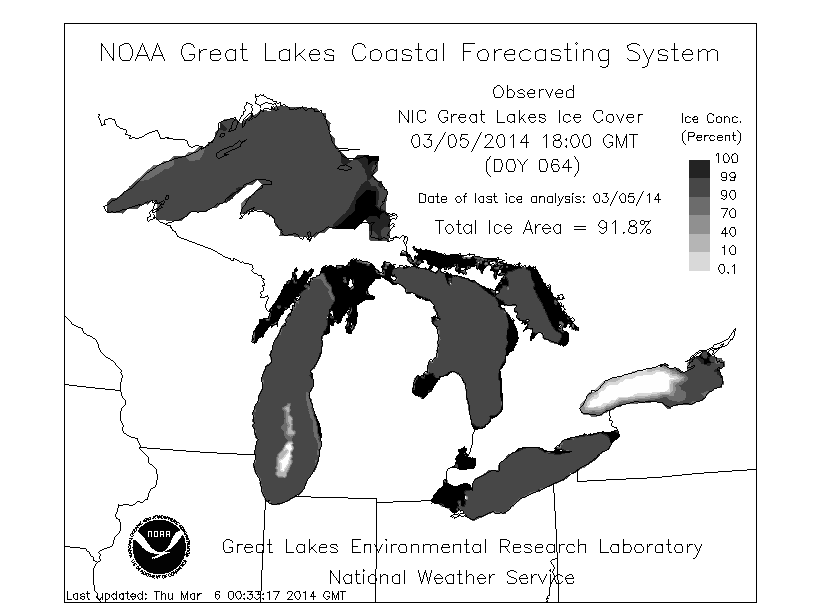
warmer winter air is causing a shorter duration of ice cover. In fact, the amount of ice covering the lakes has declined about 71 percent over the past 40 years. Last year, only 5 percent of the lakes froze over –- compared to 1979 when ice coverage was as much as 94 percent.
In order to be a climate alarmist, you have to get either your entire brain removed, or at least the part which contains your conscience.
We all know Venus is hot.
A few billion years ago, Venus had a collision with something that turned it on its side and slowed its rotation way down. One day on Venus is almost six Earth months long.
Because of Venus’ proximity to the Sun and its very long afternoons, it never developed oceans. Because it never developed oceans, it has a huge amount of CO2 in its atmosphere. (On Earth most of the CO2 is trapped in limestone, which forms in water.)
The very large amount of CO2 in Venus’ atmosphere has created very high surface pressures, which causes very high temperatures. PV = nRT
The difference between Earth and Venus is that we have oceans, which allowed limestone to form, and keeps our atmospheric pressure down to 1/100th of that on Venus. Thus Earth is much cooler.
Hansen got his PhD for writing a completely nonsensical theory about Venus heat. My dissertation took five minutes. Can I have my Columbia PhD now?
It is time to introduce some actual science into the world of climate science.
I have had the great privilege of spending time with CSU’s Bill Gray recently, and he has been explaining to me what causes the climate fluctuations we witness.
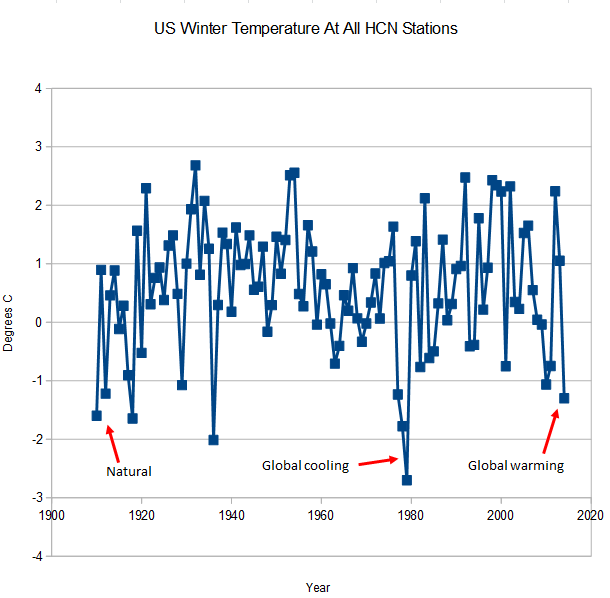
Of course it has nothing to do with CO2, and it is all natural.
Dr. Gray’s theory in a nutshell, is that surface temperatures are controlled by the amount of cold water upwelling from the deep oceans, and that is driven by cyclical changes in ocean surface salinity – which create density gradients that control vertical and horizontal circulation.
It makes very good sense, and there will be a lot of supporting material posted here soon to explain it in detail.
Great Lakes may break the all-time ice coverage record of 94% by Friday morning
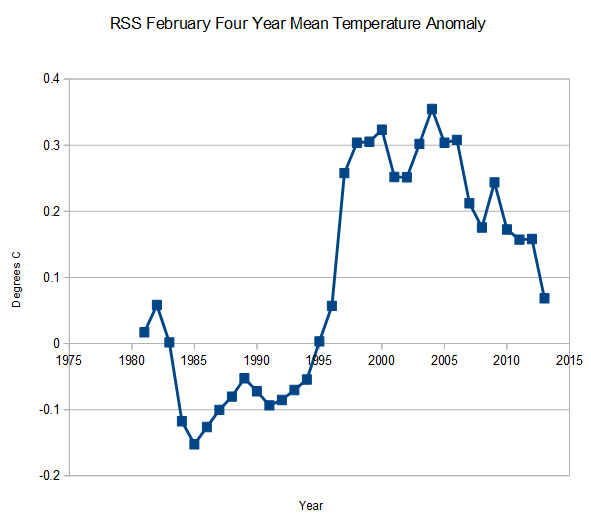
Global temperatures have been plummeting, and are almost back to where they were at the start of the satellite era – during the coldest winter ever in 1979. Yet NOAA and the rest of the climate liars are trying to keep the global warming scam alive.
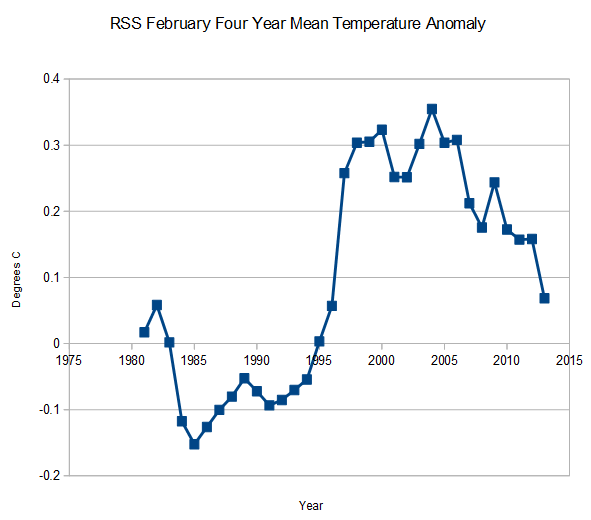
rss_monthly_msu_amsu_channel_tlt_anomalies_land_and_ocean_v03_3.txt