Long, hot summer: Wildfires thrive on drought, heat and wind
Hundreds of homes have burned in Colorado and other Western states, and it could be just the start.
By Bettina Boxall, Los Angeles Times
July 2, 2012, 5:00 a.m.
After several years of relatively benign fire seasons, the West is headed into a hot, dry summer of potentially ferocious blazes like the ones that have scorched Colorado in recent weeks.
Nonsense. There is a very strong flow of monsoonal moisture pouring into the southwest now which normally continues for the rest of the summer. The fire season here is May and June, and sometimes in the autumn.
The wildfires that have already destroyed more than 700 homes and outbuildings along Colorado’s Front Range and blackened hundreds of thousands of acres of New Mexico wilderness are not likely to be the season’s last for one simple reason: drought.
With 400 to 600% of normal precipitation forecast along the Front Range and in New Mexico’s Gila wilderness, I think Bettina doesn’t know what she is talking about.
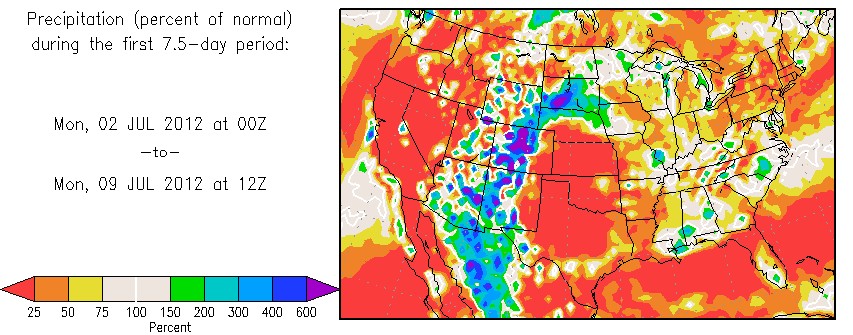
10-Day Precipitation Outlook for the Conterminous U.S.
“This year, fires are going big,” Tom Harbour, fire and aviation director for the U.S. Forest Service, said last week. “We’ve had some really extraordinary runs … fires that are running 10 miles in lighter fuels. Fires that are running miles in forested areas.”
A dry La Nina winter and a paltry, quick-melting snowpack in much of the West have set the stage for another incendiary summer, compounding the effects of a long-term drought that has gripped the seven-state Colorado River basin for more than a decade.
Long, hot summer: West’s wildfires feed off drought, heat and wind – latimes.com
Complete crap. She started out the article mentioning that we have had several years of benign fire seasons. That was because we have been having very heavy snowfall. Lake Powell has gained 55 feet of water since 2004, because of record snowmelt and runoff in the Colorado River Basin.
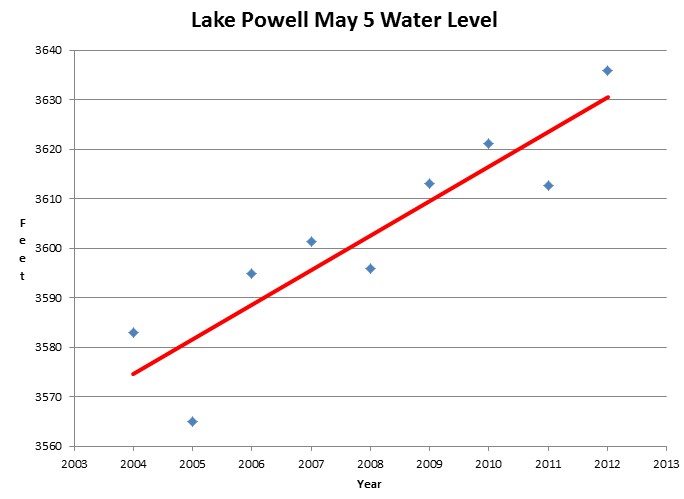
Lake Powell Water Database