Sea level rise brings to mind the threat of coastal flooding from menacing storm surges, with growing risks to shore-based infrastructure — but a new study indicates there’s another sea level rise-related threat that has so far slipped under the radar.
According to the study, as sea level rises, so will groundwater levels, and since underground infrastructure — including sewer pipes and utility equipment — was built with historical groundwater levels in mind, this could lead to expensive headaches for coastal communities.
A projection for what New Haven would look like after three feet of sea level rise. Blue areas are at or below three feet in elevation. Click on the image for a larger version, or explore the interactive maps from Climate Central’s Surging Seas project.
The study, by the U.S. Geological Survey (USGS) and Yale University, looks at the threat to New Haven, CT, Yale’s home city. Sea level rise may indeed raise groundwater levels significantly underneath the city, according to the study, leading to problems not just with pipes and pumps and buried cables but also with the arch-nemesis of many New England homeowners — basement flooding.
“Scenarios for the resulting higher groundwater levels have the potential to inundate underground infrastructure in lowlying coastal cities,” the study states.
Since the 1960s, sea level has risen by about 0.38 feet, at a rate of about .008 feet per year, at Bridgeport, CT, about 20 miles southwest of New Haven. Because the land in this area is slowly sinking at the same time the sea is rising, the amount of local sea level rise is expected to be greater here than in some other parts of the country. According to the study, some climate change scenarios show that sea level may rise by nearly three feet above current levels by 2080.
Why Groundwater is Another Sea Level Rise Concern | Climate Central
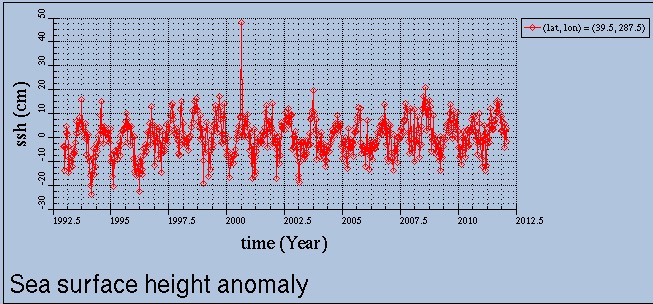
Satellites show almost no sea level rise around New Haven over the last 15 years- see the CU graph below. The perceived sea level rise is due to subsidence caused by groundwater pumping. If the groundwater was replaced, the land would stop sinking and the perceived sea level rise would stop. He has his thinking cap on exactly backwards.
All of the other crap in this article is mindless speculation. The IPCC forecasts only 18-59 cm of sea level rise this century. Freedman is pulling alarmist numbers and logic out from where the sun never shines, and not checking his facts.
h/t to Marc Morano