The article below is Joe Bastardi’s response to Tim McCarver’s claim that global warming is causing more home runs because warm air is thinner.. The only thing I would add is that part of his theory seems easy enough to test. Are there more proportionally home runs scored during afternoon games than night games?
————————————————————————————-
Guest post by Joe Bastardi
The recent comment by Tim McCarver that climate change is leading to more home runs and a defense of it in some circles shows two things in addition to what is an absurd comment.
- The bologna about climate change has gotten so bad, it is in the psyche of people even broadcasting sporting events and
- the people defending this will ignore the overwhelming facts to push their points.
First of all it is an absurd comment along the lines that one can argue changes in uniforms are just as much responsible. Every team has changed its uniform from the old days, they are not exactly the way they were, they may be made of different material, heck I have seen some games where people play in shorts. Its one of those comments where someone can say anything and then say, okay, prove to me absolutely its not true. “ So Mr, Jones, just when did you stop spying on your neighbor” , as if you were, but then then the person says, okay prove it.
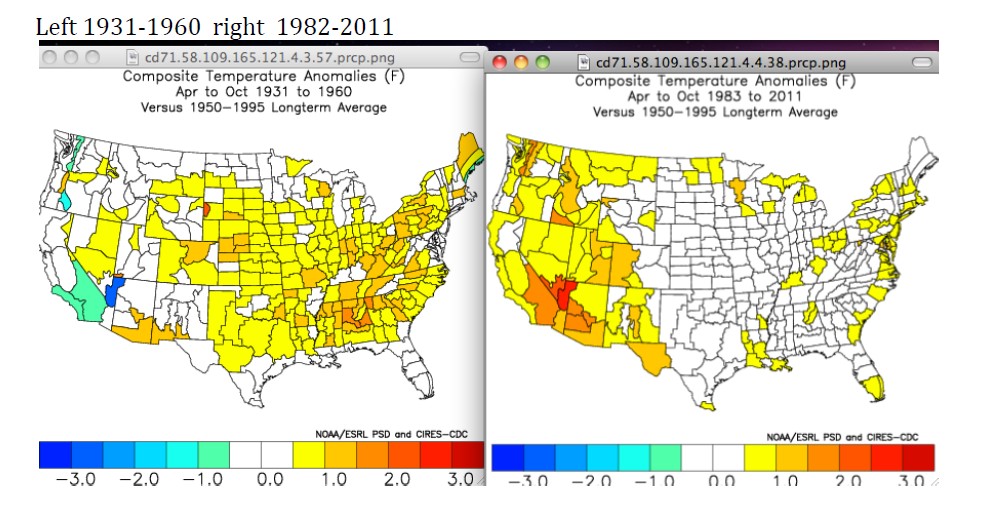
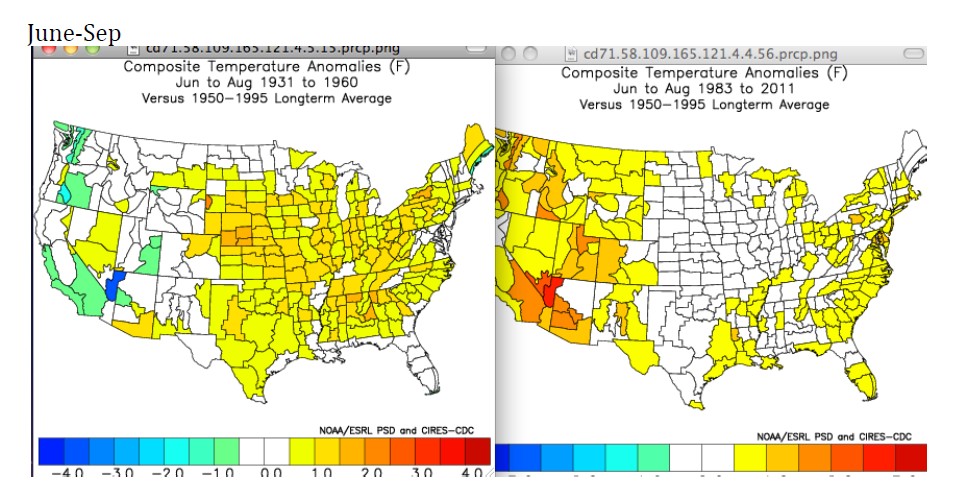
So again, you want to defend that idea against the fact that stadiums are smaller, players are bigger and stronger, there are more teams leading to more variance in strength, on paper it seems absurd, because it is. And the data backs me up. In the period 1931-1960, when the pdo and amo were in similar cyclical phases are they are now ( the pdo was warm till the late 40s, then it flipped, it was warm 1978-2007 then flipped, the atlantic overall is similar to the way it was in the 50s now, so in the whole comparison, we are in the latter stages of the warm cycle we were in the 50s) the comparison of temps plainly shows the weather was warmer in baseball season ( I will use April to October, for one, then June-August for the other)
Continue reading →