NOAA’s extreme weather expert, Martin Hoerling, slammed Hansen on Andy Revkin’s blog yesterday.
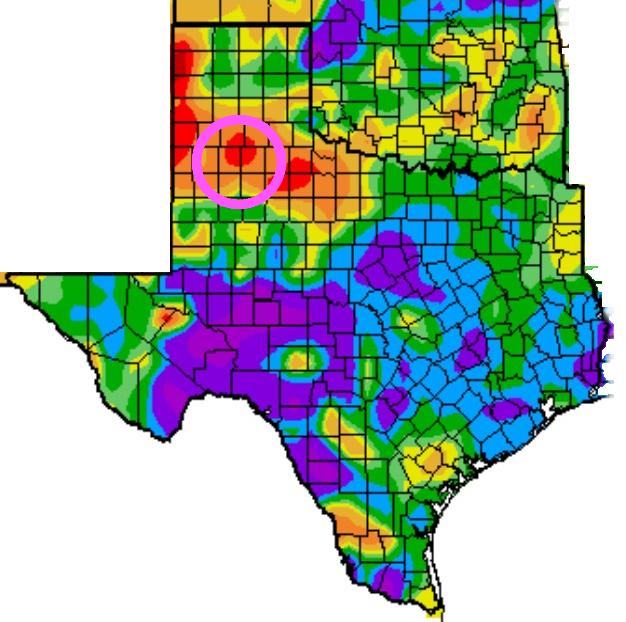
“Over the next several decades, the Western United States and the semi-arid region from North Dakota to Texas will develop semi-permanent drought, with rain, when it does come, occurring in extreme events with heavy flooding. Economic losses would be incalculable. More and more of the Midwest would be a dust bowl. California’s Central Valley could no longer be irrigated. Food prices would rise to unprecedented levels.”
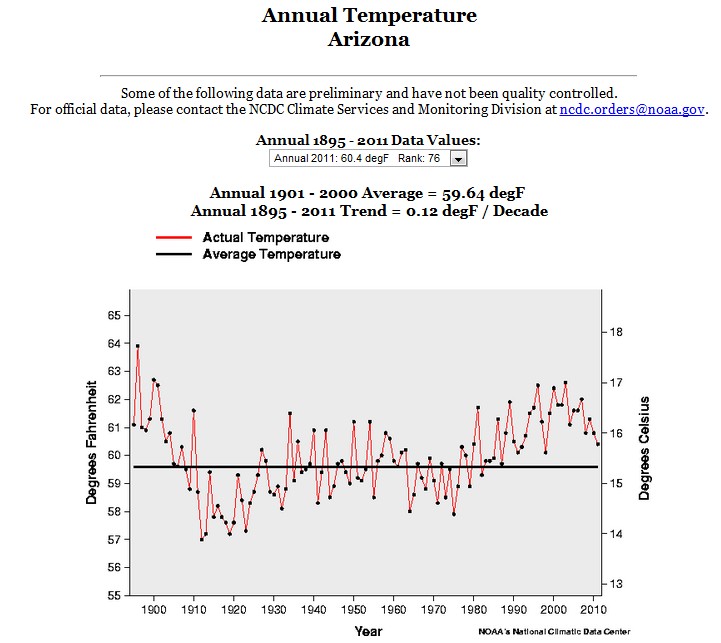
He doesnt define “several decades,” but a reasonable assumption is that he refers to a period from today through mid-century. I am unaware of any projection for “semi-permanent” drought in this time frame over the expansive region of the Central Great Plains. He implies the drought will be due to a lack of rain (except for the brief, and ineffective downpours). I am unaware of indications, from model projections, for a material decline in mean rainfall. Indeed, that region has seen a general increase in rainfall over the long term during most seasons (certainly no material decline). Also, for the warm season when evaporative loss is especially effective, the climate of the central Great Plains has not become materially warmer (perhaps even cooled) since 1900. In other words, climate conditions in the growing season of the Central Great Plains are today not materially different from those existing 100 years ago. This observational fact belies the expectations from climate simulations and, in truth, our science lacks a good explanation for this discrepancy.
The Hansen piece is policy more than it is science, to be sure, and one can read it for the former. But facts should, and do, matter to some. The vision of a Midwest Dustbowl is a scary one, and the author appears intent to instill fear rather than reason.
The article makes these additional assertions:
“The global warming signal is now louder than the noise of random weather…”
This is patently false. Take temperature over the U.S. as an example. The variability of daily temperature over the U.S. is much larger than the anthropogenic warming signal at the time scales of local weather. Depending on season and location, the disparity is at least a factor of 5 to 10.
Continue reading →