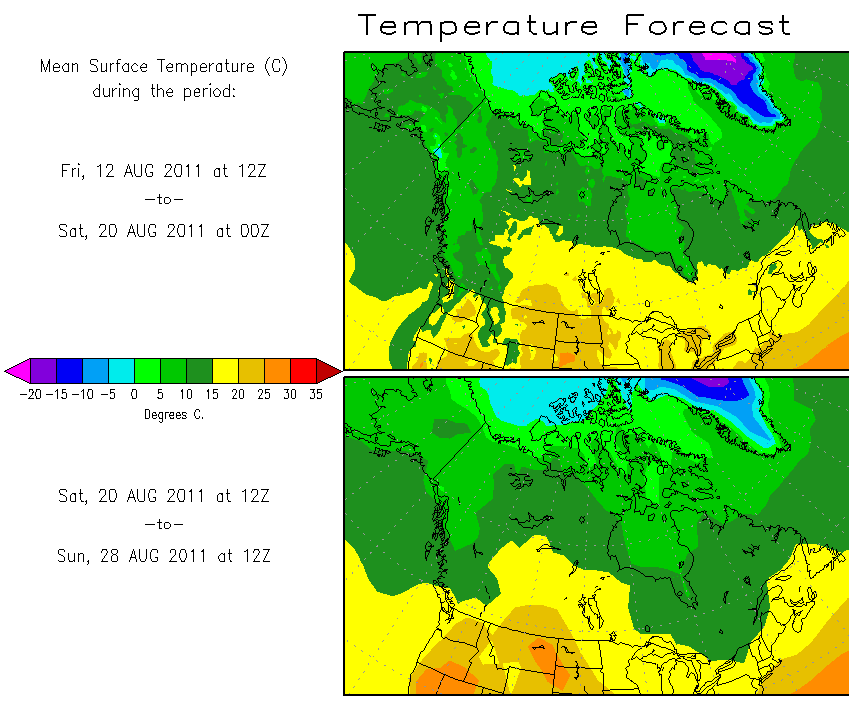
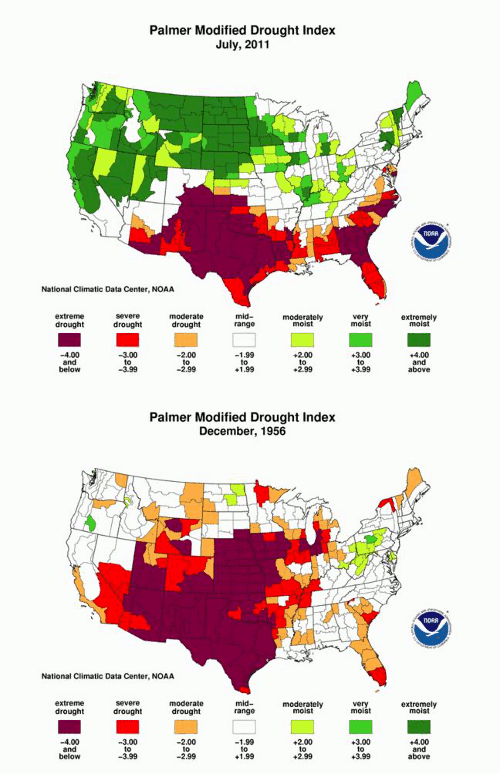
NOAA said yesterday that the current drought is the worst in their records, but there is no truth to that statement.
NOAA said yesterday that the current drought is the worst in their records, but there is no truth to that statement.

There are currently 100,000 Manhattans of sea ice in the Arctic.
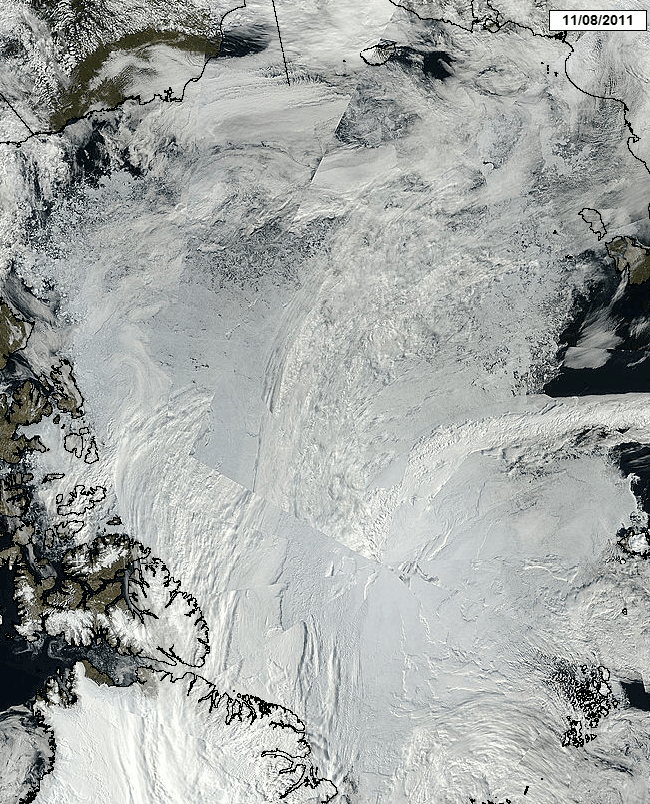
Sea level may not go up much any time soon. The Arctic may go through a decade or so without melting any more, temperatures may be going down. But in about 50 years the $hit is really going to hit the fan.
Arctic ice melt could pause in near future, then resume again
August 11, 2011
BOULDER—Although Arctic sea ice appears fated to melt away as the climate continues to warm, the ice may temporarily stabilize or somewhat expand at times over the next few decades, new research indicates.
Why is this loser running as a Republican?
Former Minnesota Gov. Tim Pawlenty, who is seeking to boost his flagging campaign, instead went after Minnesota Rep. Michelle Bachmann in the debate, dismissing her record of accomplishments and results in Congress as “nonexistent.”
“That’s not going to be good enough for our candidate for president of the United States,” he said. “The American people are going to expect more and demand more. And in fact we need somebody who can contrast with Barack Obama on results.”
We are from the government. We are here to help you.
Researchers try to spell out a rational plan for so-called assisted colonization in the face of climate change
By Summit VoiceSUMMIT COUNTY — As global warming causes ever-greater disruption to plants and animals, conservation biologists are having serious discussions about how and when to relocate species so they they can survive for the long-term.
If society values them enough, some species threatened by climate disruption could benefit from immediate relocation, especially small and vulnerable populations that need time to grow before risking translocation losses, an international group of researchers wrote in a climate change journal article published this week.
The paper is an effort at creating a pragmatic framework for deciding when, if ever, to move species in the face of climate change. University of Queensland and United States Geological Survey researchers also contributed to the research.
“As our climate changes more rapidly than species can adapt or disperse, natural resource managers increasingly want to know what adaptation options are available to help them conserve biodiversity,” said Dr. Eve McDonald-Madden, of the Commonwealth Scientific and Industrial Research Organization.
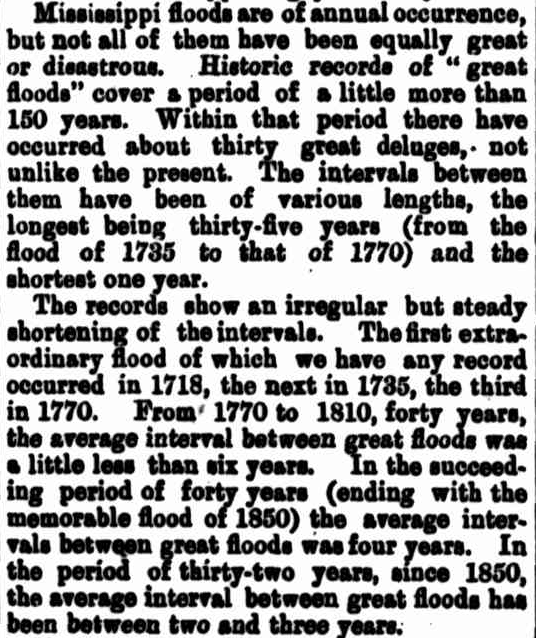
They understood that the floods were getting worse due to the levees.
Now, we have geniuses like Joe Romm who would attribute it to CO2 and describe it as a thousand year flood every five years.

Al Gore Rants Against Global Warming Doubters
Speaking at the Copenhagen climate change summit, Mr Gore said new computer modelling suggests there is a 75 per cent chance of the entire polar ice cap melting during the summertime by 2014.
No doubt this year’s drought is much worse than the century long drought of the 12th century.
Medieval Drought and Temperatures in Southwestern North
AmericaThe medieval period was characterized by widespread and regionally severe, sustained drought in western North America.
Proxy data documenting drought indicate centuries-long periods of increased aridity across the central and western U.S. In the Colorado and Sacramento River basins, reconstructions show decadal periods of persistently below average flows during several intervals including much of the 9th, 12th, and 13th centuries . The 12th century episode, also reflected in precipitation and drought extent, was particularly severe and persistent and was associated with a peak in solar irradiance and nadir in volcanic activity.
http://www.pnas.org/content/early/2010/12/06/0911197107.full.pdf+html
Being a lefty means never having to tell the truth about anything. They never had floods or fires before.
By Lisa Anderson
NEW YORK (AlertNet) – North American Indian tribes, who have lived close to the land for generations, are disproportionately affected by climate change, according to a study released by the National Wildlife Federation.
“Extreme weather events can be devastating for tribes, many of whom already suffer from lack of resources,” said Amanda Staudt, a scientist with the National Wildlife Federation, during a conference call on the report.
Staudt noted that there have been eight weather and climate disasters in the first half of 2011, including flooding of the Missouri River in May, which left much of the Crow nation under water, and June wildfires in Arizona that consumed 21,000 acres belonging to the White Mountain Apache tribe.
Staudt warned that these kinds of events – which have cost some $32 billion in the first seven months of the year in North America – will become increasingly frequent in the years ahead and pose particular challenges to Indian tribes.
“Power disruptions from storms, long dry spells and heavy floods can be difficult to recover from, especially for people who live close to the land and have limited economic resources,” said Garrit Voggesser, senior manager of the National Wildlife Federation Tribal Lands Program.
Voggesser pointed out that while Native American tribes have coped for millennia with climate change – albeit not as acute and severe as currently experienced – tribal boundaries and treaties now limit their ability to move to escape severe effects of climate change.
h/t to Dave G