Apparently 130 degree weather was common in Iraq when CO2 levels were lower.
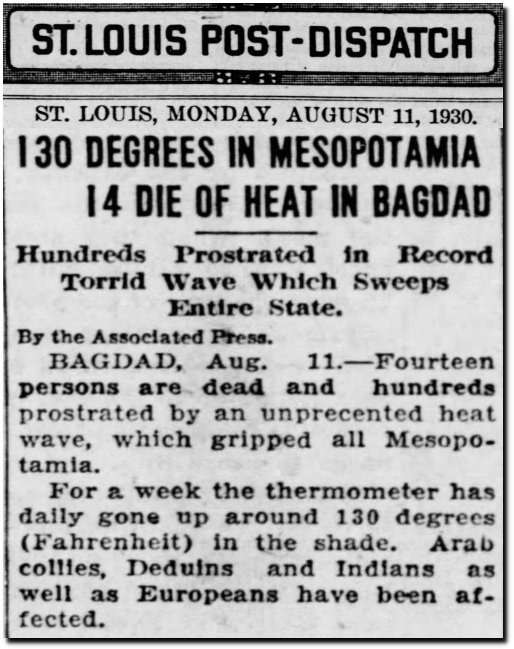
11 Aug 1930, Page 17 – St. Louis Post-Dispatch at Newspapers.com
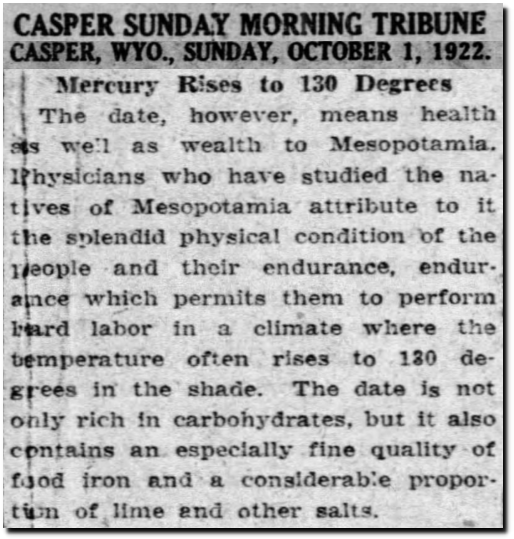
01 Oct 1922, 44 – Casper Star-Tribune at Newspapers.com
h/t Don Penim
Apparently 130 degree weather was common in Iraq when CO2 levels were lower.
11 Aug 1930, Page 17 – St. Louis Post-Dispatch at Newspapers.com
01 Oct 1922, 44 – Casper Star-Tribune at Newspapers.com
h/t Don Penim
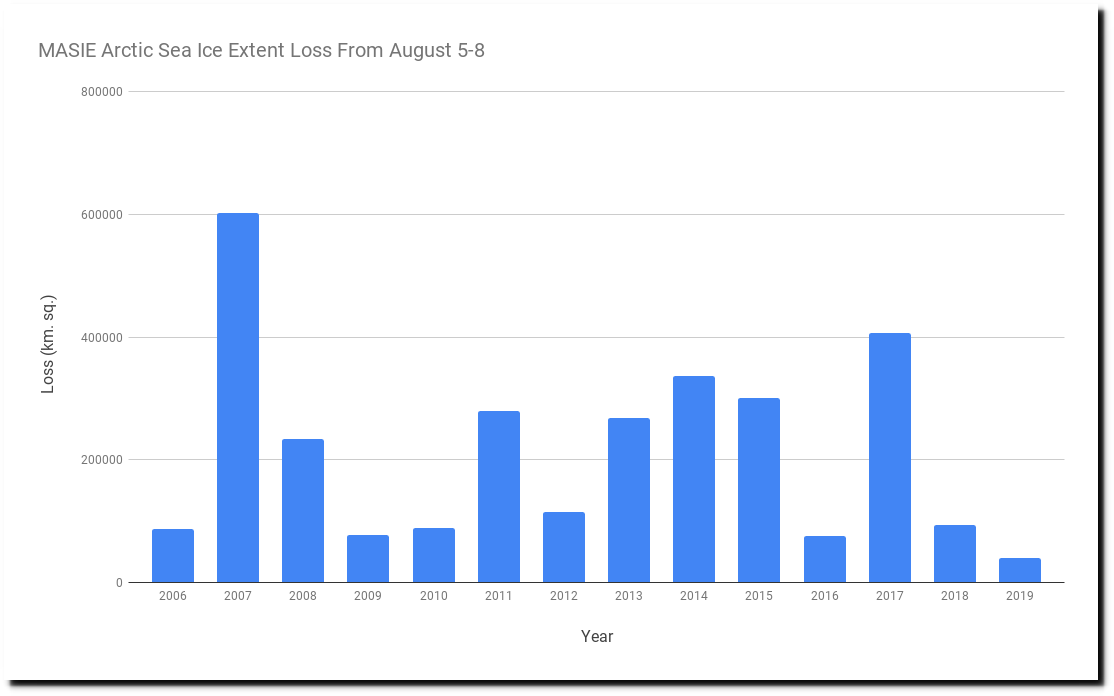
Despite endless hysterics based on cherry-picking a few warm days somewhere in the Arctic, there is nothing happening there. The MASIE record extends back to 2006, and every day in their record is shown in the graph below. The graph shows annual cycles with no trend.
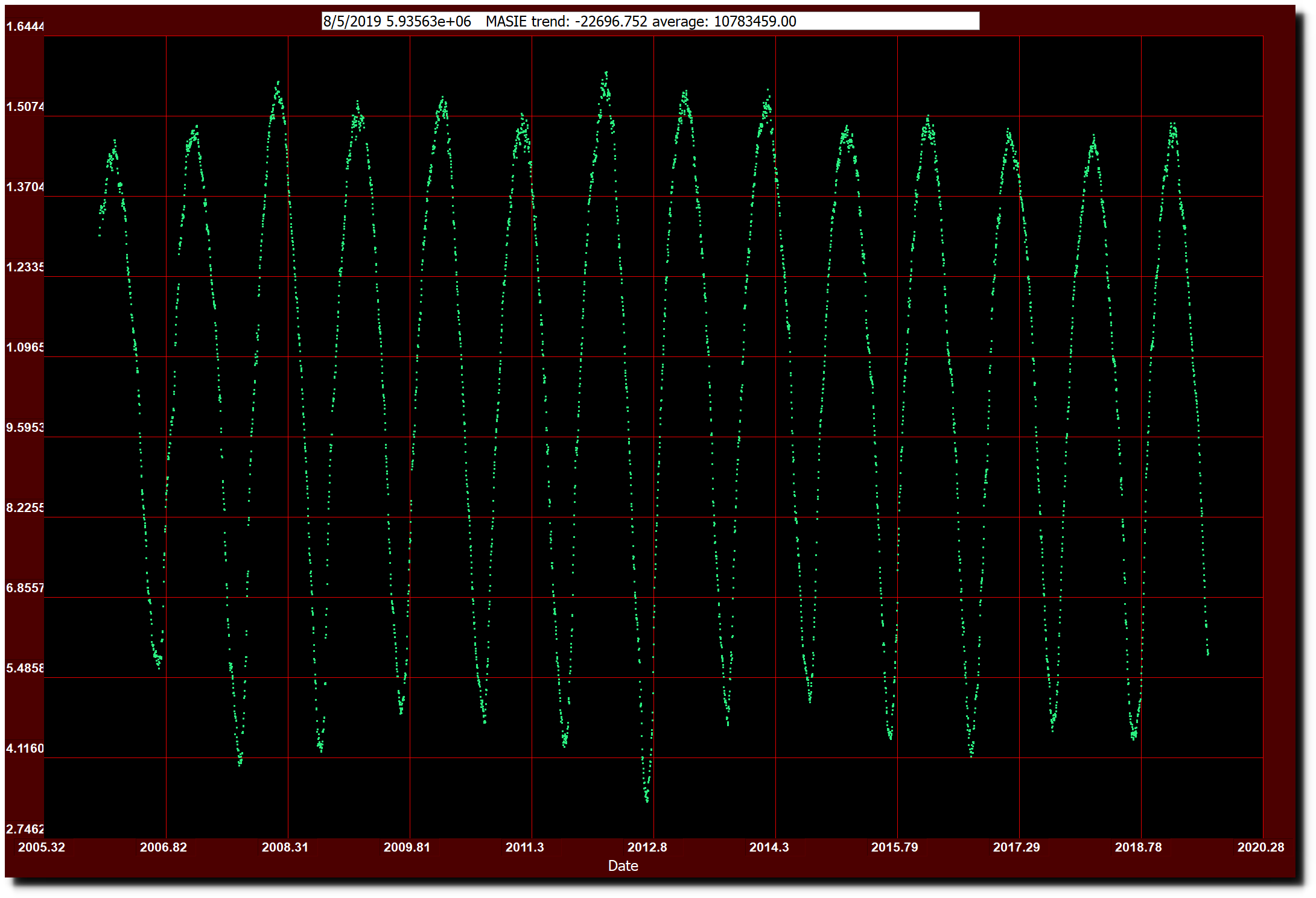
masie_4km_allyears_extent_sqkm.csv
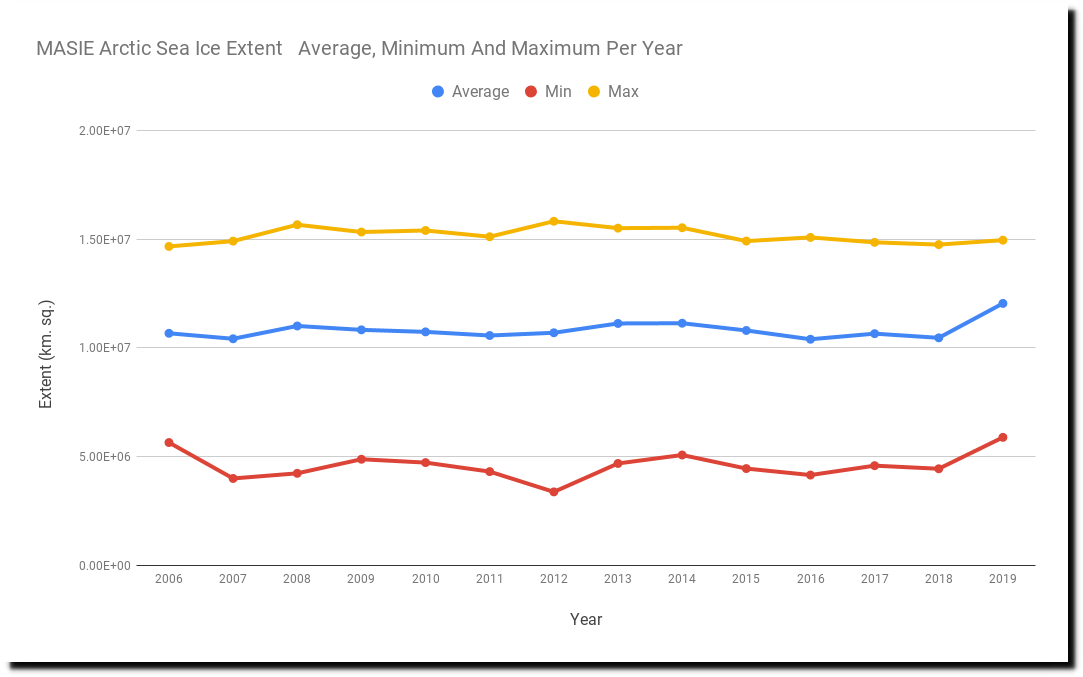
Maximum, minimum and average extent all show no trend since the start of records.
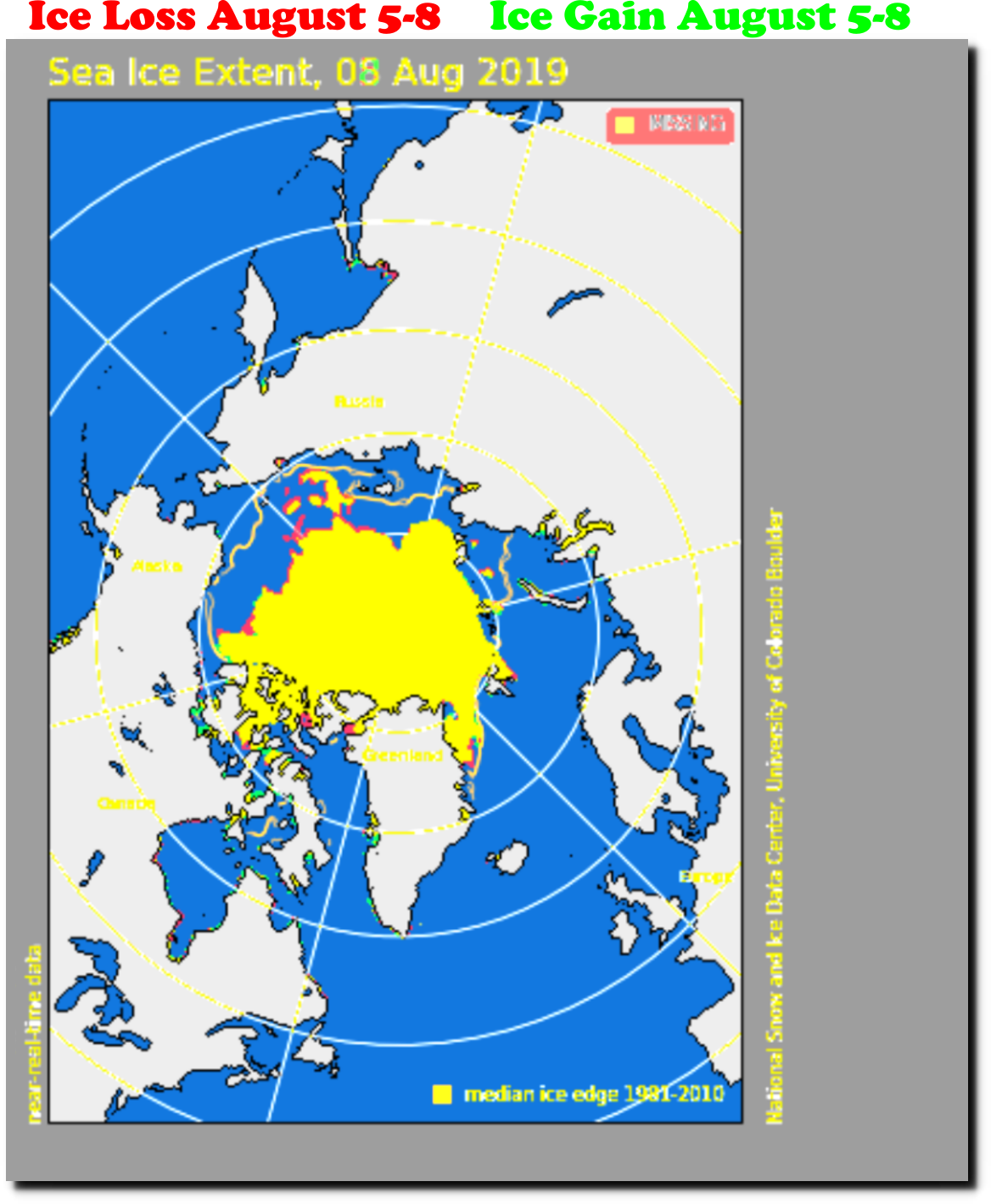
Alarmists are hoping for some luck the rest of summer, but ice extent loss since August 5th has been the lowest on record.
On this date 85 years ago, temperatures in the Chicago area were well over 100 degrees, there was a worldwide drought and farmers were unable to survive the heat, drought and insect plagues.

09 Aug 1934, 1 – Chicago Tribune at Newspapers.com
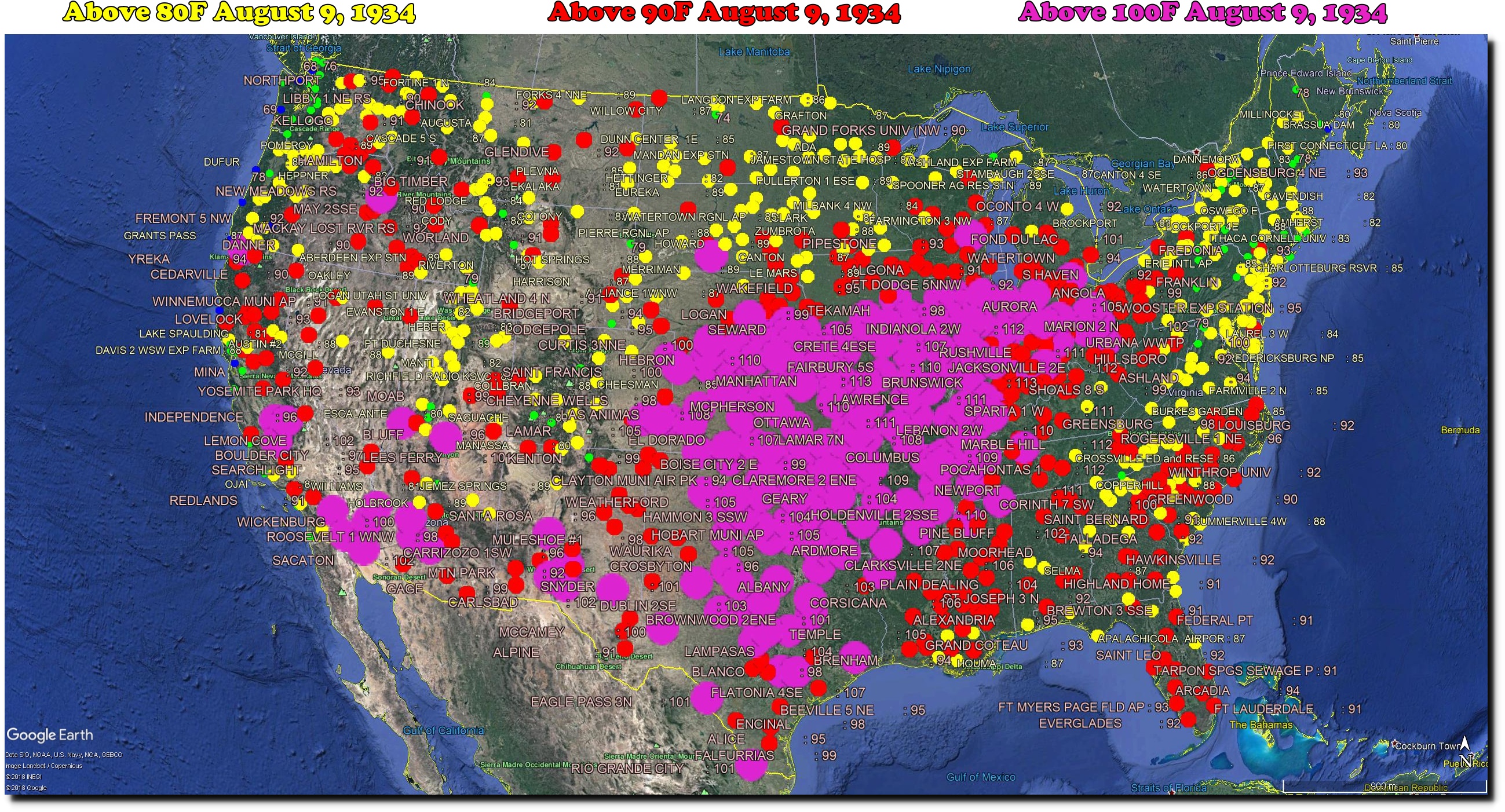
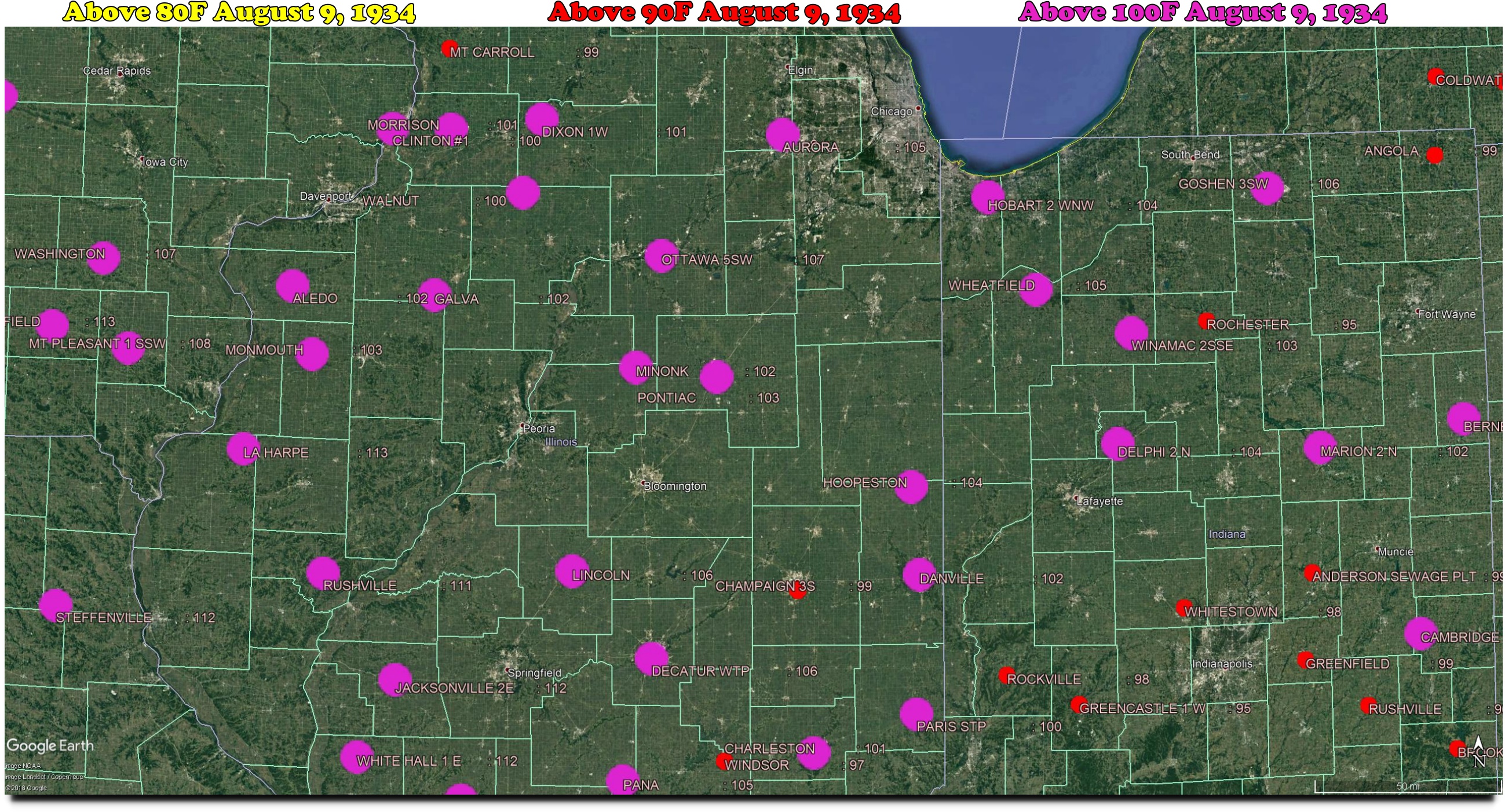
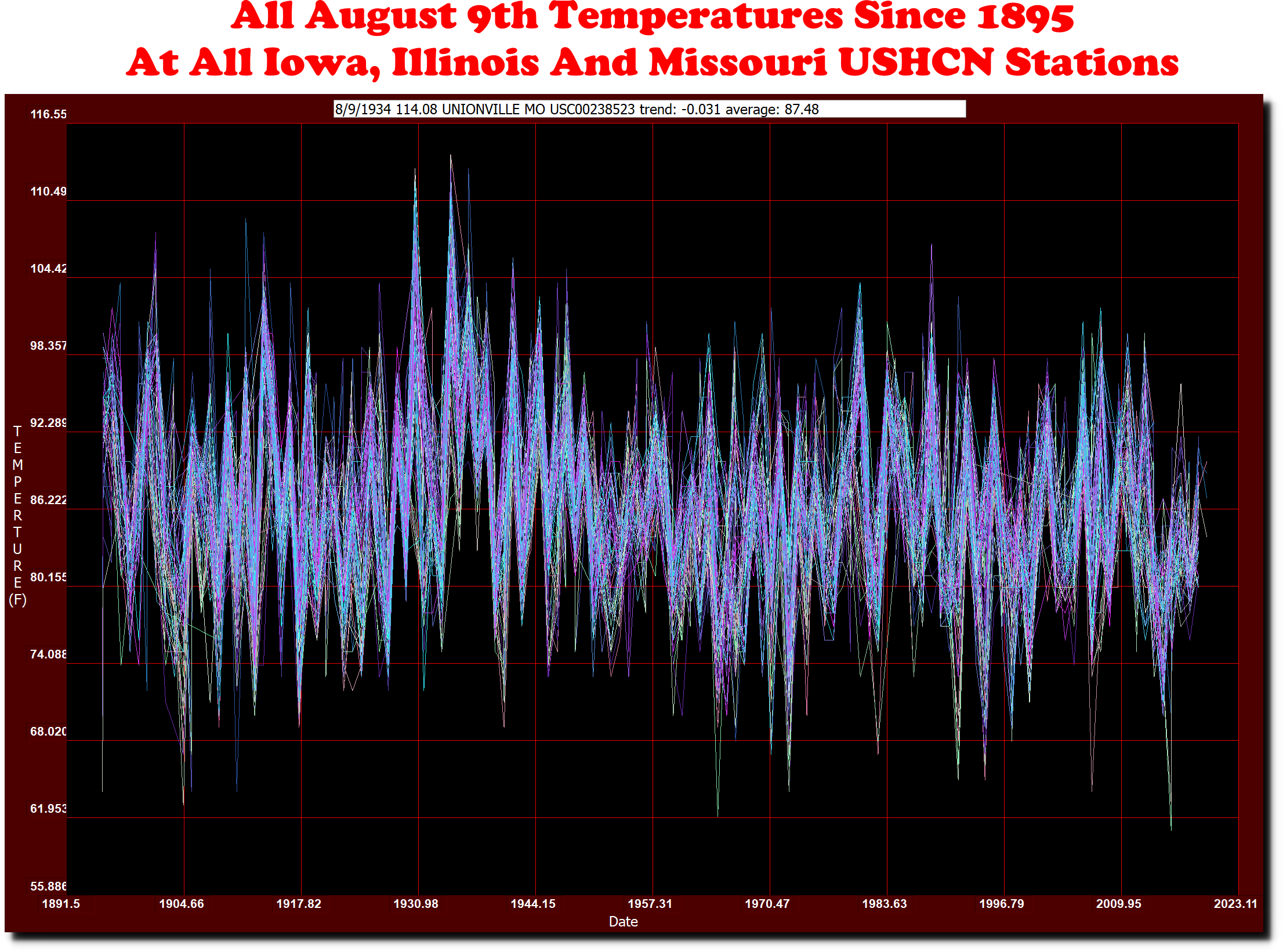
Prior to 1960, August 9th was much hotter in the Midwest. The 1930’s were typically ten to twenty degrees warmer than recent years,
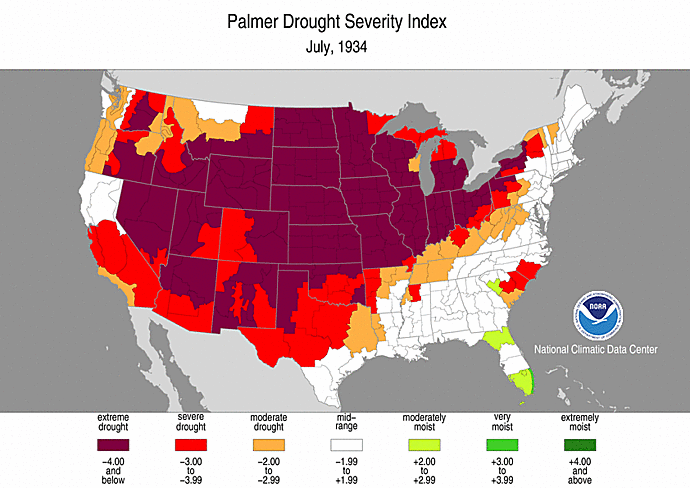
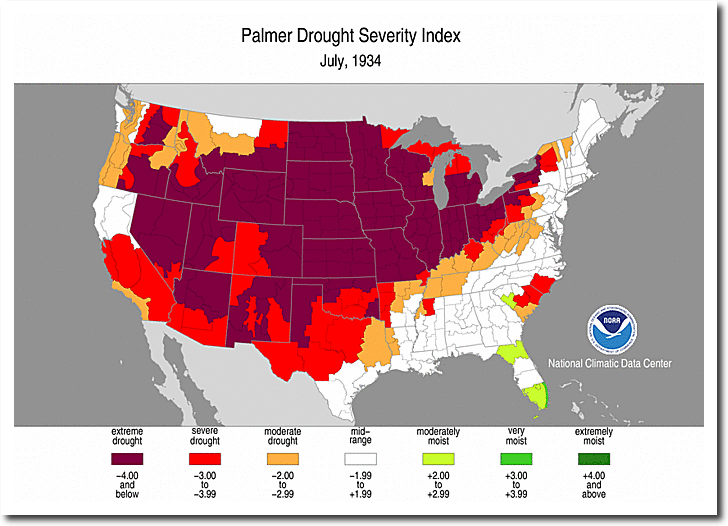
Eighty percent of the US was in drought.
The Arctic was melting and was going to drown England.
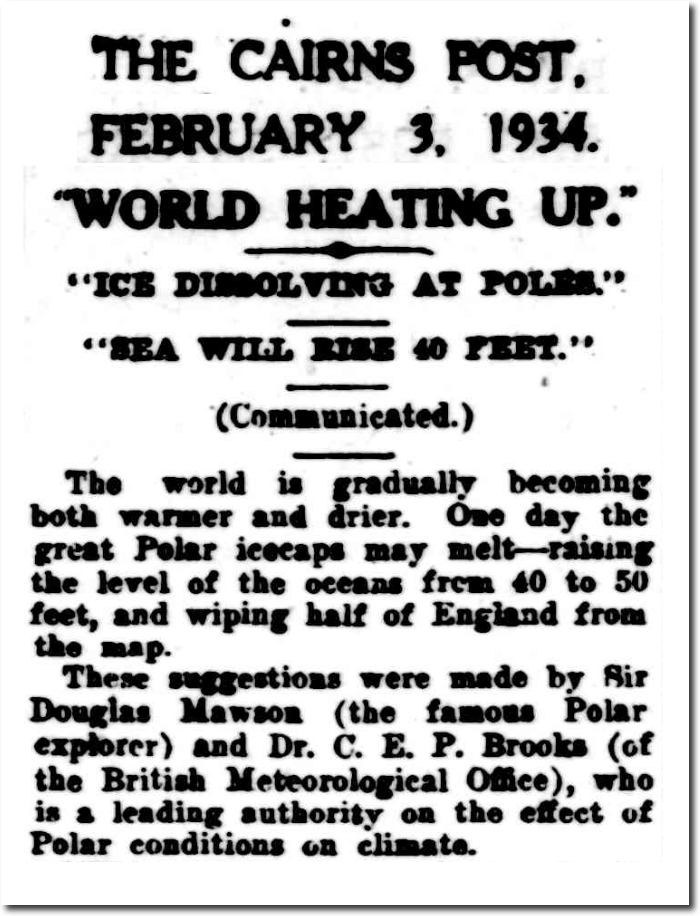
03 Feb 1934 – “WORLD HEATING UP.” – Trove
The drought was global and there was freak weather around the world.
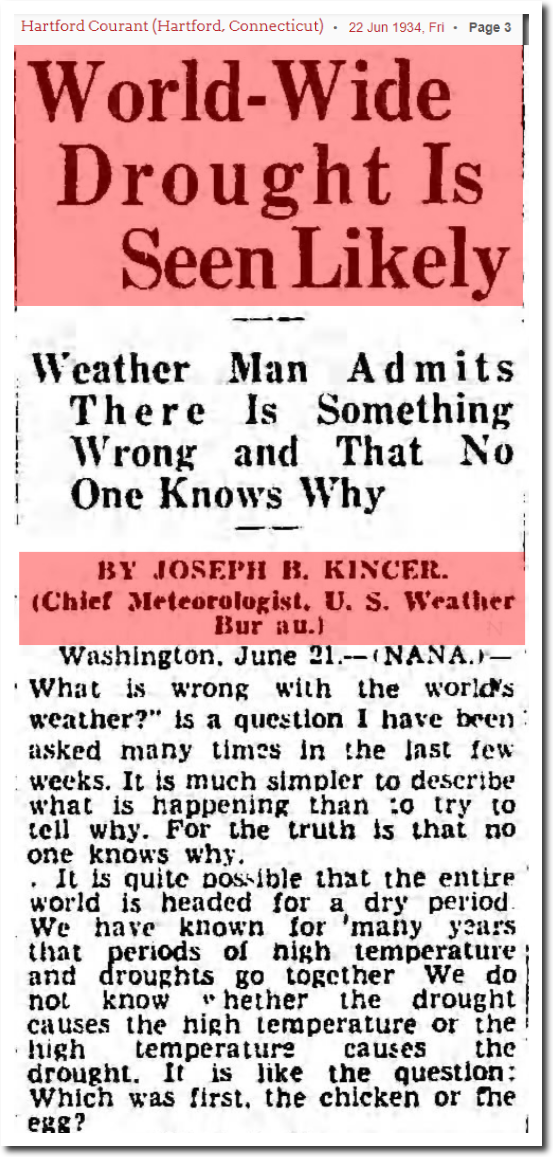
22 Jun 1934, Page 3 – Hartford Courant at Newspapers.com
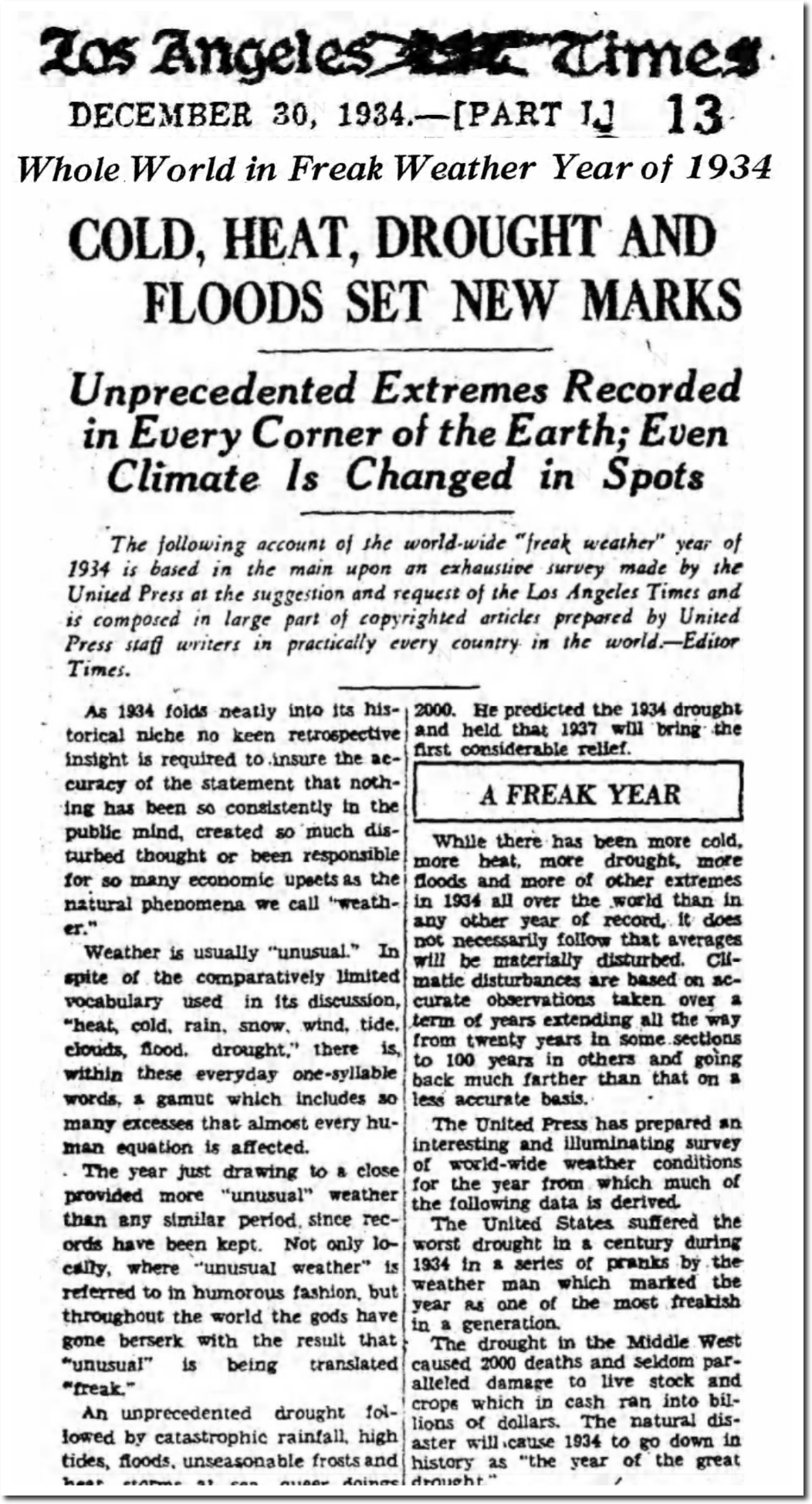
30 Dec 1934, Page 13 – The Los Angeles Times at Newspapers.com
If NASA and NOAA climate scientists were actual scientists – they would want to understand the heat of 1934 – rather than trying to erase it and lie to the public about a non-existent “climate crisis.”
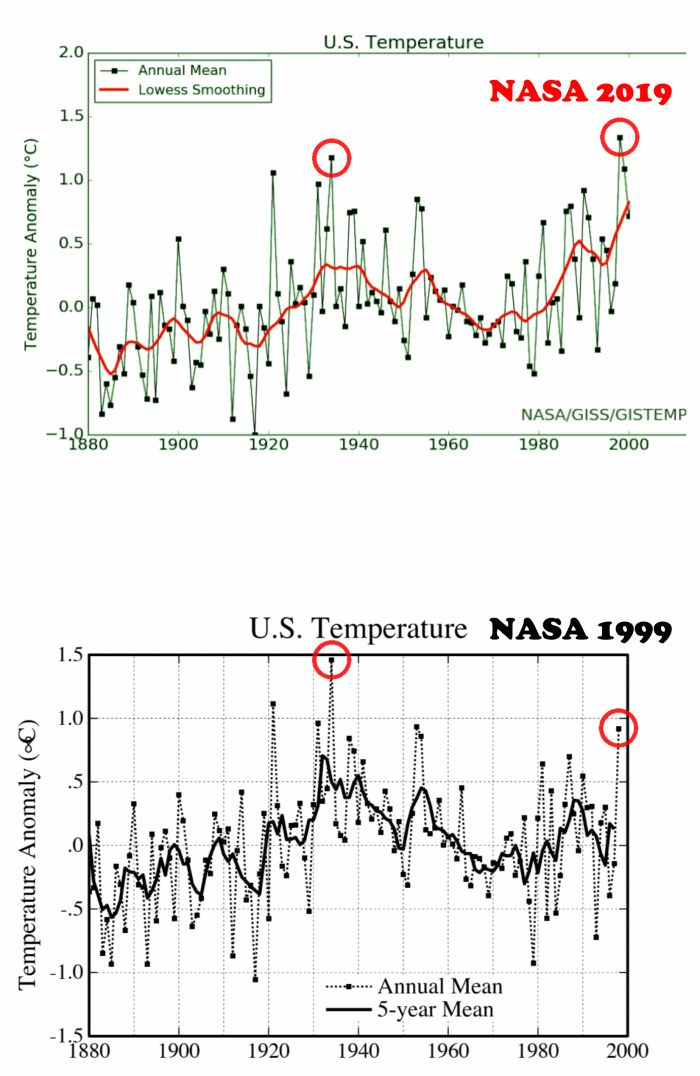
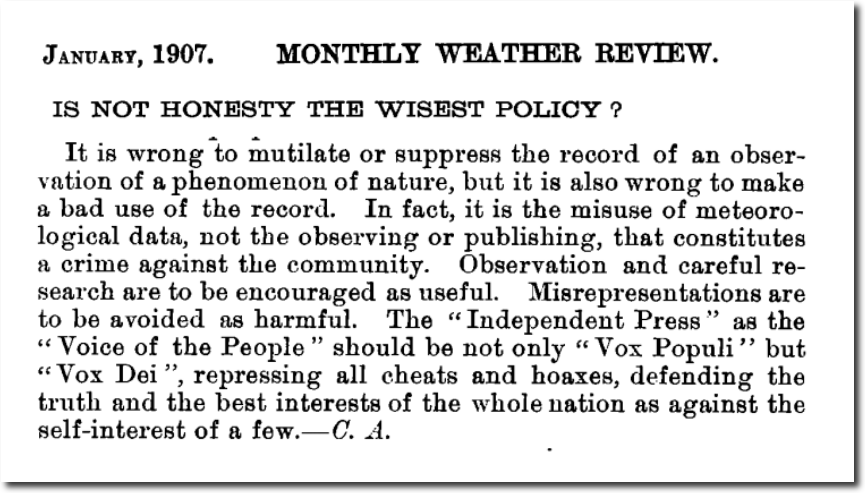
There Is nothing new about scientists tampering with climate data for political purposes – and it has always been up independent journalists to set the record straight.
On this date in 1934, it was over 110 degrees in Iowa, Missouri, Nebraska, Kansas, Oklahoma, Arkansas and Illinois. Iowa was 115 degrees and the corn crop was dead.
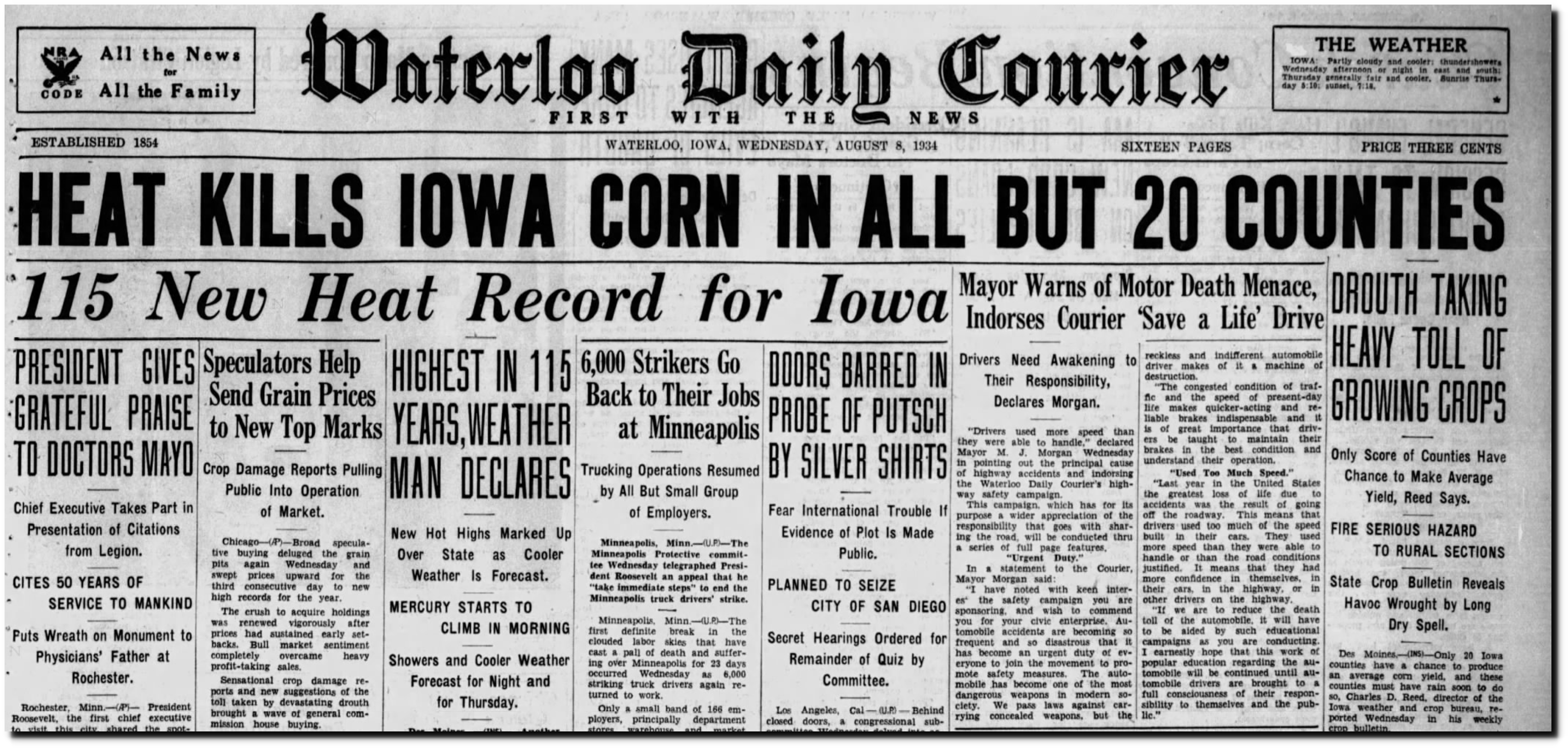
08 Aug 1934, 1 – The Courier at Newspapers.com
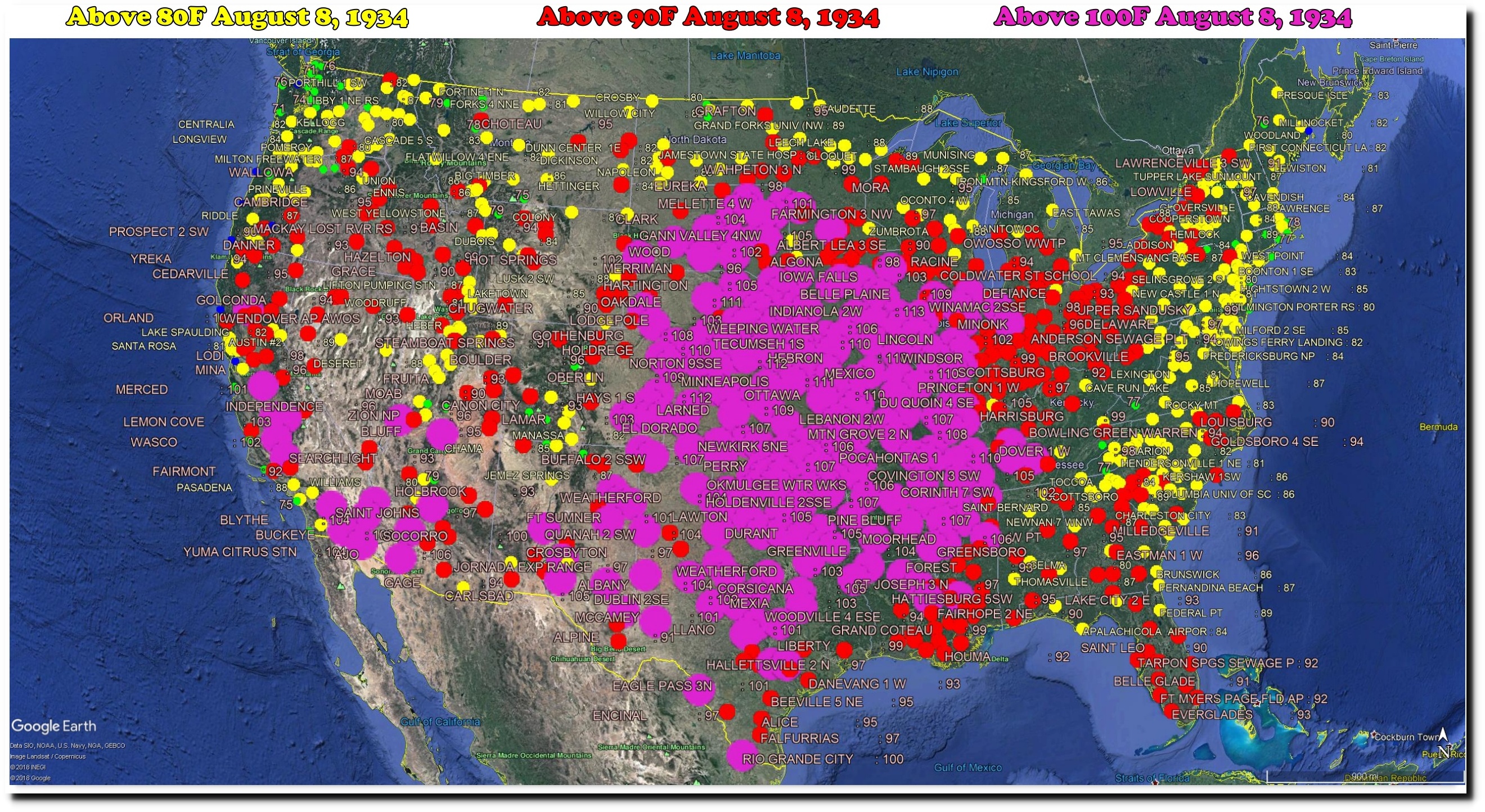
USHCN Temperatures over 110 degrees on August 8, 1934. The Midwest hasn’t reached 110F since CO2 went above 350 PPM in 1988, and no place in the Midwest has reached 100F this year.
NE	ALBION	        111
NE	ASHLAND NO 2	112
NE	AUBURN 5 ESE	111
NE	BEAVER CITY	112
NE	DAVID CITY	111
NE	FAIRBURY 5S	110
NE	FRANKLIN	110
NE	GENEVA	        110
NE	GENOA 2 W	110
NE	HASTINGS 4N	111
NE	HEBRON	        110
NE	HOLDREGE	110
NE	IMPERIAL	110
NE	MADISON	        111
NE	MINDEN	        113
NE	OAKDALE	        111
NE	PAWNEE CITY	113
NE	RED CLOUD	113
NE	SAINT PAUL	111
NE	TECUMSEH 1S	110
NE	TEKAMAH	        110
NE	YORK	        111
IA	ALBIA 3 NNE	113
IA	CLARINDA	114
IA	FAIRFIELD	112
IA	INDIANOLA 2W	113
IA	MT AYR	        110
MO	FARMINGTON	112
MO	JEFFERSON CITY  110
MO	MEXICO	        110
MO	UNIONVILLE	114
IL	JACKSONVILLE 2E	111
IL	LA HARPE	111
IL	RUSHVILLE	111
IL	WHITE HALL 1 E	111
KS	ATCHISON	110
KS	ELLSWORTH	112
KS	HAYS 1 S	112
KS	HORTON	        110
KS	LAWRENCE	111
KS	MANHATTAN	113
KS	MCPHERSON	111
KS	MINNEAPOLIS	111
KS	NORTON 9SSE	112
KS	OTTAWA	        110
OK	JEFFERSON	111
AR	CONWAY	        111
AR	CORNING	        113
AR	NEWPORT	        112
AR	POCAHONTAS 1	110
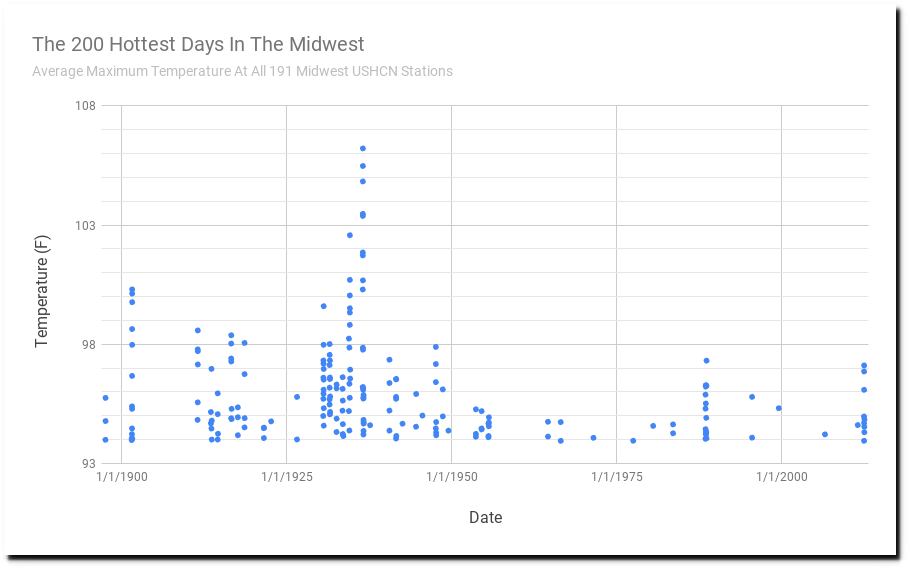
All but twelve of the hottest summer days in the Midwest occurred below 350 PPM CO2. The hottest day this century (July 7, 2012) was more than nine degrees cooler than July 14, 1936 – which averaged 106.2 degrees across the Midwest.
But that certainly didn’t stop Climate Central from lying about the 2012 heatwave.

2012 Heat Wave is Historic, if not Unprecedented | Climate Central
Unlike the completely imaginary climate crisis of 2019, there was a very real climate crisis on this date in 1930.
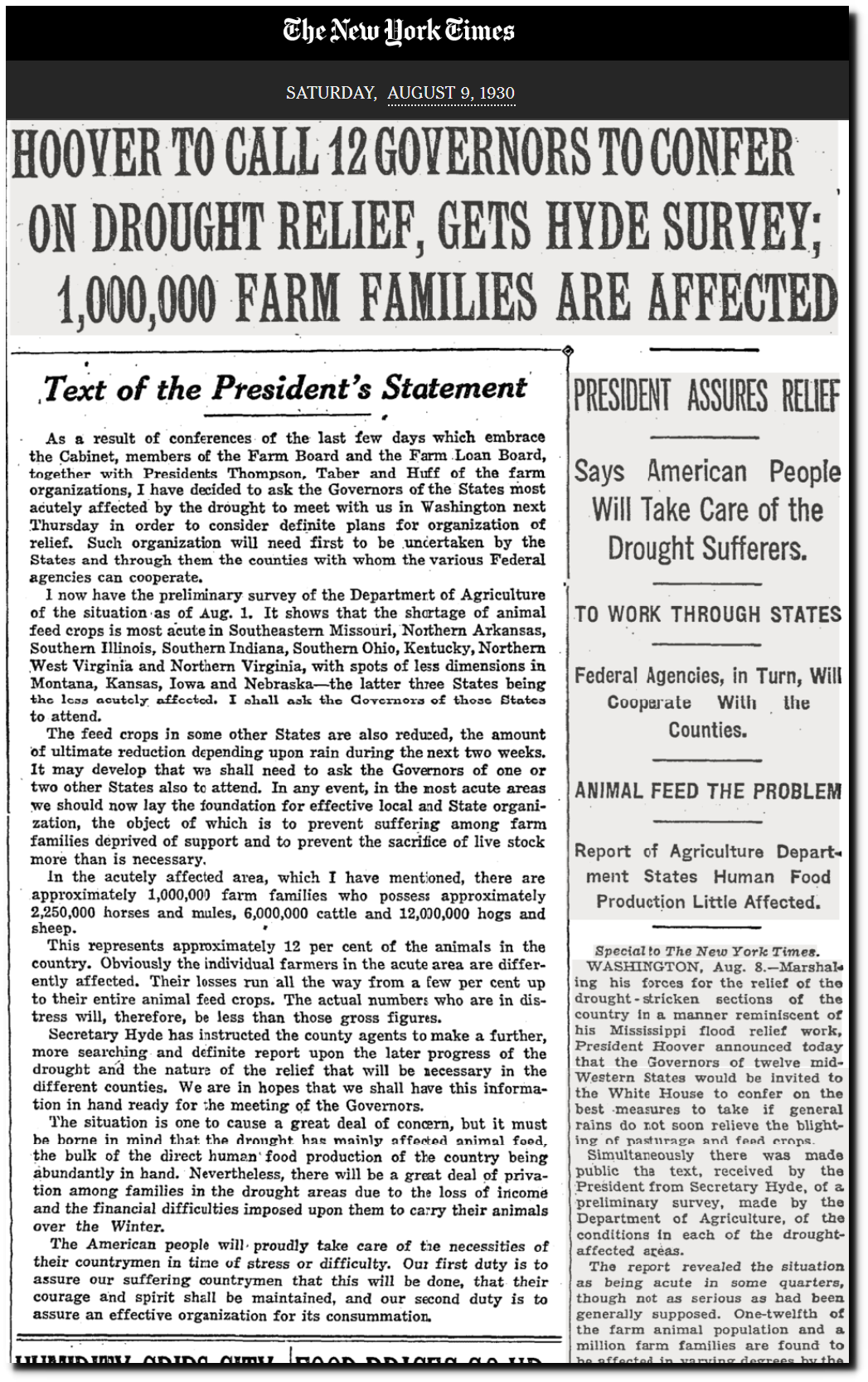
TimesMachine: Saturday August 9, 1930 – NYTimes.com
Almost the entire eastern half of the country was over 90 degrees on this date in 1930, and a large percentage was over 100 degrees.


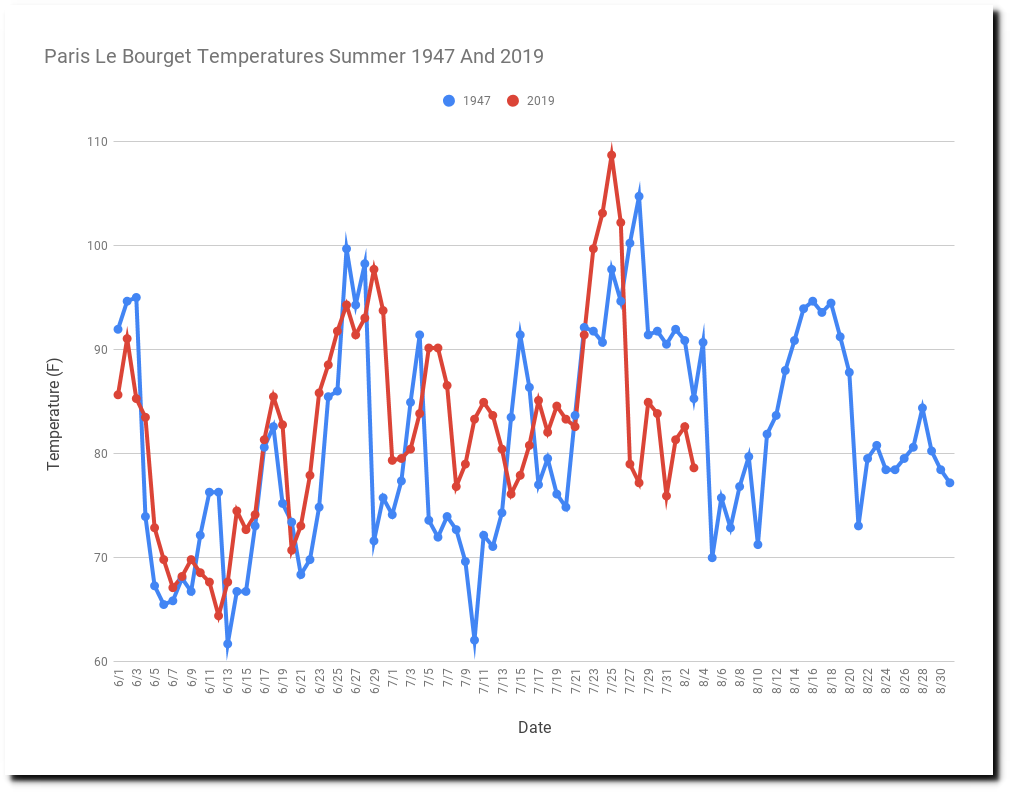
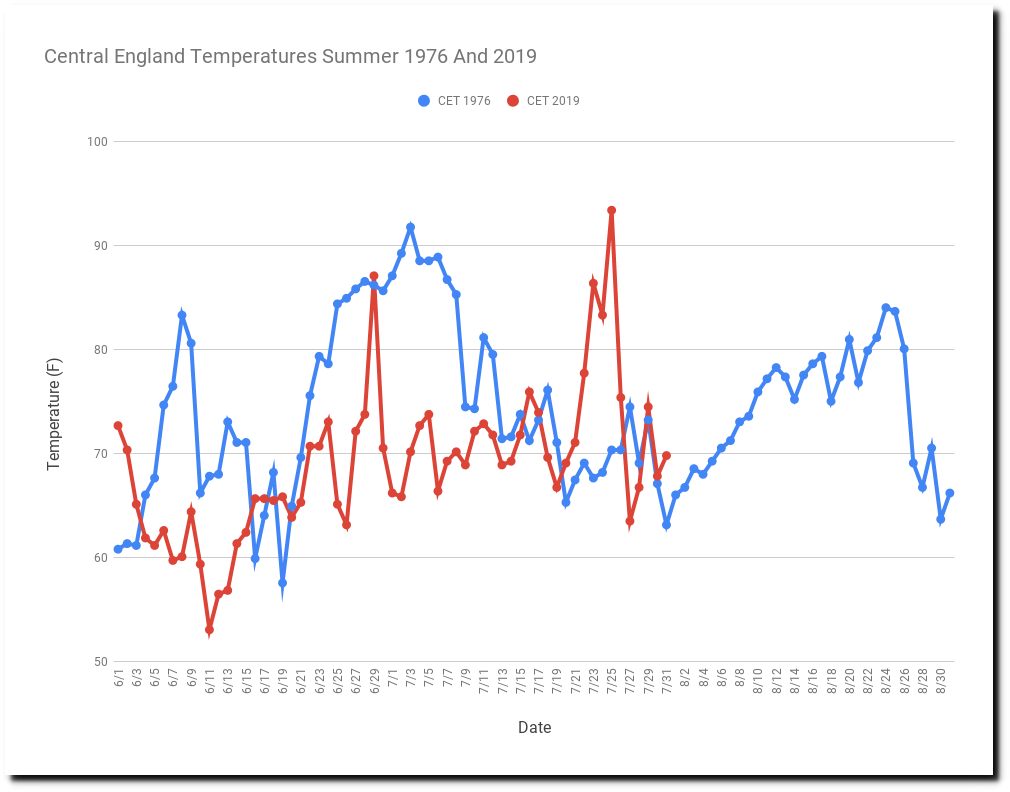
England has averaged five degrees cooler than summer 1976.
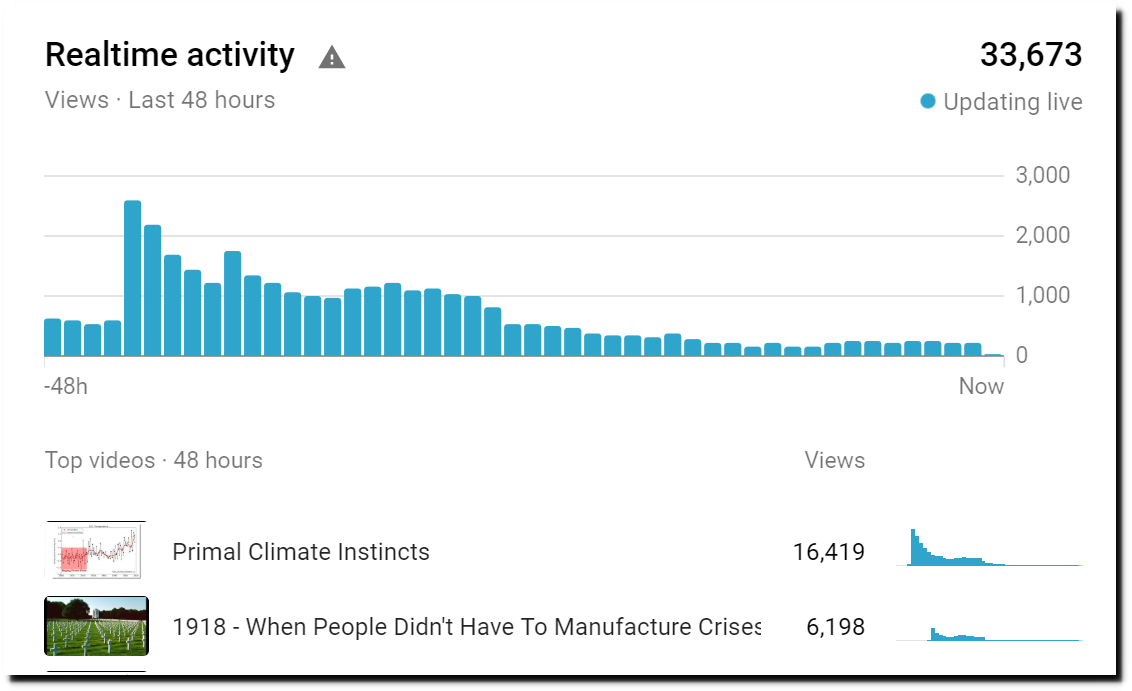
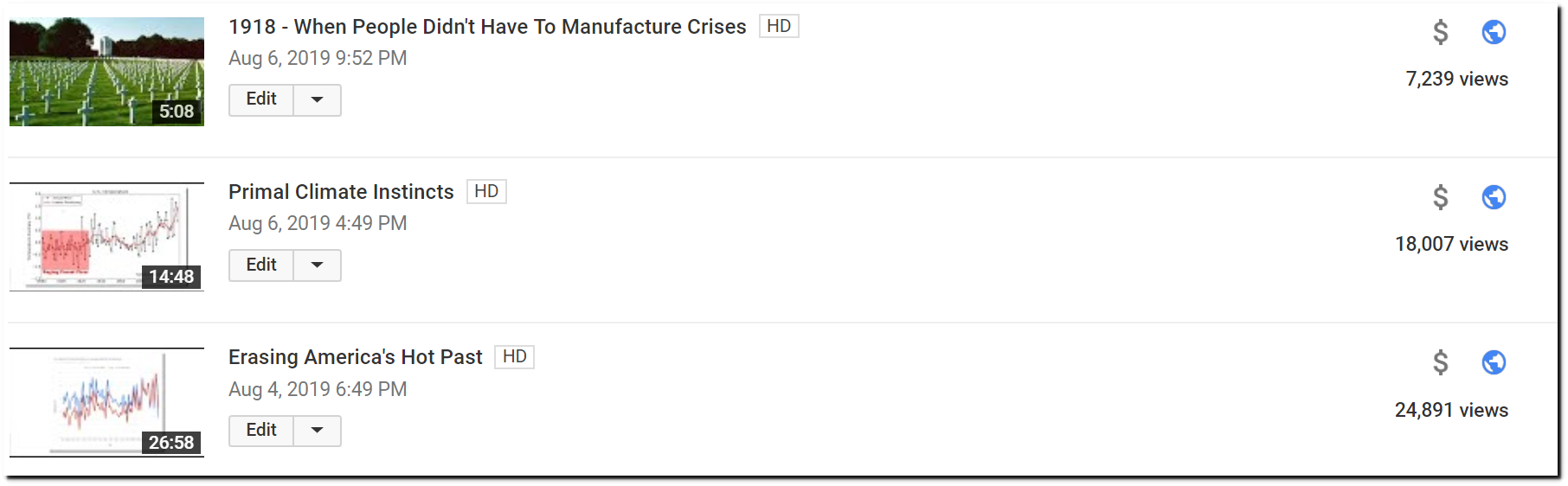
About 30 hours ago, someone truncated my YouTube channel view analytics. It now shows a lot fewer views than the sum of the views on the individual videos. Not surprising since they have been contaminating my videos with banners and Tom Steyer ads.