Toto Explores The Colorado Permanent Drought

Posted in Uncategorized | Leave a comment

The Third Heatwave Of May 1934

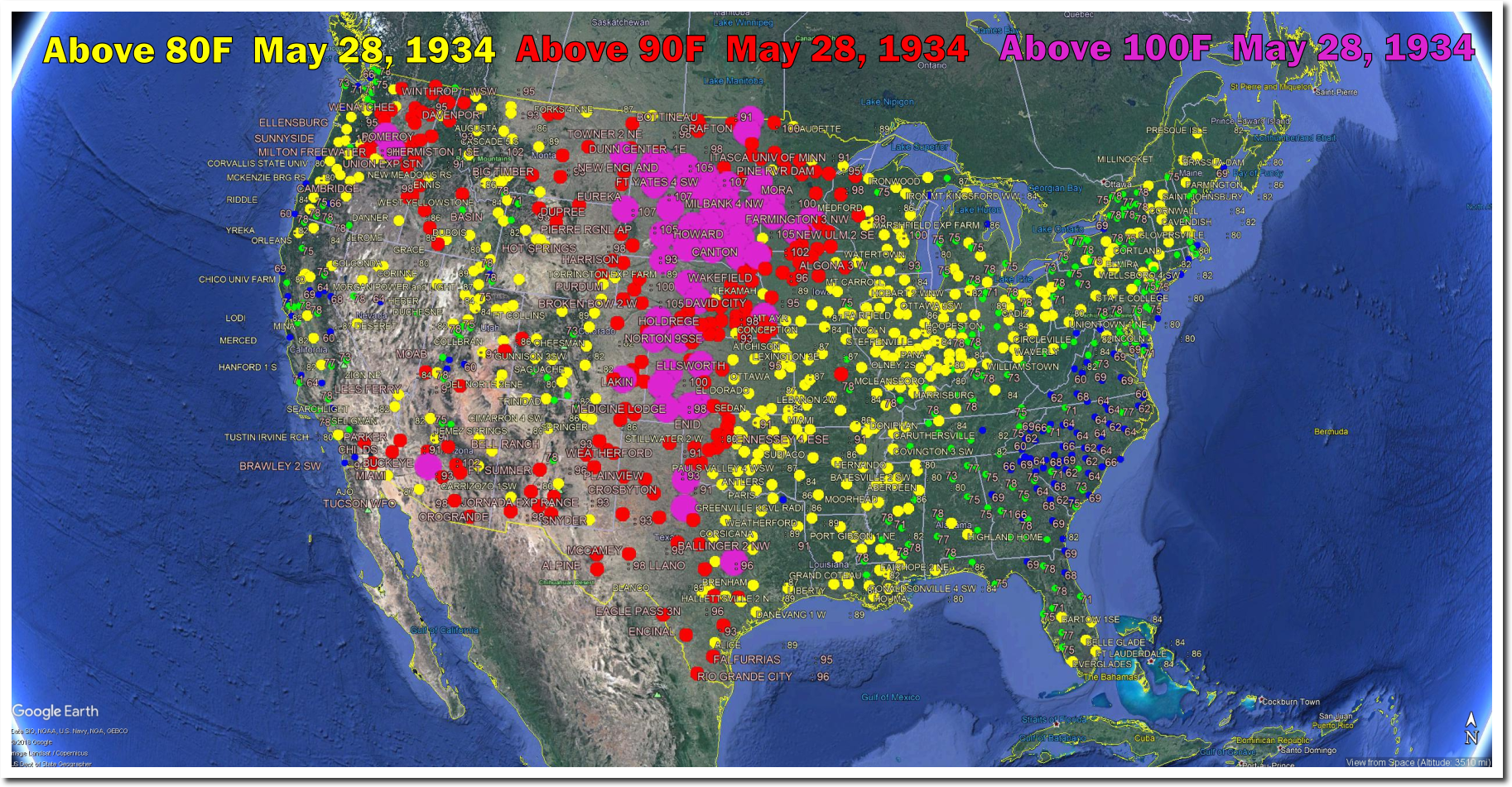
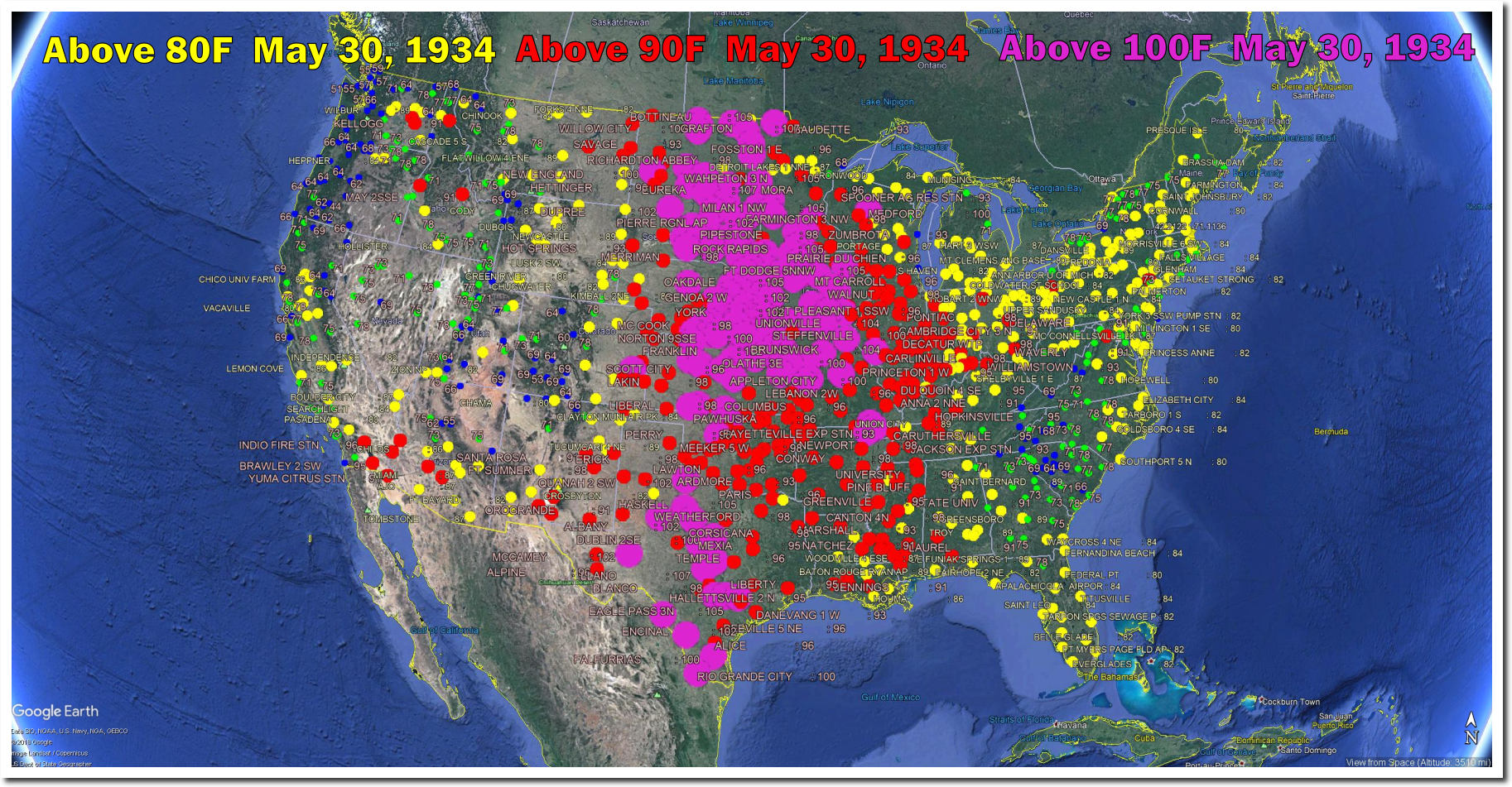
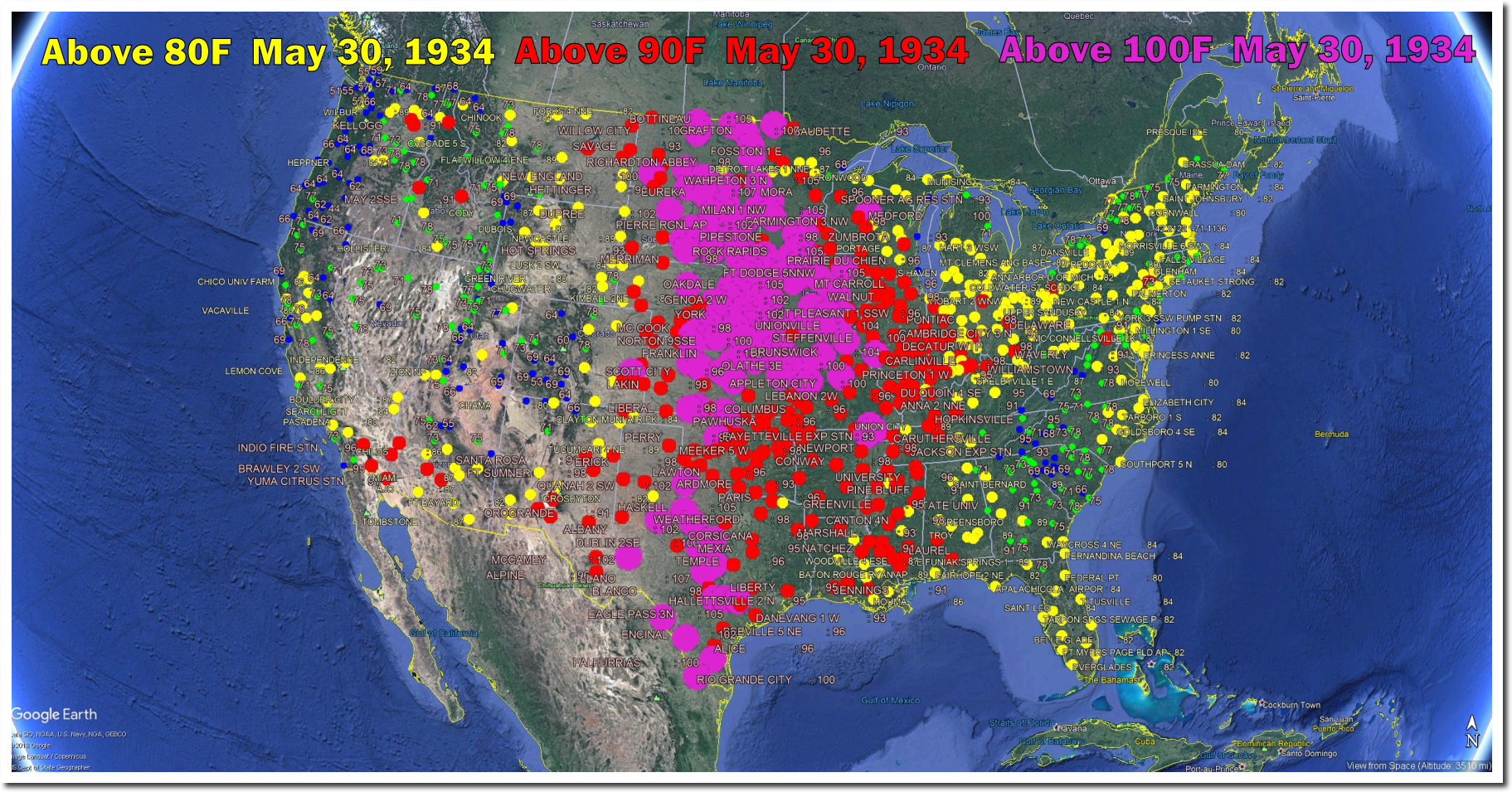
May, 1934 brought three incredible heatwaves to the US. The first peaked on May 8, the second on May 18, and the third on May 30. It was 109 degrees at Gann Valley, SD on May 28, 1934 – twenty degrees warmer than today’s forecast.

By May 30, the heatwave got even more intense and covered all of the Great Plains and Midwest. North Dakota reached 111 degrees.

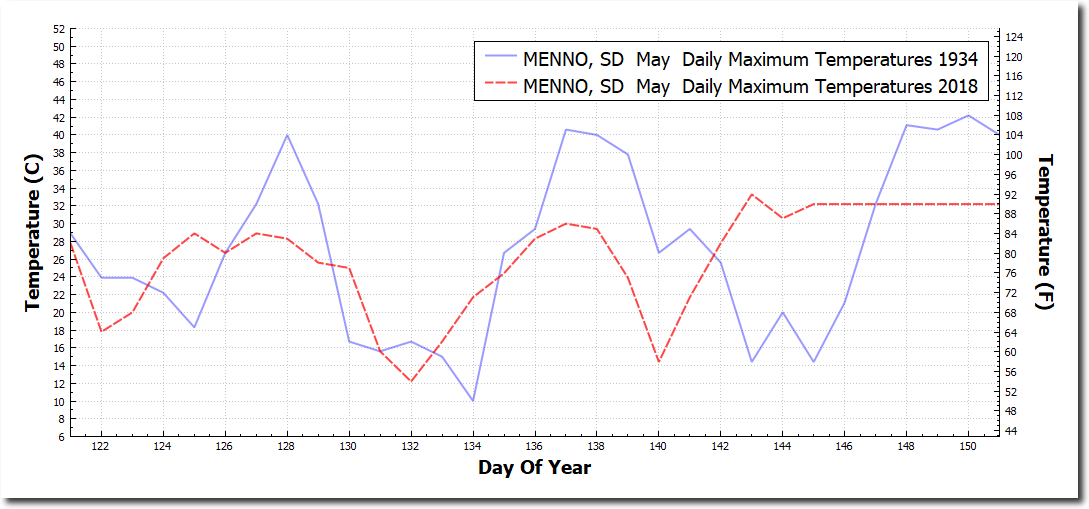
Menno, SD averaged five degrees warmer during May 1934 than this year.

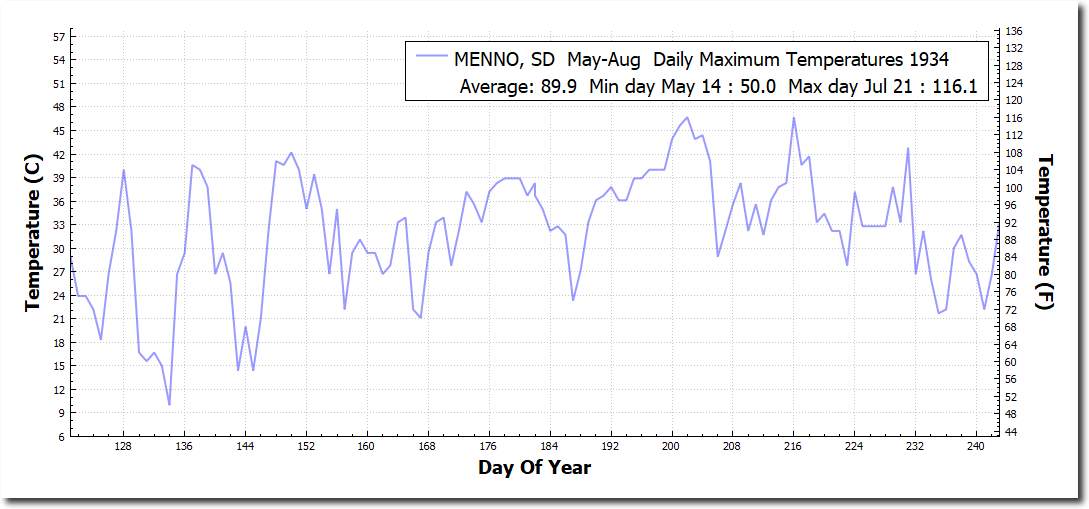
As the summer of 1934 progressed, temperatures kept getting hotter. Menno reached 116 degrees during July and August 1934.

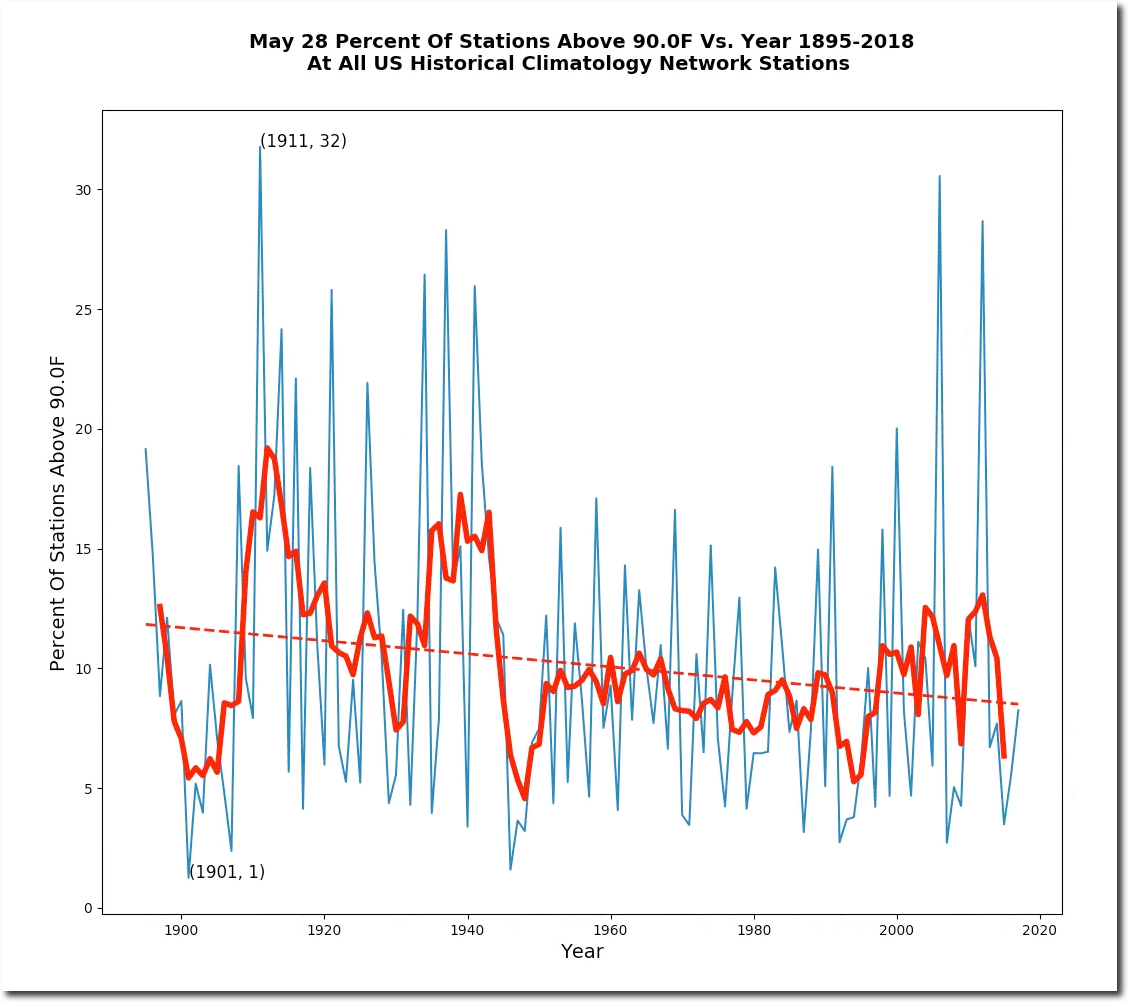
Ninety degree weather on May 28 peaked in 1911, and has been declining ever since.

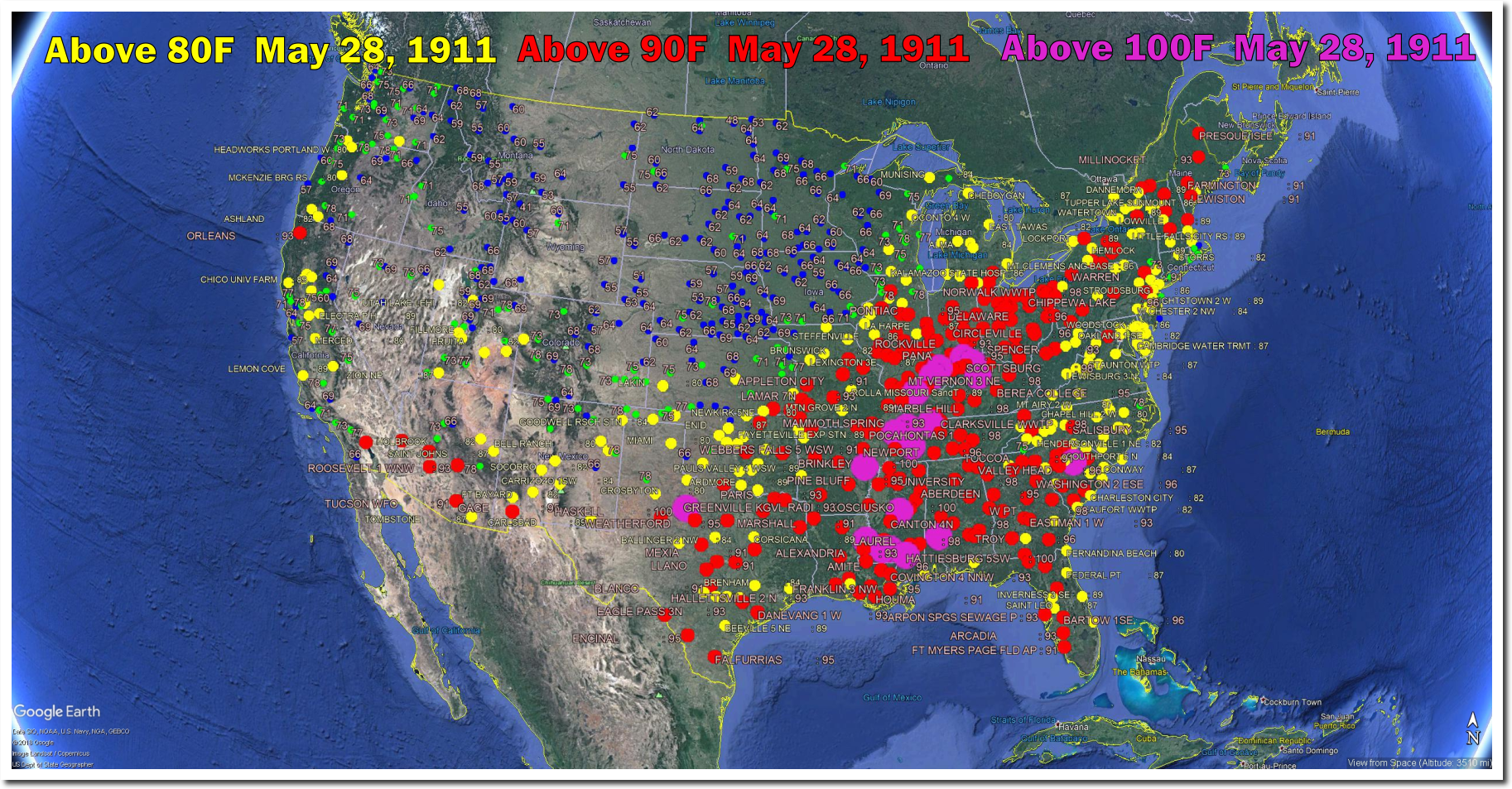
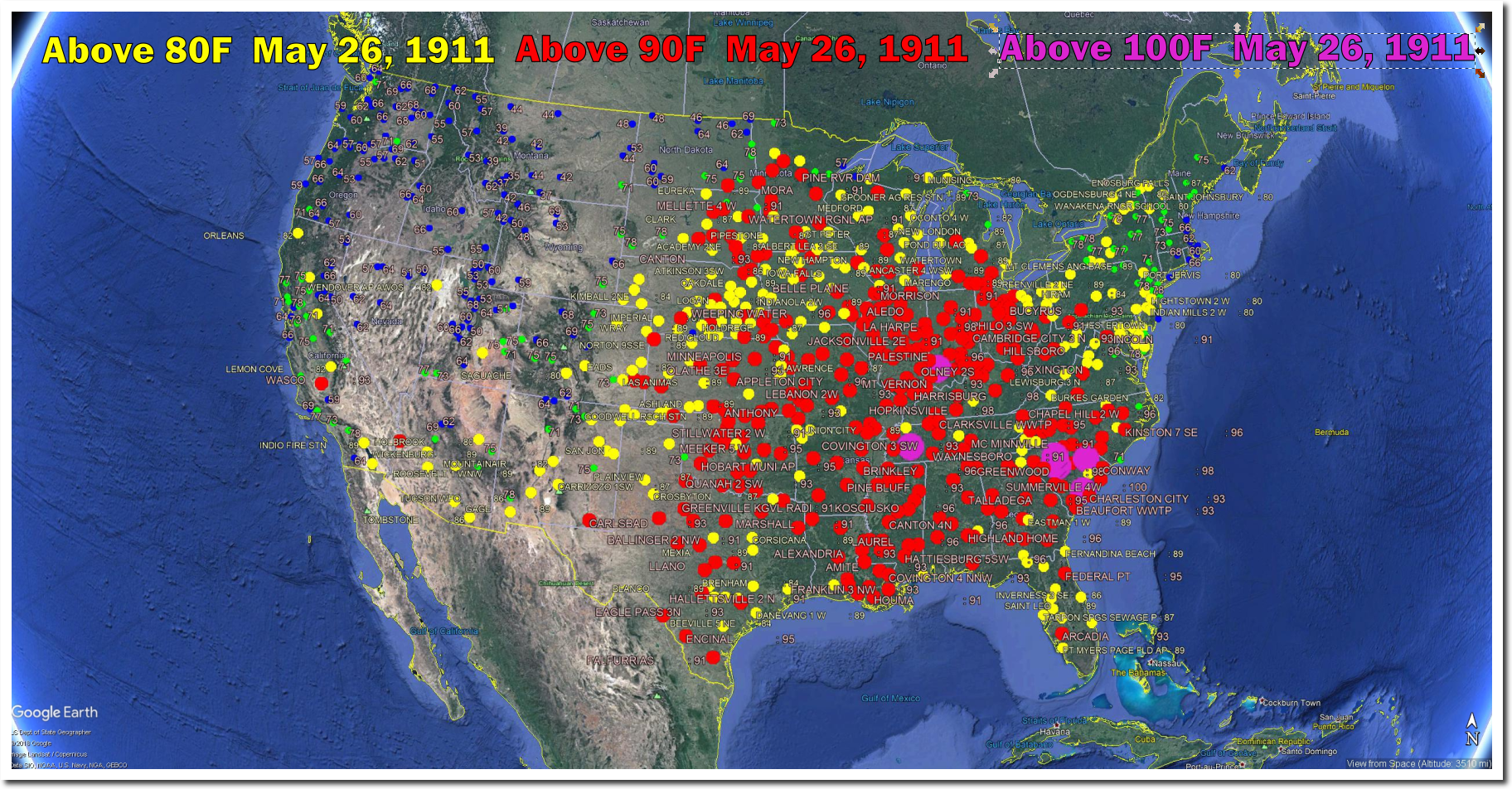
On this date in 1911, 90 and 100 degree temperatures dominated the eastern US, spreading all the way to the northern tip of Maine.

Posted in Uncategorized | Leave a comment

New Video : How Did We Survive The 1970s?

Posted in Uncategorized | Leave a comment

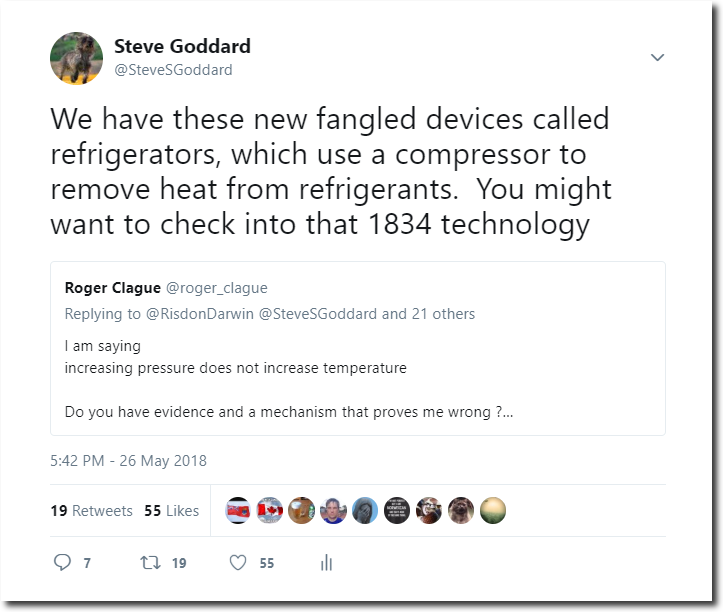
Anti-Science Since 1834

Steve Goddard on Twitter

Posted in Uncategorized | Leave a comment

How Did We Survive The 1970’s?

The whole aim of practical politics is to keep the populace alarmed (and hence clamorous to be led to safety) by menacing it with an endless series of hobgoblins, all of them imaginary.

  • H. L. Mencken

In 1969, the world’s most famous environmental scientist (Paul Ehrlich of Stanford) warned  we would all die by 1989 in a cloud of blue steam.

“The trouble with almost all environmental problems,” says Paul R. Ehrlich, the population biologist, “is that by the time’ we have enough evidence to convince people, you’re dead.”

“We must realize that unless we are extremely lucky, everybody will disappear in a cloud of blue steam in 20 years”

  • New York Times   August 10, 1969, Page 53
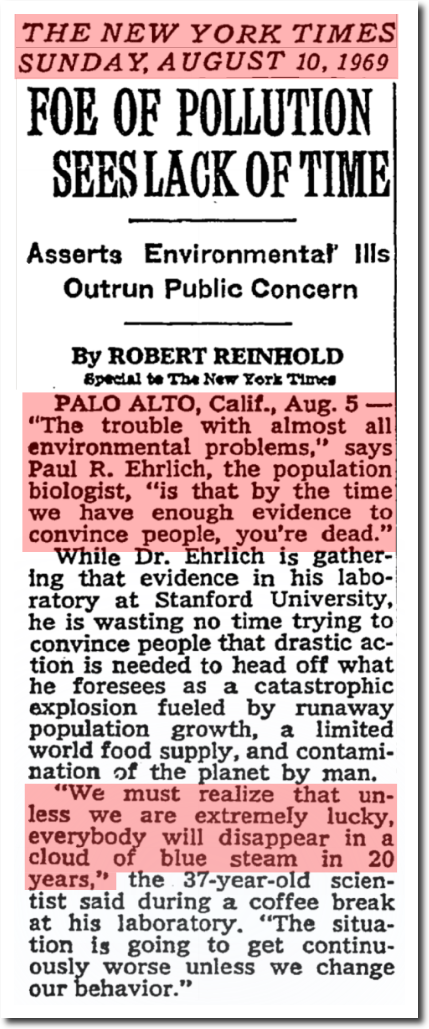
FOE OF POLLUTION SEES LACK OF TIME   The New York Times

A year later he said we would run out of water by 1974, and out of food by 1980.
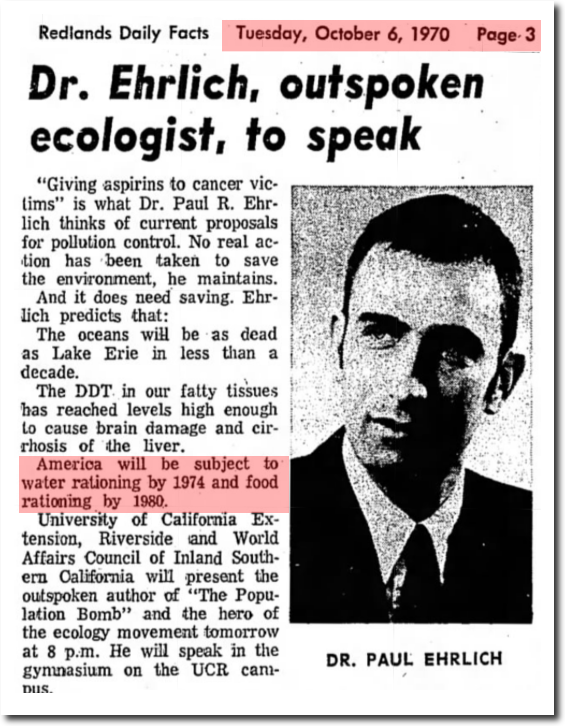
06 Oct 1970, Page 3 – Redlands Daily Facts at Newspapers.com

Two years later, the world’s leading climate experts warned President Nixon about a new ice age “in about a century.”
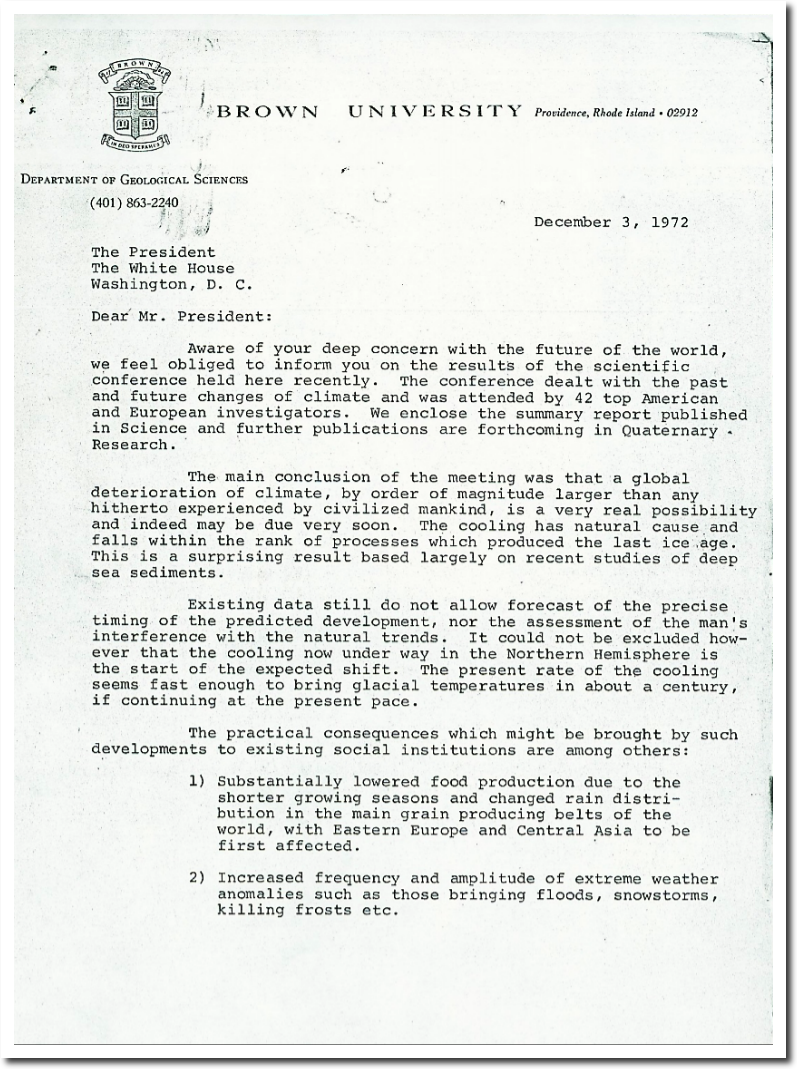
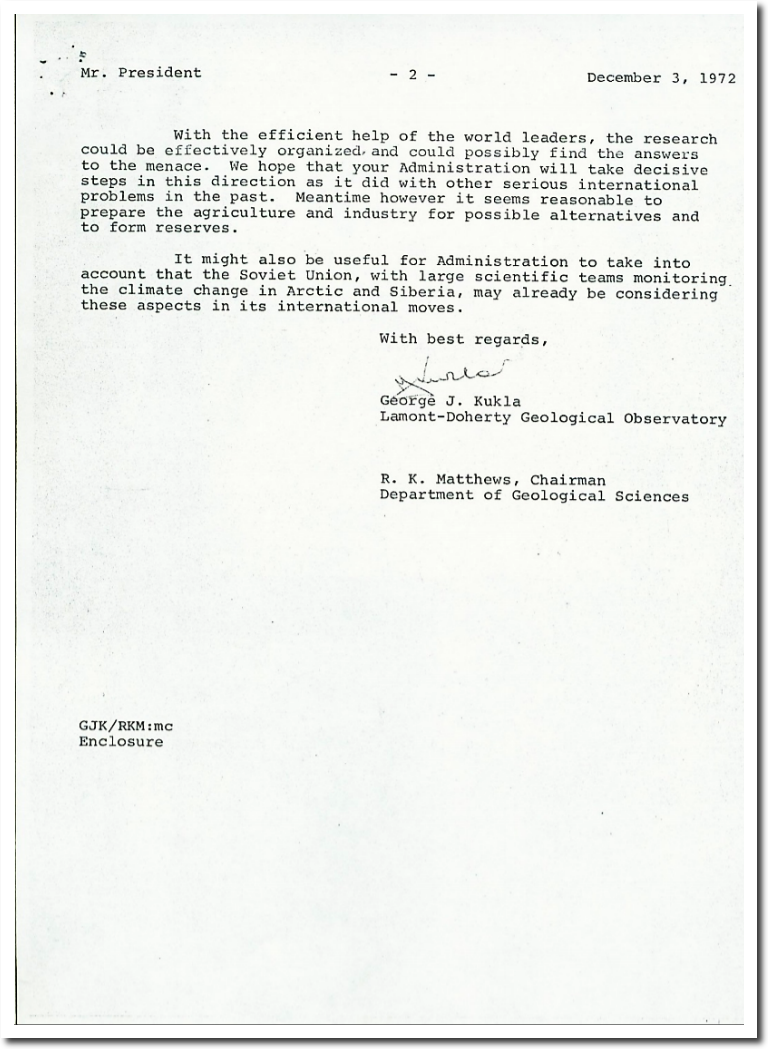
THE ROLE OF NOAA’S CLIMATE PREDICTION CENTER IN THE DEVELOPMENT OF CLIMATE SERVICES

We didn’t run out of water by 1974 as Paul Ehrlich predicted, so he switched over to the global cooling scam.
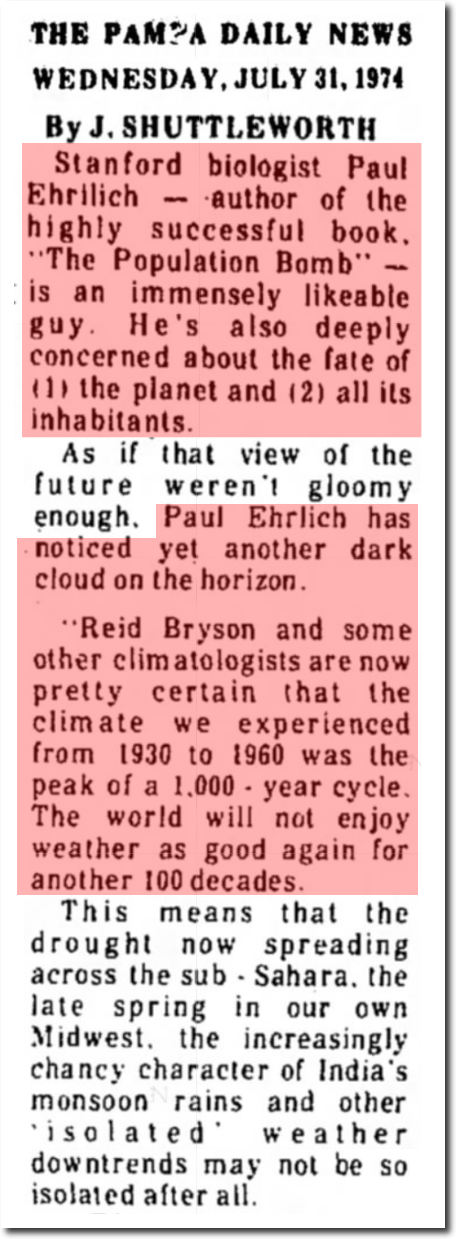
31 Jul 1974, Page 7 – Pampa Daily News at Newspapers.com

In 1974, Steven Schneider took the scientific consensus of global cooling to the White House.

climatic researchers are becoming alarmed that in the next 10 to 100 years humanity will be unable to feed itself

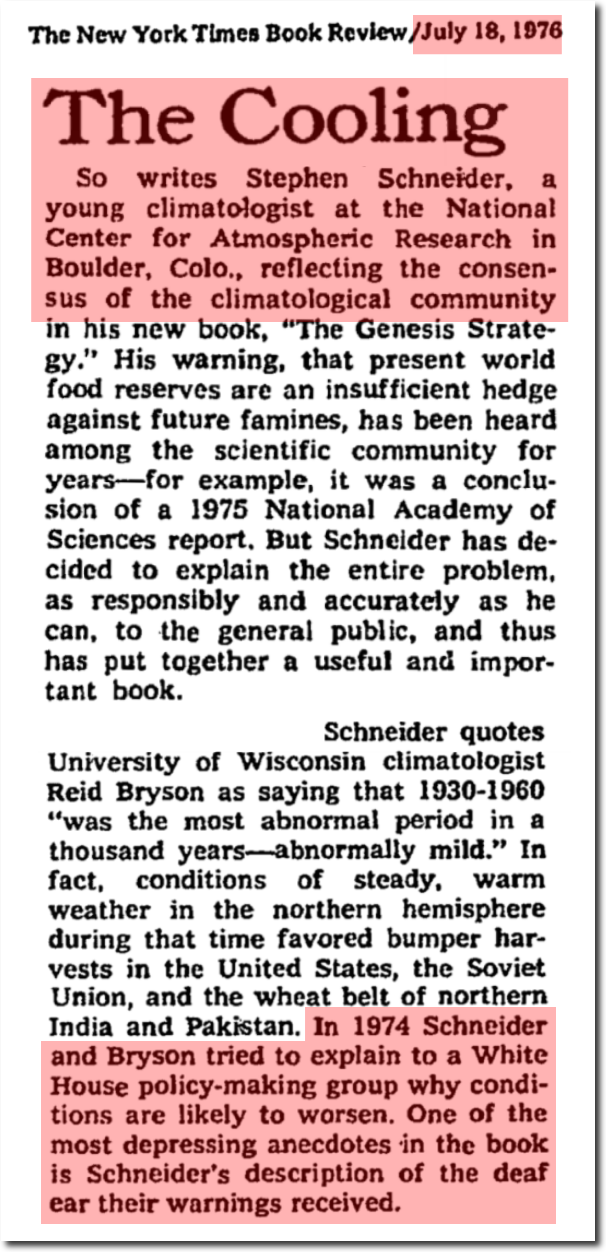
So writes Stephen Schneider, a young climatologist at the National Center for Atmospheric Research in Boulder, Colo., reflecting the consensus of the climatological community in his new book, “The Genesis Strategy.” His warning, that present world food reserves are an insufficient hedge against future famines, has been heard among the scientific community for years—for example, it was a conclusion of a 1975 National Academy of Sciences report. But Schneider has decided to explain the entire problem, as responsibly and accurately as he can, to the general public, and thus has put together a useful and important book.

It is a matter, as Schneider explains, of statistics. The last 15,000 years have been unusually warm when compared to global temperatures for the last 150,000. The last 200 years have been unusually warm when compared to the last 1,000. But there is considerable evidence that this warm period is passing and that temperatures on the whole will get colder. For example, in the last 100 years mid?latitude air temperatures peaked at an all?time warm point in the 1940’s and?have been cooling ever since.

In 1974 Schneider and Bryson tried to explain to a White House policy?making group why conditions are likely to worsen. One of the most depressing anecdotes in the book is Schneider’s description of the deaf ear their warnings received.

  • New York Times  July 18, 1976

The Genesis Strategy – The New York Times

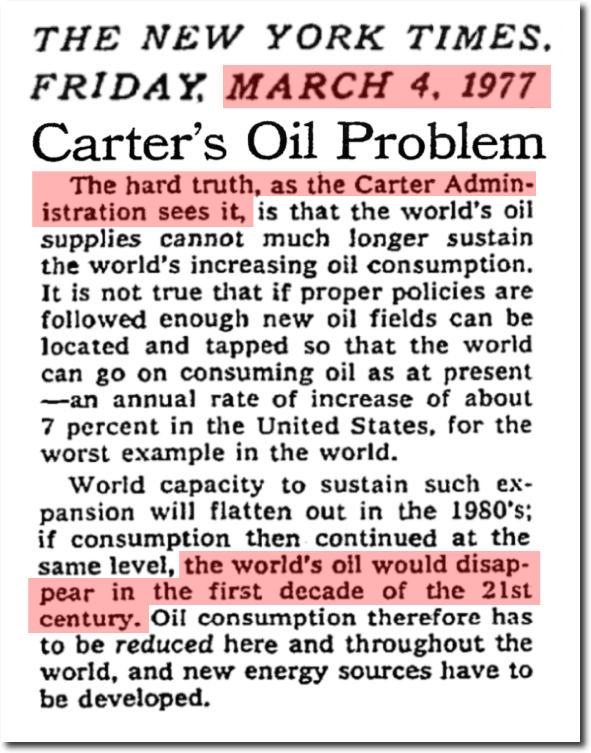
Three years later President Carter warned that we would run out of oil before 2010.

The hard truth, as the Carter Administration sees it, is that the world’s oil supplies cannot much longer sustain the world’s increasing oil consumption.

if consumption then continued at the same level, the world’s oil would disappear in the first decade of the 21st century. Oil consumption therefore has to be reduced here and throughout the world, and new energy sources have to be developed.

  • New York Times March 4, 1977

Carter’s Oil Problem – The New York Times

Two years later, experts determined that nuclear reactors were going to melt through the Earth all the way to China, and that Pennsylvania would be made uninhabitable.
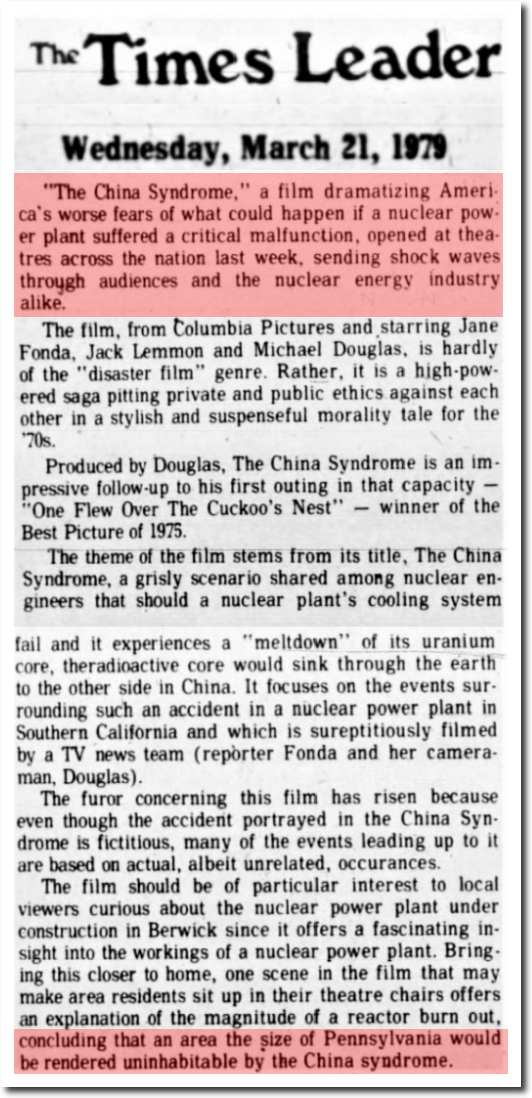
21 Mar 1979, 4 – The Times Leader at Newspapers.com

That didn’t happen, so a year later “frightened” experts decided that acid rain was going to make Pennsylvania uninhabitable, and all they needed was $100 million dollars to fix it.

“Acid rain …… It’s a lot worse than we thought”
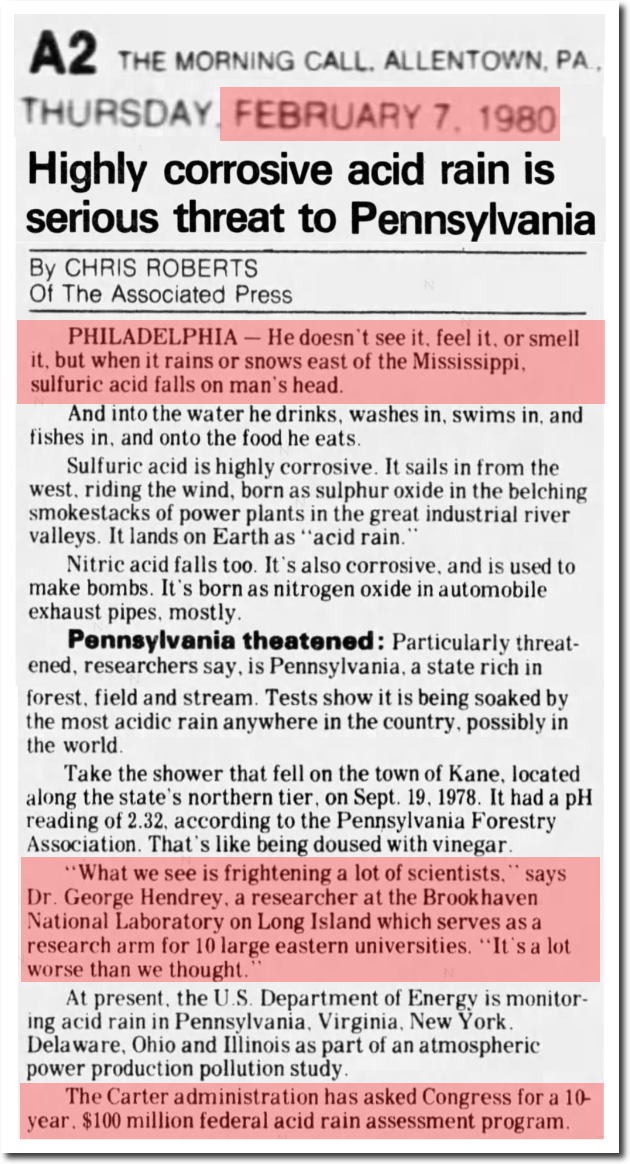
07 Feb 1980, 2 – The Morning Call at Newspapers.com

What stands out for me is the $100 million.  Scientists now expect $billions for their scams.

Posted in Uncategorized | Leave a comment

Plummeting May 26 Temperatures In The US

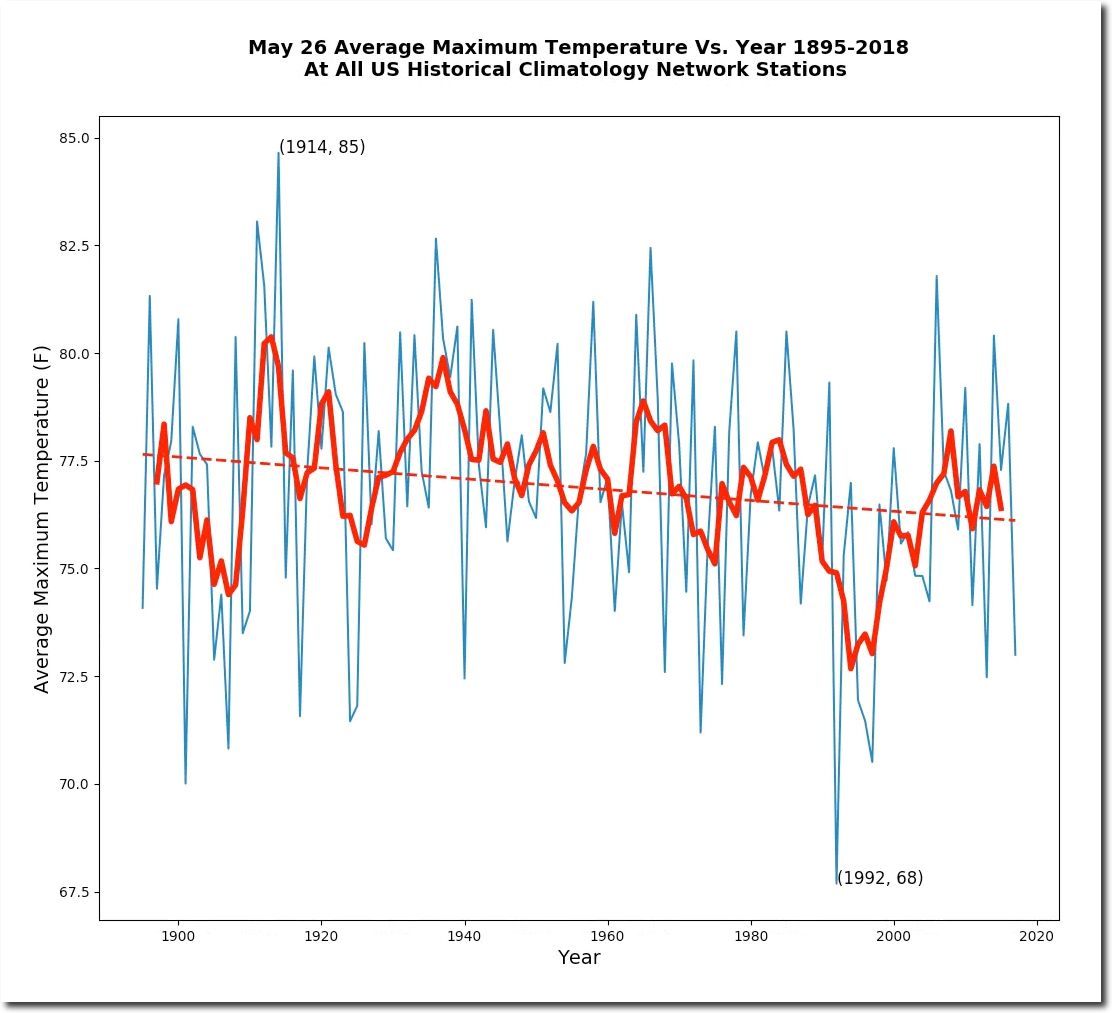
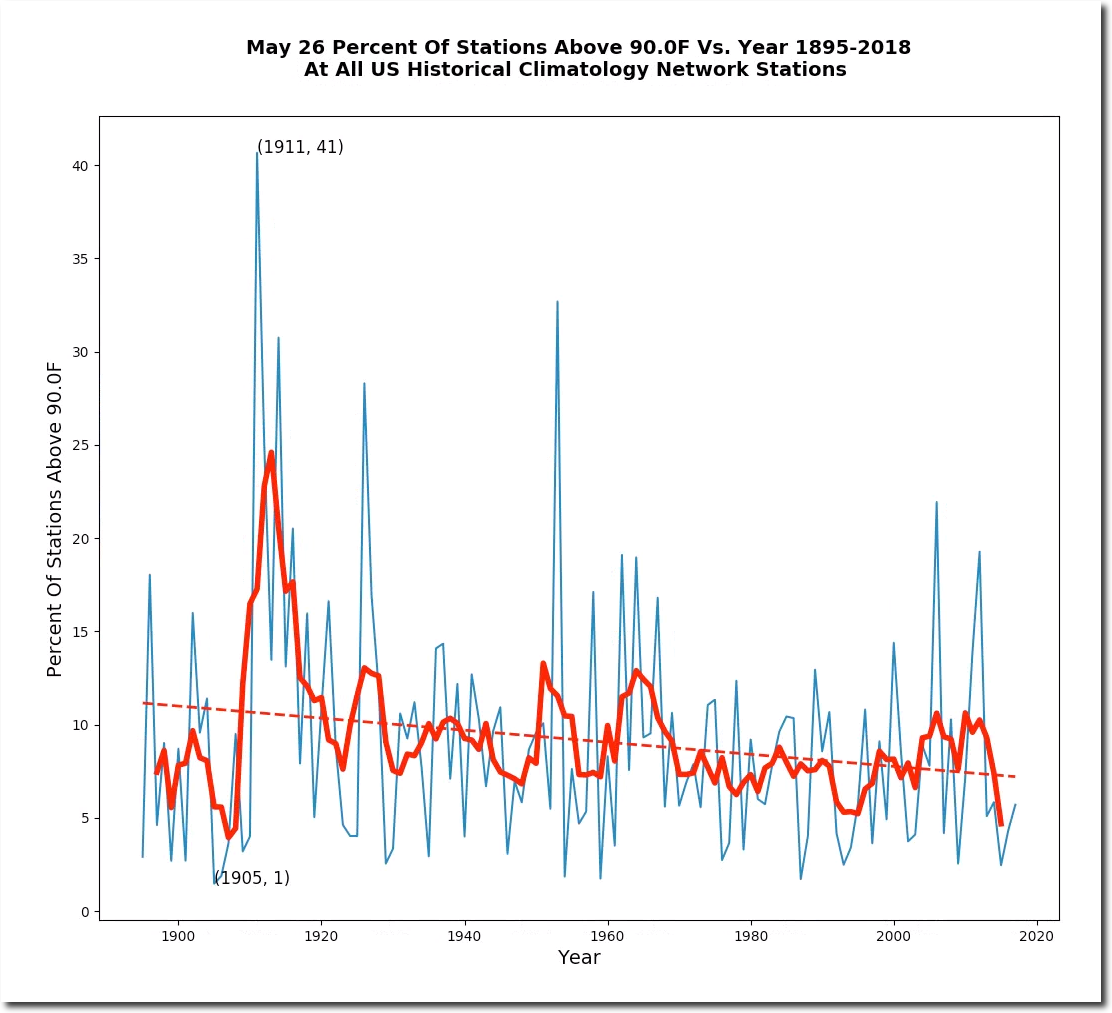
May 26 temperatures in the US have declined sharply since about 1910.

On this date in 1911, almost the entire eastern US was over 90 degrees.
Similar story in 1914, with 90 degree weather up into Vermont.
Posted in Uncategorized | Leave a comment

So Why Tamper With The Data?

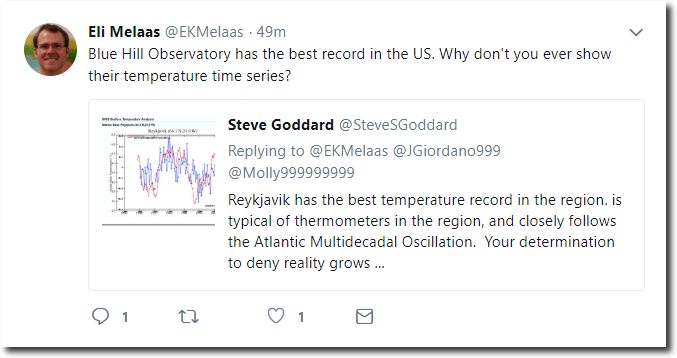
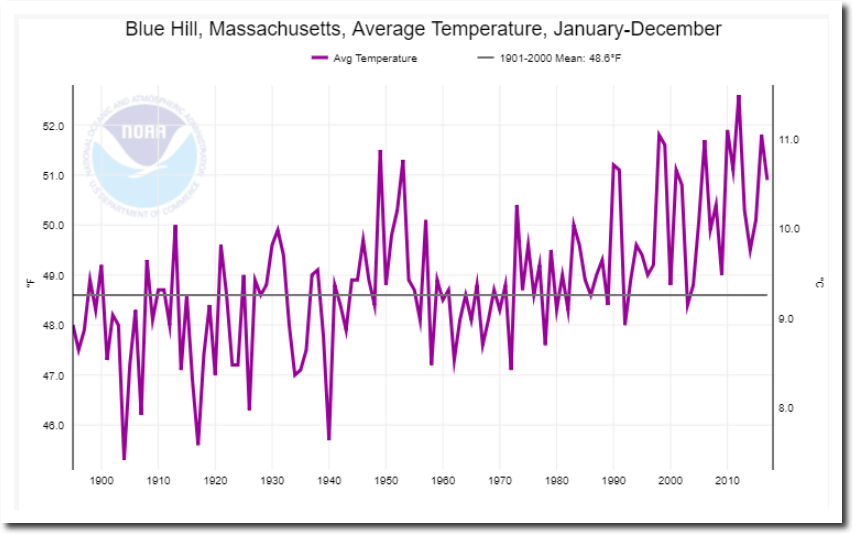
Eli Melaas is bragging that Blue Hill, MA has the best temperature record in the US.

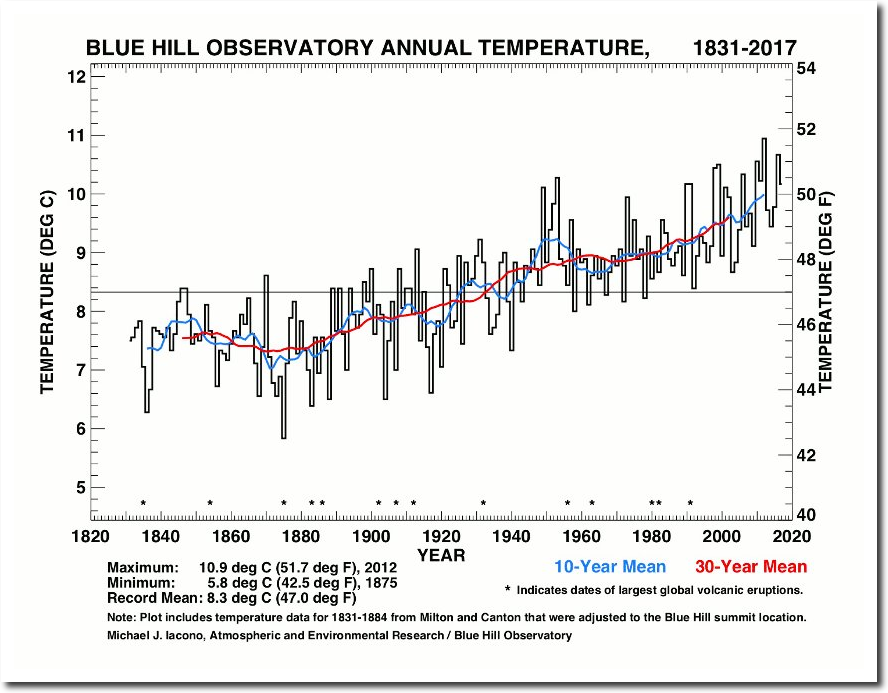
And he provided this graph.

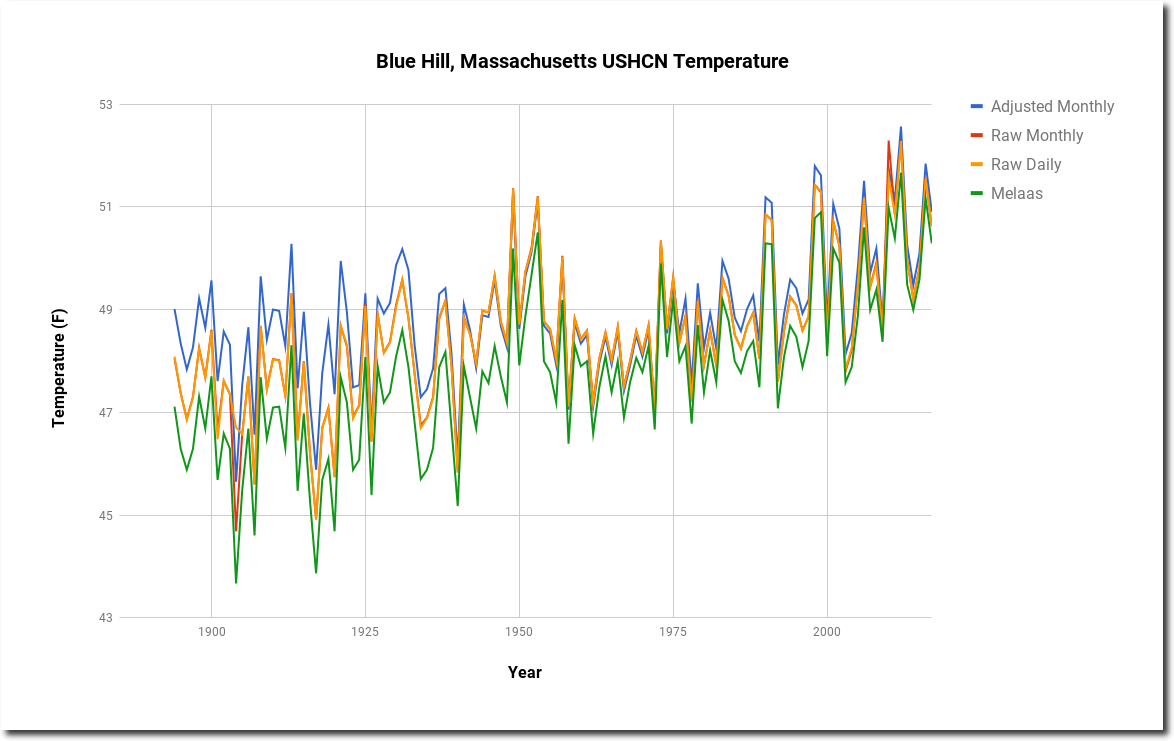
This is what the actual USHCN daily data looks like.

I plotted four versions of the graph – Melaas, USHCN raw daily, USHCN raw monthly, and USHCN adjusted monthly. As you can see there is a huge spread, other than the two raw data sets which agree almost exactly.

Spreadsheet

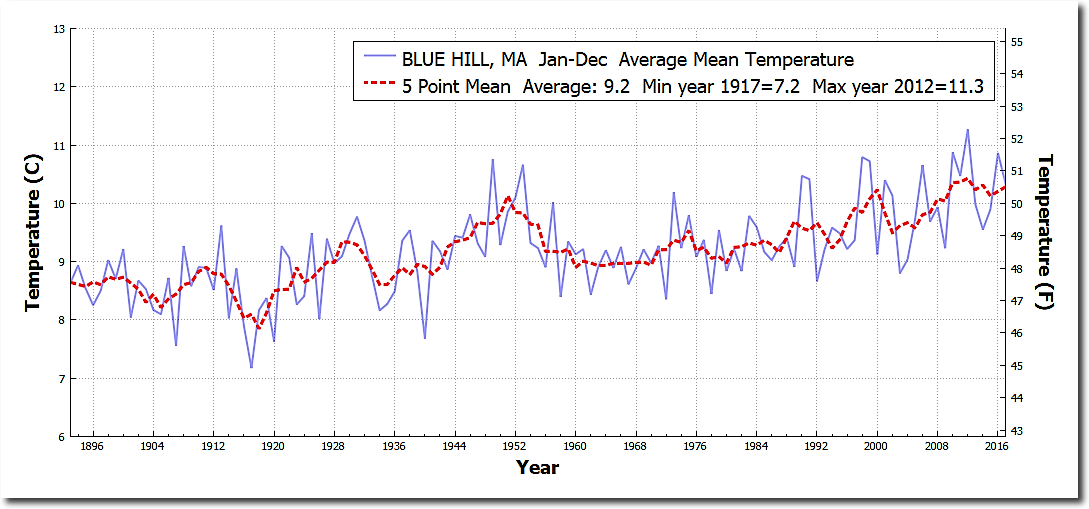
Here is the graph from the NOAA web site. Essentially identical to the USHCN adjusted.

Climate at a Glance | National Centers for Environmental Information (NCEI)

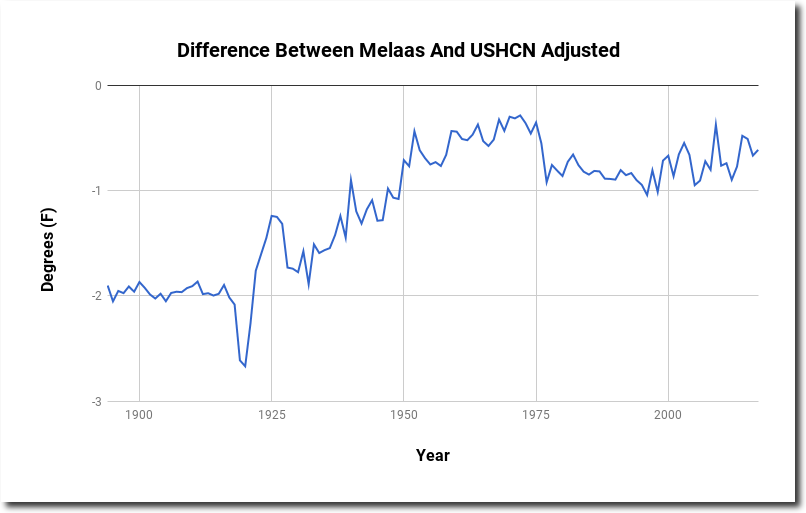
Blue Hill is one of the few USHCN stations where NOAA warms the past with the adjustments. Melaas version of the data shows a lot more warming than other data sets. Here is the difference between Melaas and USHCN adjusted temperatures.

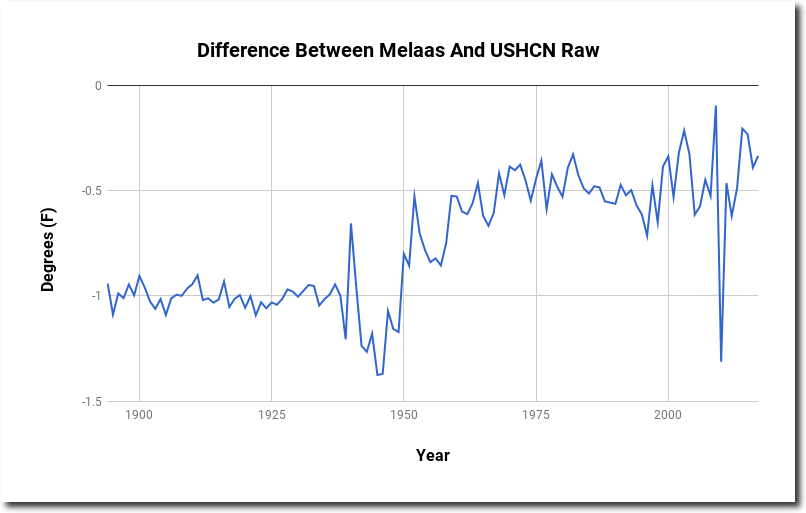
Here is the difference between Mellas and USHCN raw temperatures.

If the Blue Hill station is so good, why is the data being tampered with? And why does Melaas’ graph show so much more warming than the other graphs?

Posted in Uncategorized | Leave a comment

A Very Mild May In The US

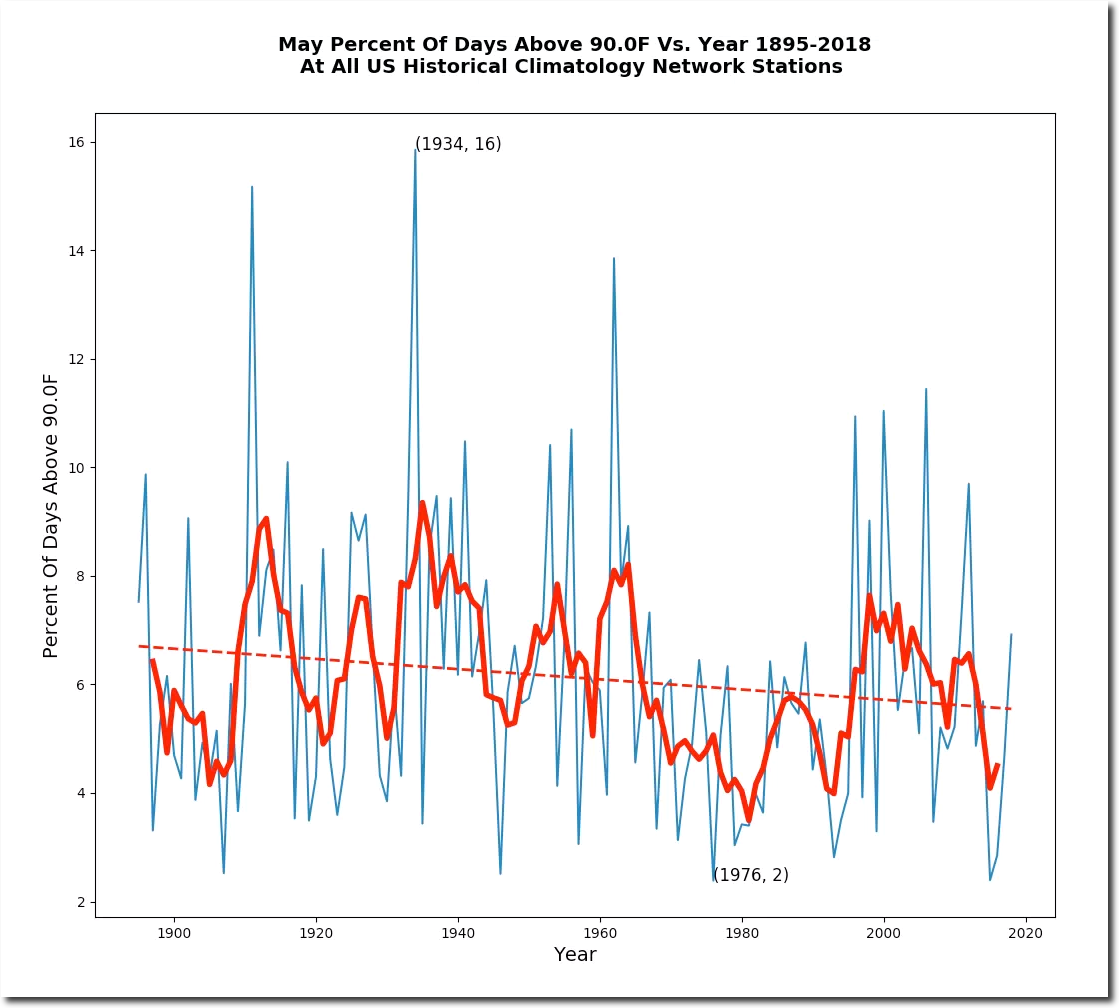
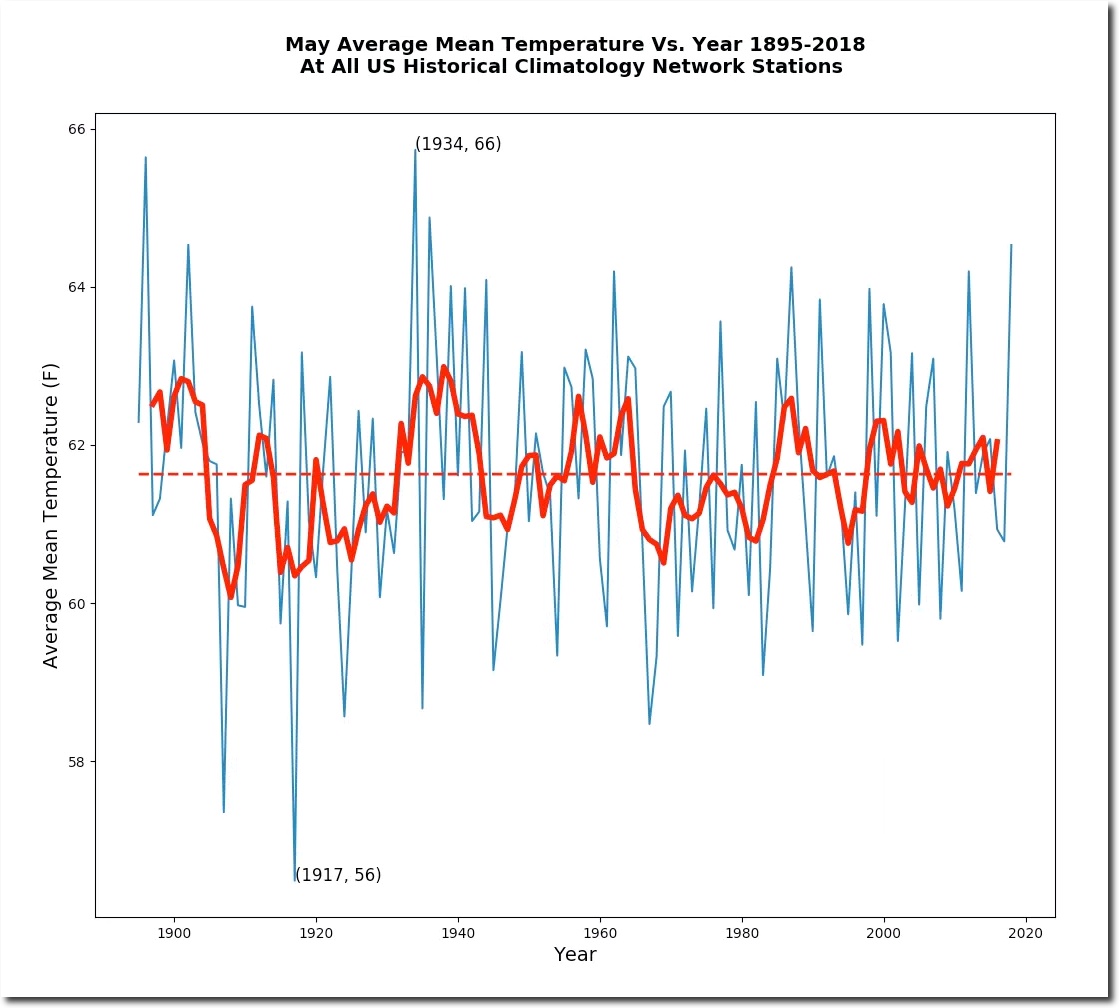
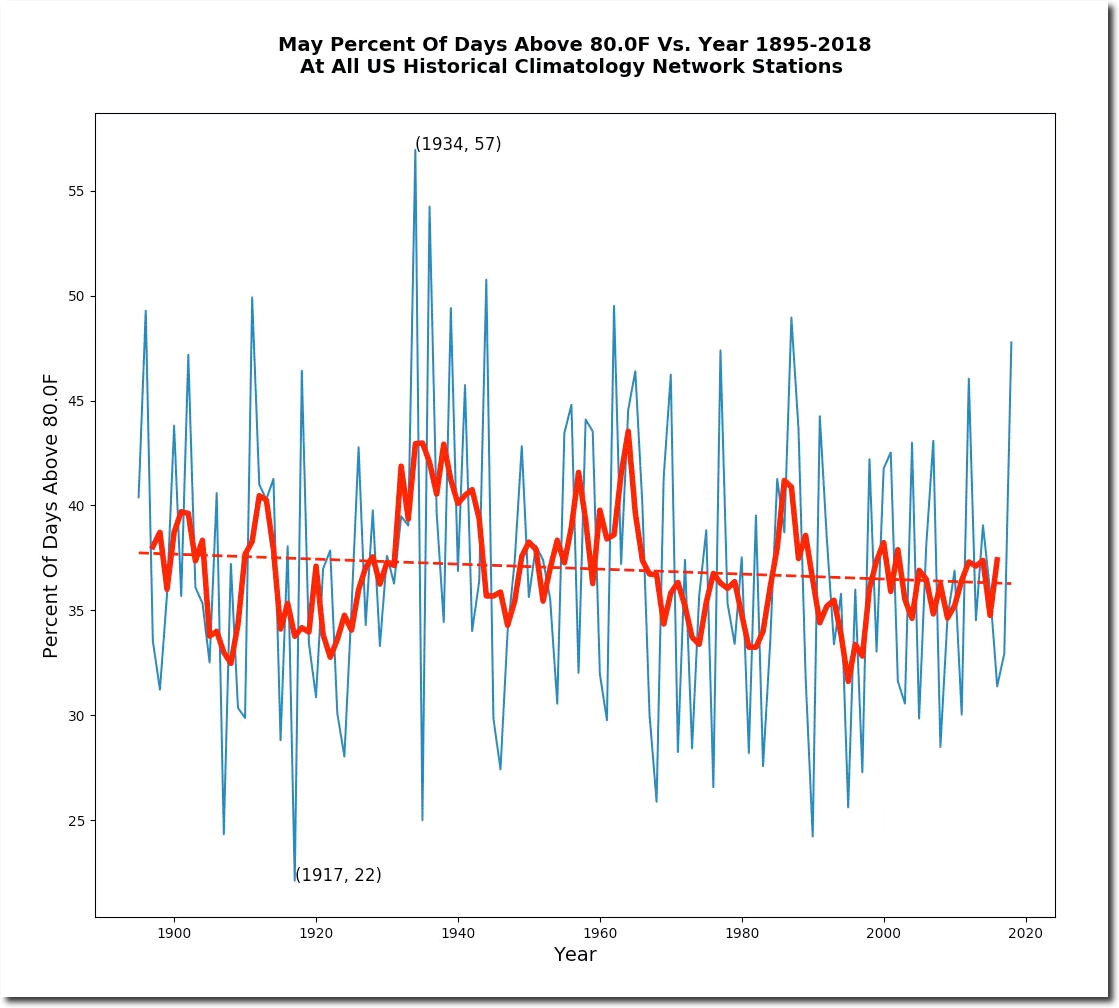
The frequency of hot May days has declined sharply in the US over the past century, with this year being just about average.

However, the average temperature this month has been in the top five.

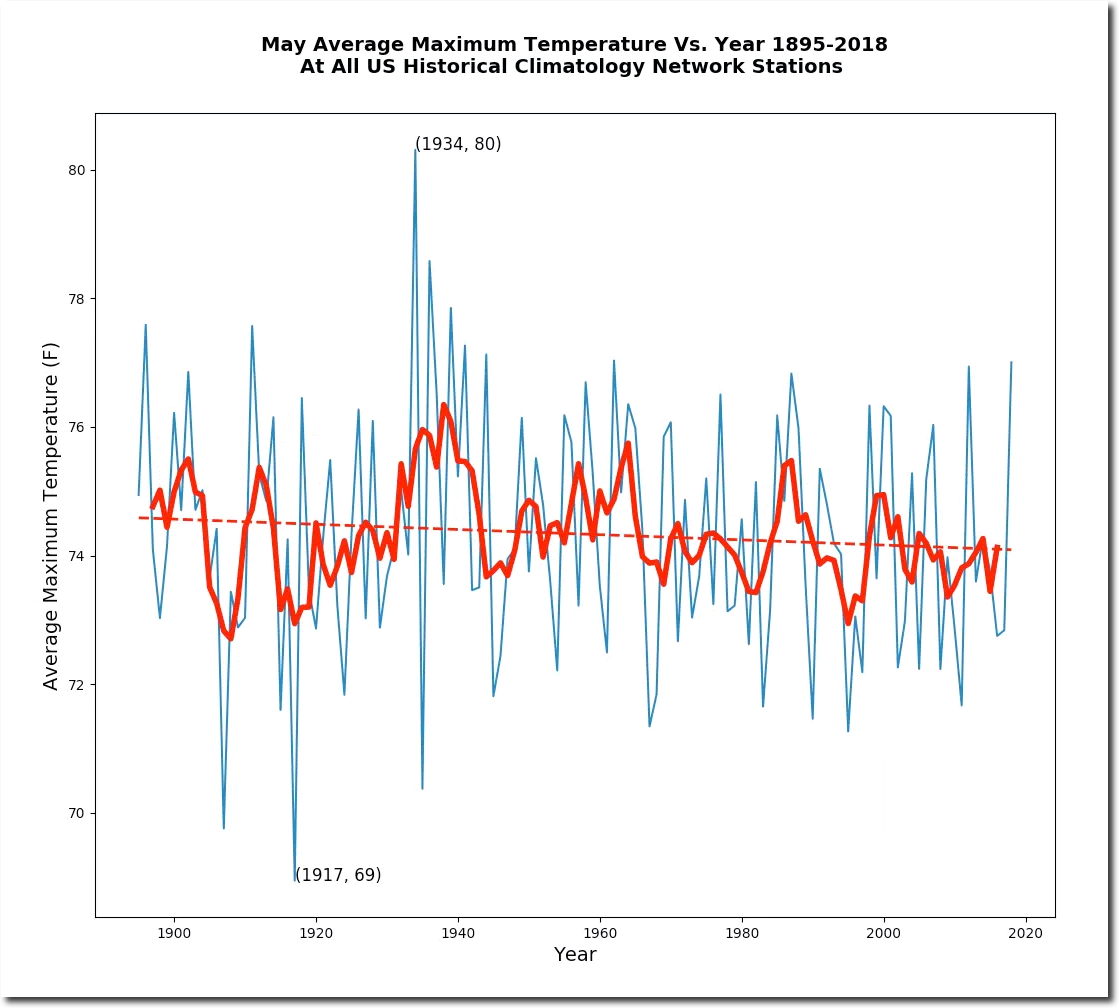
Afternoon temperatures have been much cooler than 1934.


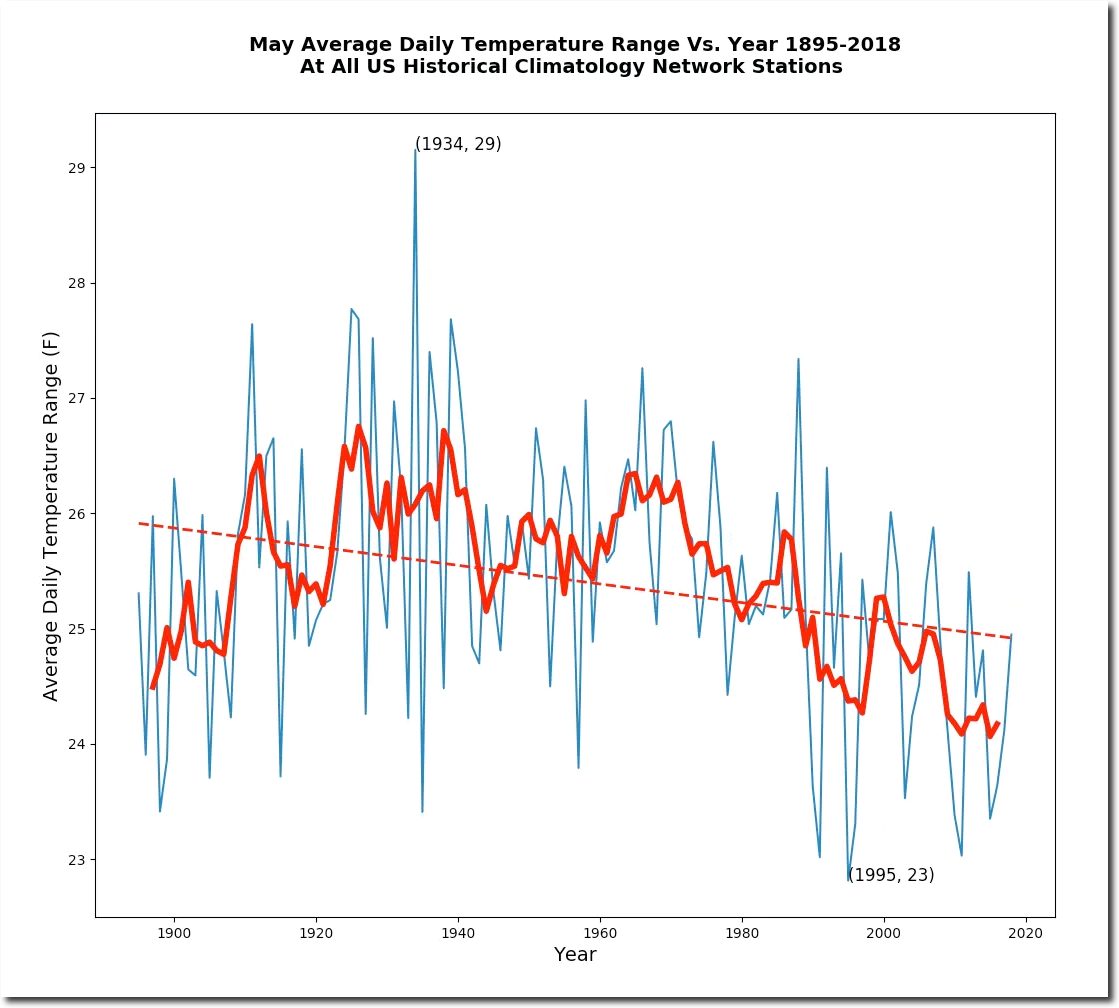
Maximum temperatures are decreasing, minimum temperatures are increasing – so the daily range in temperatures has plummeted.

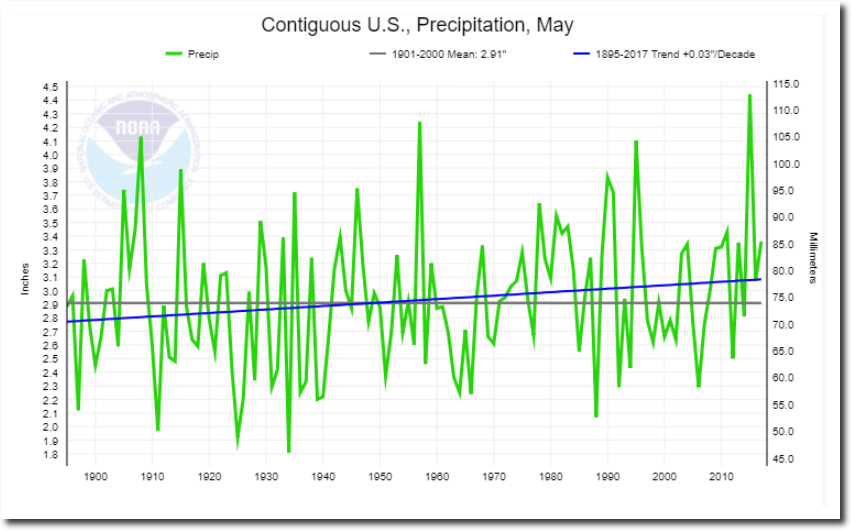
One of the main reasons for the warmer nights and cooler days is the latent heat of water.  The US is getting wetter and having fewer droughts, so we get more evaporation during the day and more condensation at night. This moderates both daytime and nighttime temperatures.

Climate at a Glance | National Centers for Environmental Information (NCEI)

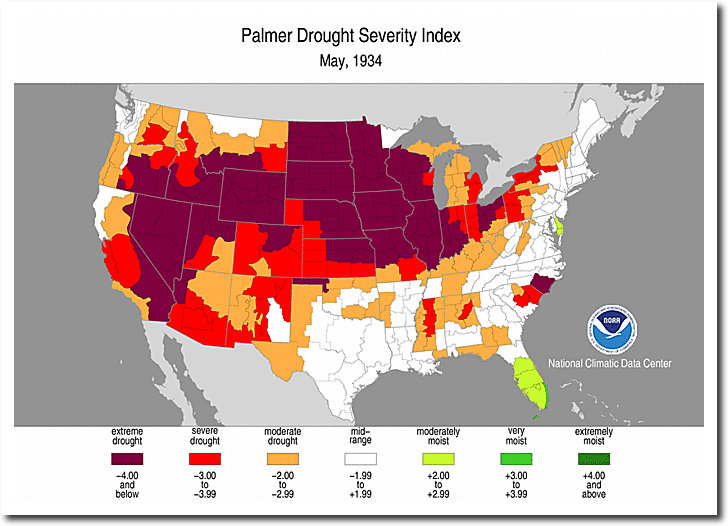
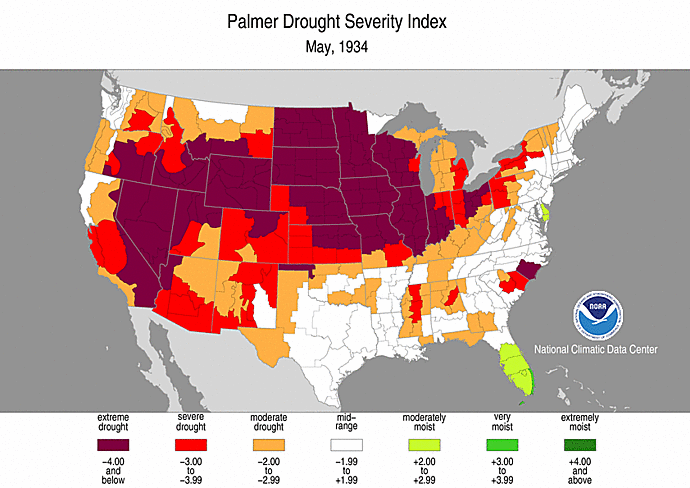
The hottest May was also the driest May in the US. During May, 1934 most of the US was in severe or extreme drought.  That was also the May with the largest diurnal temperature range.

psi-193405.gif (690×488)

On Memorial Day weekend 1934, North Dakota reached 111 degrees, and almost the entire Great Plains was over 100 degrees.

The propaganda about hottest May ever is about to start, and I wanted everyone to be prepared with facts.

Posted in Uncategorized | Leave a comment

Canadian Climate Experts

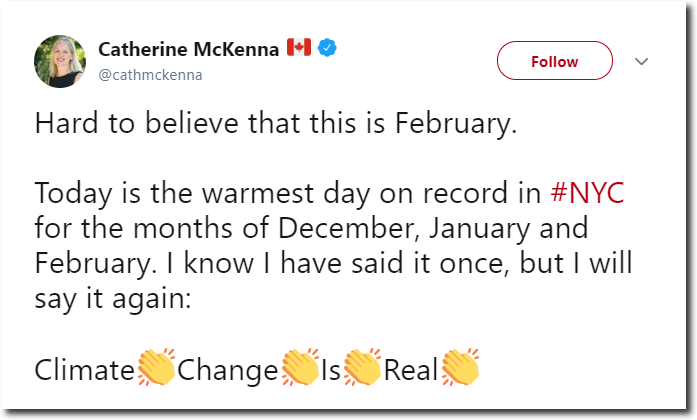
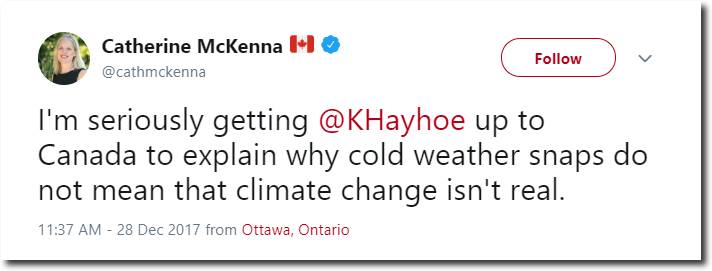
Canadian climate experts Katharine and Catherine team up to explain why warm days are climate and cold days are just weather.

Catherine McKenna ?? on Twitter

Catherine McKenna ?? on Twitter

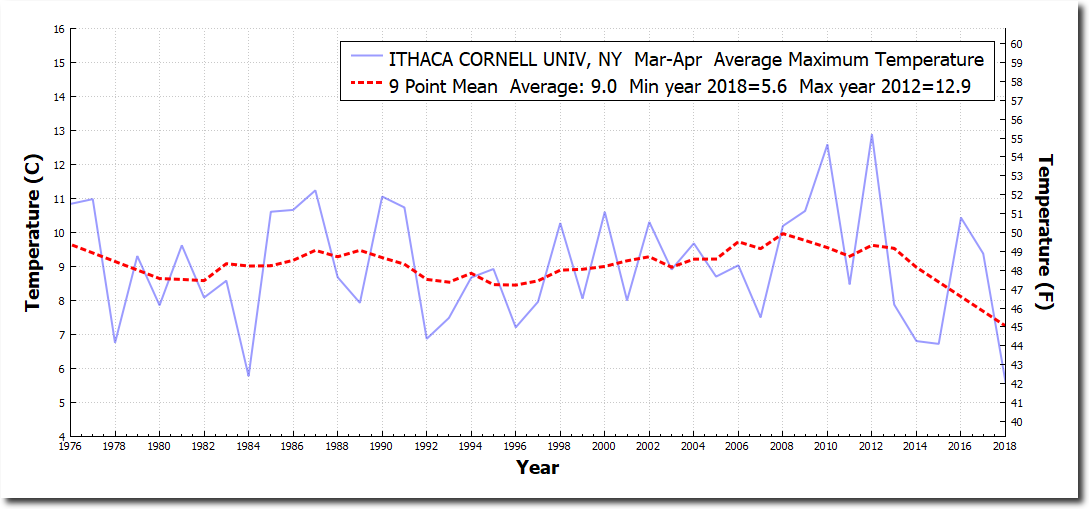
Right after Climate Barbie bragged about a warm day in New York at the end of February, New York State had their coldest March/April in over 40 years.

Posted in Uncategorized | Leave a comment

D-Day Approaches For Climate Alarmists

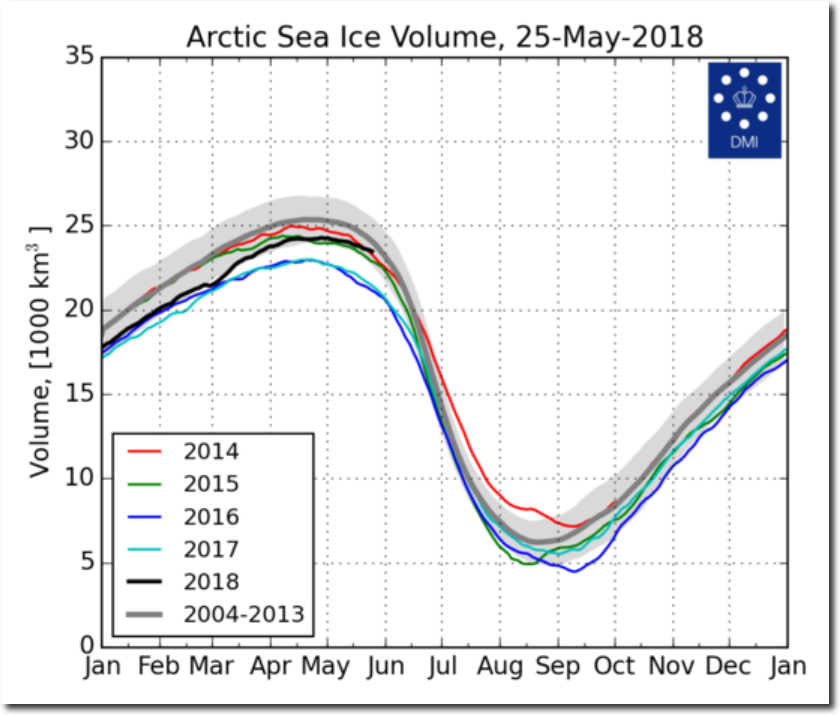
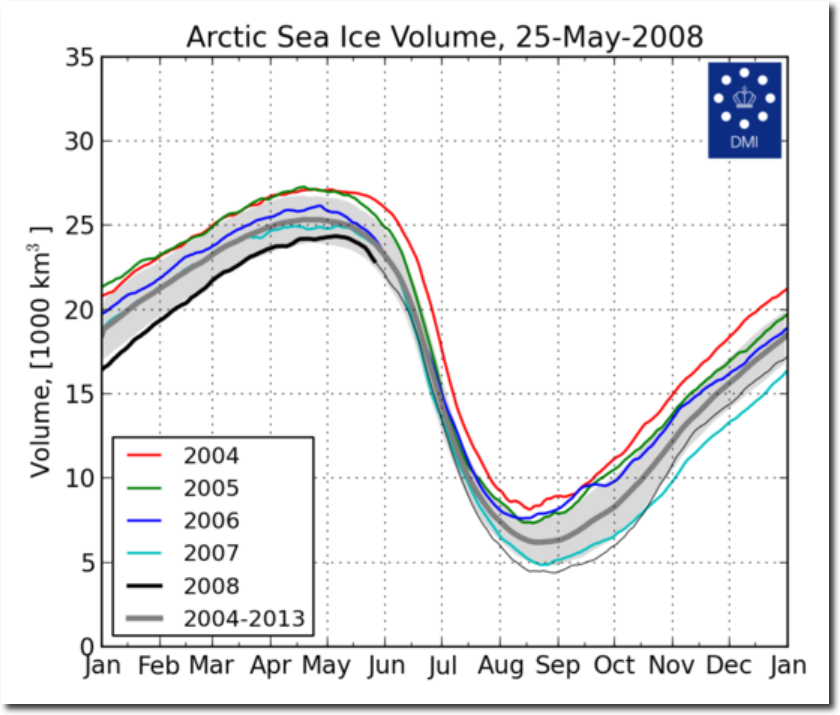
I warned alarmists at the beginning of the month that their day of reckoning would come near the end of May, and it is nearly here. Arctic sea ice volume is the highest in five years, and much higher than 10 years ago. Ice is melting very slowly, and volume is getting very close to the “normal” line.

2018      2008

Posted in Uncategorized | Leave a comment