Hansen says UHI is 0.1 degrees.
Hansen and Lebedeff (1987) estimate that urban effects cause a warming of about 0.1°C/century on global average
Surface Air Temperature Analyses
Every night the weather forecaster says “and a few degrees cooler in outlying areas” – typically 20 to 40 times larger than Hansen claims.
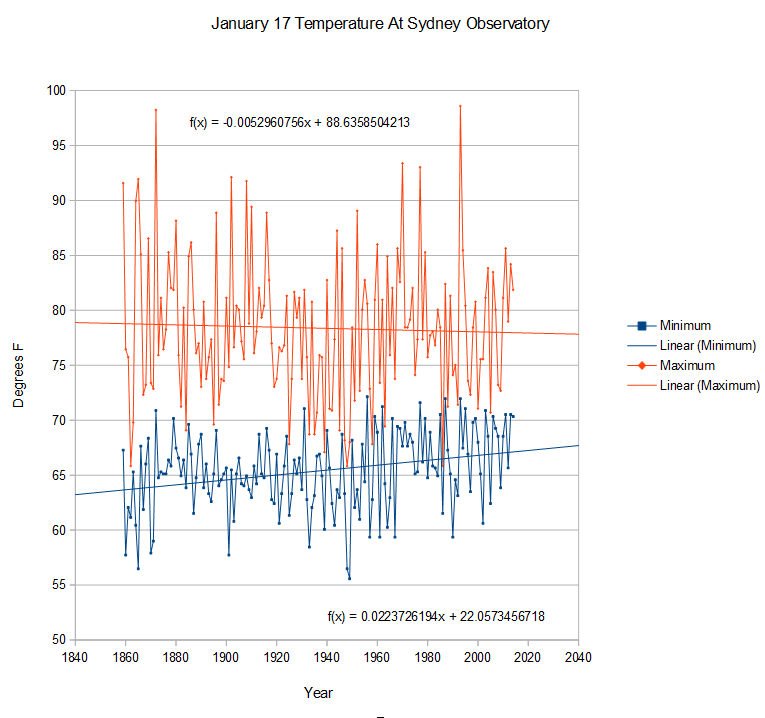
So what does UHI look like at an actual station? Midsummer temperatures in Sydney show a very strong UHI signature. Maximum temperatures have declined over the past 150 years, while minimum temperatures have risen sharply.
 This probably has something to do with being located adjacent to 20 lanes of asphalt.
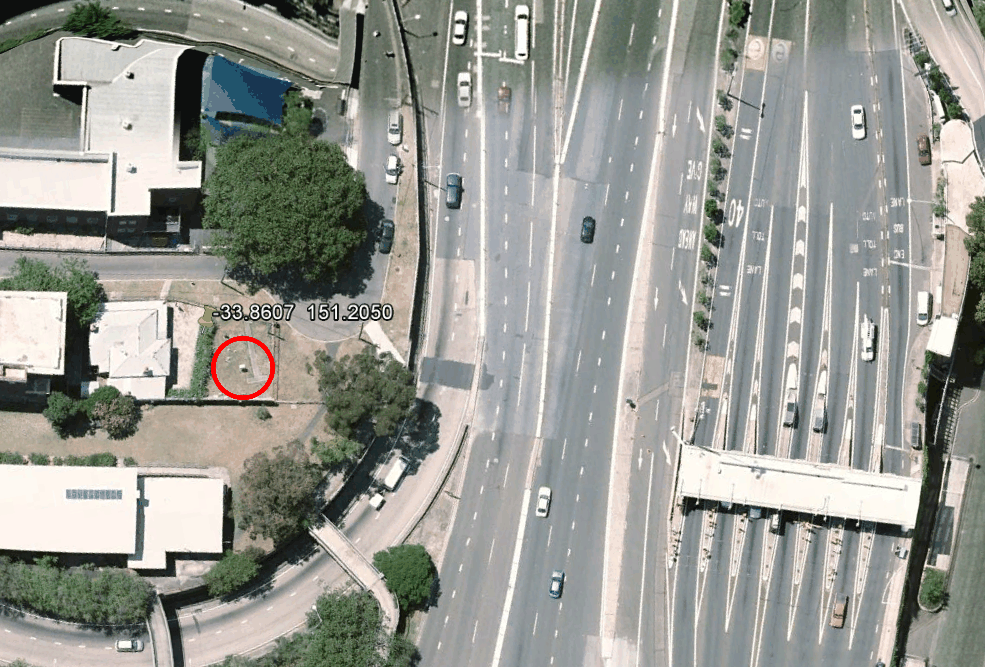
The experts adjust for other factors very aggressively, but the one thing they should be adjusting for – UHI – they simply write off.