Arctic cyclone chews up rotten northern sea ice
The Canadian Press July 28, 2013
Cyclones can destroy large amounts of ice very quickly.
“In 2009, we actually documented one of these events in which large, multi-year ice floes — Manhattan-sized — broke up in a matter of minutes,” said Barber.
This year’s storm over the Beaufort Sea formed about mid-week and is expected to die out on the weekend.
It isn’t as strong as last year’s, but the ice is thinner and weaker. As well, the ice has already been pummelled by earlier storms.
Barber said the ice is getting so weak that new categories have had to be created for it.
“We have a whole new class of sea ice in the Arctic, which we’re calling ‘decayed ice,”‘ he said.
“We started seeing it in 2009. It’s extremely weak.”Barber said the research icebreaker CCGS Amundsen can do 13.5 knots in open water. Through decayed ice, it can do 13 knots
Changing sea-ice cover is increasingly being linked to southern weather patterns. The jet stream, which strongly influences weather at mid-latitudes, is driven by temperature differences between the Arctic and the equator, a difference that shrinks with the sea ice.
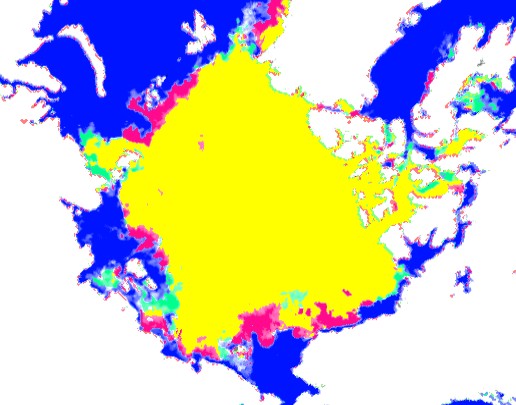
Ice coverage is slightly about last year’s record low but still well below the 30-year average.
Much remains unknown about the role of Arctic cyclones in the annual freeze-thaw cycle. Back when the sea was thick and lasted for years, cyclones tended to spread the ice out and actually increase its extent, said Julienne Stroeve of the National Snow and Ice Data Center in Boulder, Colo. Now, when ice gets spread out, it simply breaks up and disappears.
“As our ice cover has thinned, some of our old rules are changing,” said Stroeve.
Arctic cyclone chews up rotten northern sea ice | Alaska Dispatch
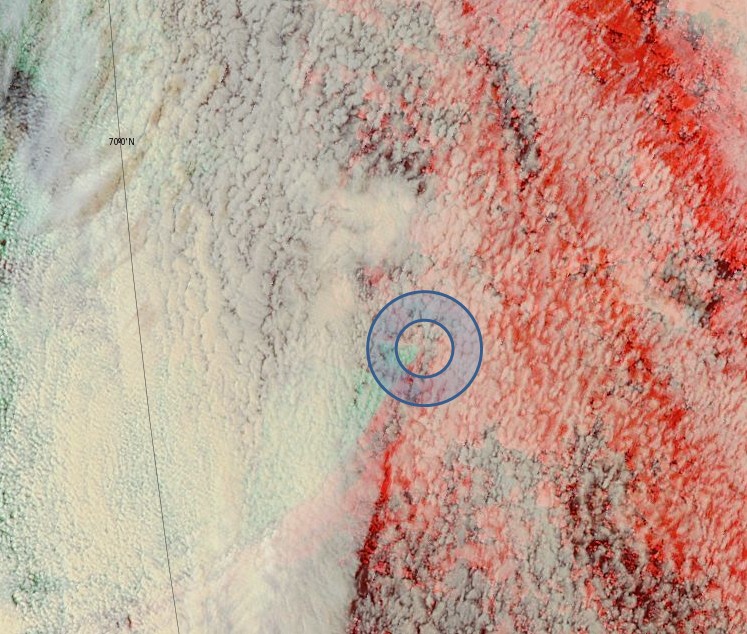
You can see the rotten, decayed ice here. Ice extent is more than double last year’s “record low” and has been moving horizontally for almost a week.
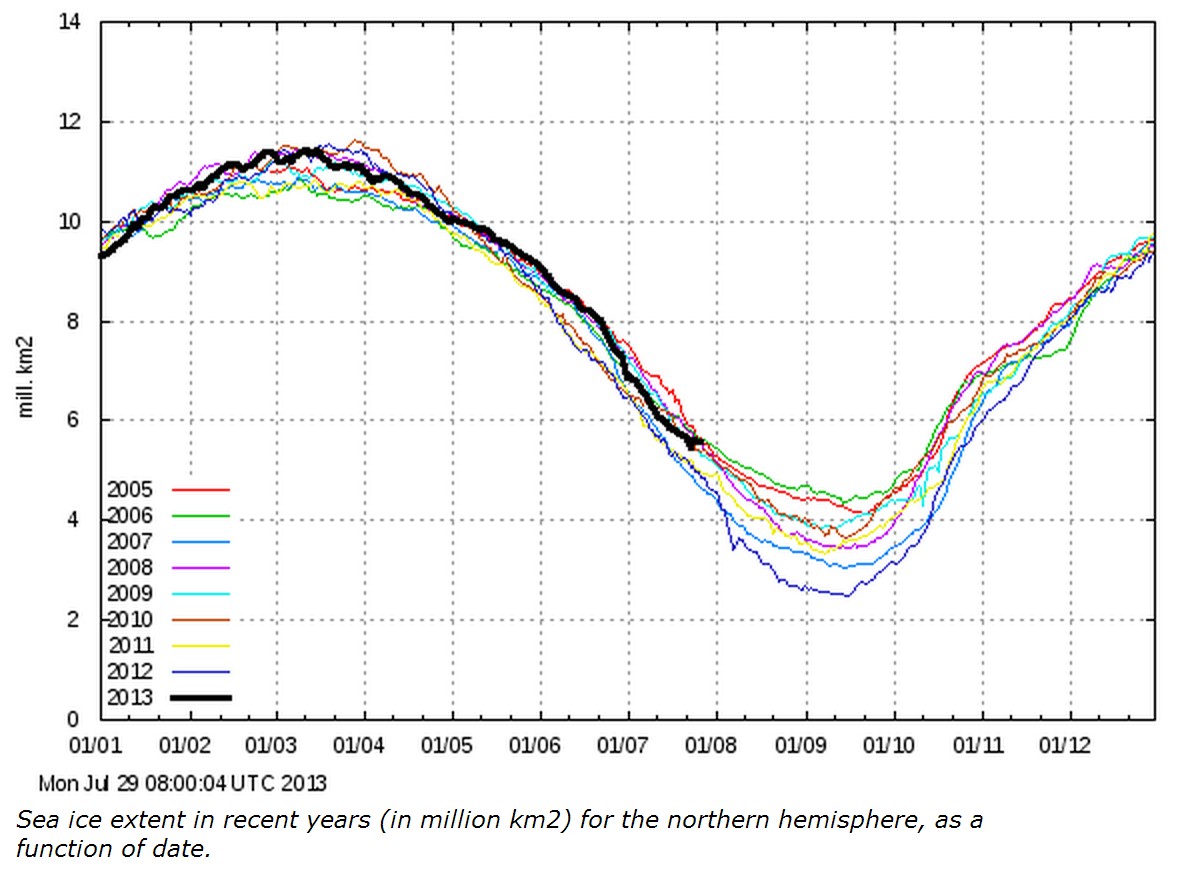
COI | Centre for Ocean and Ice | Danmarks Meteorologiske Institut