Melting ice is cooking the planet. Shrinking Arctic sea ice means the ocean is absorbing more energy from the sun, and it’s now clear the effect is twice as big as thought – adding significantly to heating from greenhouse gases.
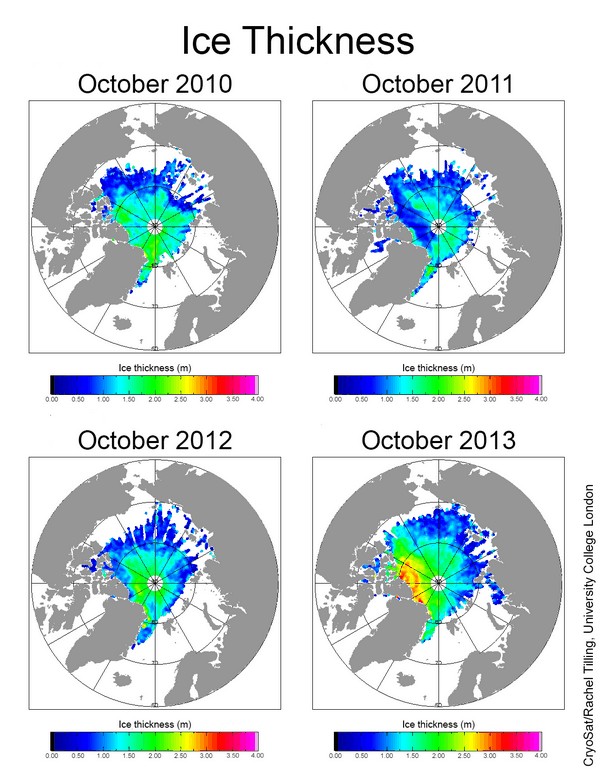
NSIDC just reported a significant increase in Arctic sea ice thickness and volume over the past four years.
Arctic temperatures have risen 2 °C since the 1970s, leading to a 40 per cent dip in the minimum summer ice coverage in the Arctic Ocean. Open water soaks up more sunlight than ice, so as the ice retreats the ocean absorbs more energy, warming it and causing even more melting.
The summer minimum occurs in mid-September, just as the sun sets at the north pole. It has almost no impact on albedo or absorption of sunlight, but open water in September allows heat to escape from the water, cooling the planet.
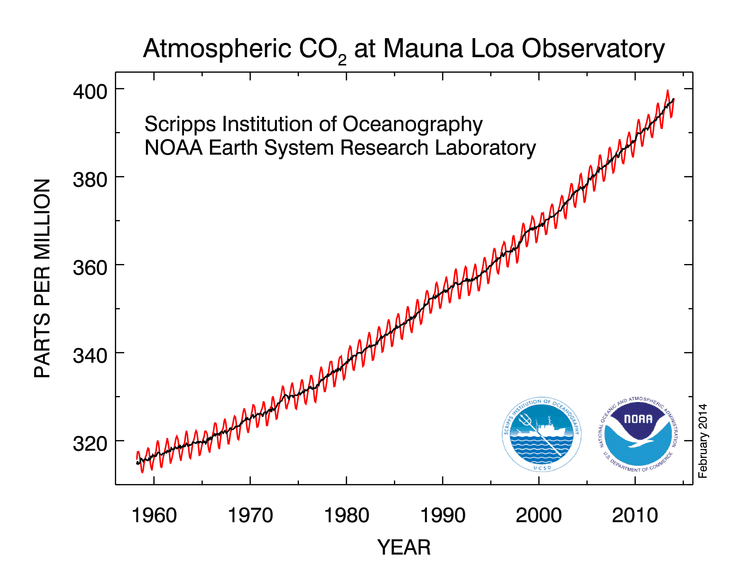
To measure the effect, Ian Eisenman of the Scripps Institute of Oceanography in La Jolla, California, and colleagues turned to data from NASA’s CERES satellite. They found that the Arctic Ocean’s albedo – the fraction of sunlight it reflects back into space – dropped from 52 per cent in 1979 to 48 per cent in 2011. That may not seem like much, but it means a big rise in energy absorbed – equal to 25 per cent of that trapped by the rise in atmospheric carbon dioxide over the same period.
Arctic thaw significantly worsens global warming risk – environment – 18 February 2014 – New Scientist
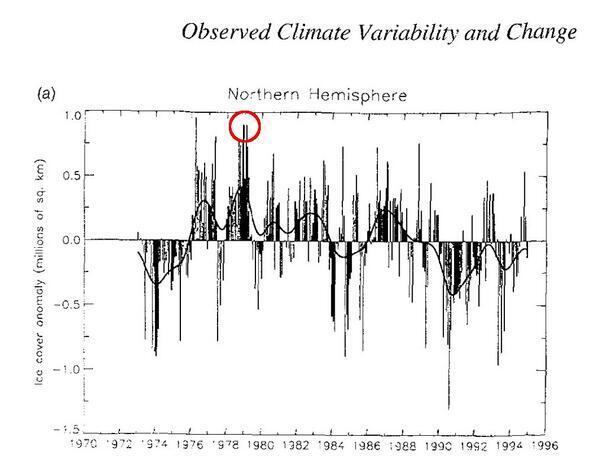
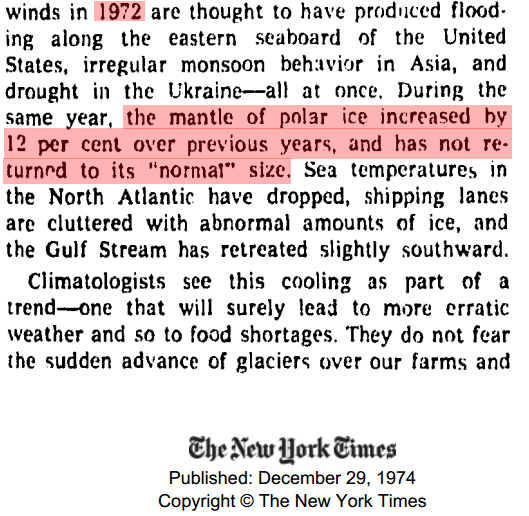
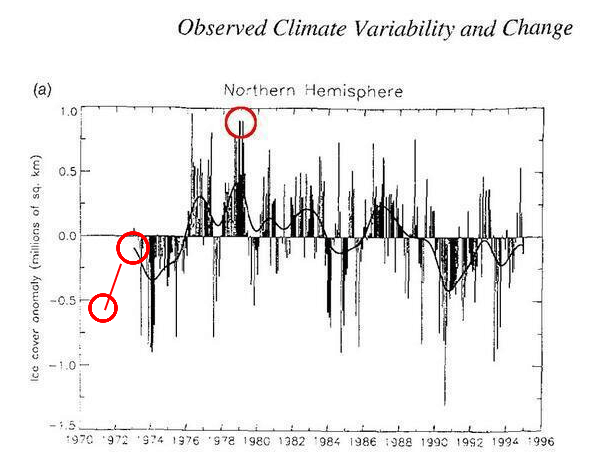
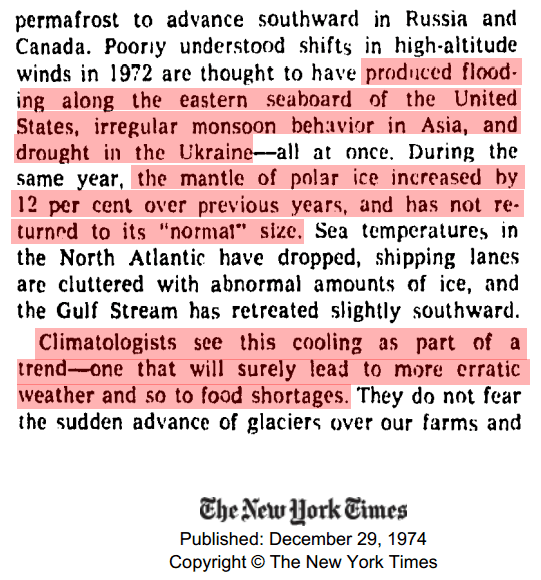
1979 was the peak year for Arctic sea ice. That is why the climate deceivers always use it as a start date. This graph is from the second IPCC report. Had they started their analysis in 1974, there would be nothing scary to report.