Fires in those areas don’t require an arsonist even today. One of the things that truly astonishes me even today is that people think the trees and uncleared brush around them have always been there. The life cycle of the trees in those areas require the forests to burn down to make way for the next wave. In another 150 years there will be photographic evidence accumulated to show the continual cycles with Oak, Pines, Redwoods, Manzanitas, and no telling what else competing for dominance depending on the amount of moisture available during any one cycle. They either need to manage the forest with selected cutting and underbrush reduction or get used to the fires. The Lake Cuyamaca area burned in 2003 and is only just beginning to cover. A beautiful pine forest and many homes were lost.
That’s “recover” The 2003 fire burned most of the areas mentioned in the 1950 article. The area was completely reforested in the early 1990s with no trace of the 1950 fire. The temperatures in the area stay moderate year round, except for occasional snow in the Lagunas, so you only need water for rapid growth. Of course, that is in short supply right now.
When the Spaniards first came into San Fernando Valley, they already witness smog due to the smoke from the slash-n-burn practiced by the locals and the natural containment environment of the valley.

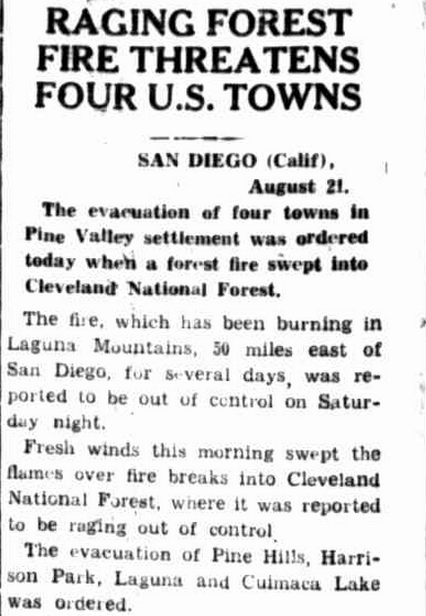


Those were natural fires, not like these recent ones that were set by arsonists or by CNN to boost their ratings.
Fires in those areas don’t require an arsonist even today. One of the things that truly astonishes me even today is that people think the trees and uncleared brush around them have always been there. The life cycle of the trees in those areas require the forests to burn down to make way for the next wave. In another 150 years there will be photographic evidence accumulated to show the continual cycles with Oak, Pines, Redwoods, Manzanitas, and no telling what else competing for dominance depending on the amount of moisture available during any one cycle. They either need to manage the forest with selected cutting and underbrush reduction or get used to the fires. The Lake Cuyamaca area burned in 2003 and is only just beginning to cover. A beautiful pine forest and many homes were lost.
That’s “recover” The 2003 fire burned most of the areas mentioned in the 1950 article. The area was completely reforested in the early 1990s with no trace of the 1950 fire. The temperatures in the area stay moderate year round, except for occasional snow in the Lagunas, so you only need water for rapid growth. Of course, that is in short supply right now.
When the Spaniards first came into San Fernando Valley, they already witness smog due to the smoke from the slash-n-burn practiced by the locals and the natural containment environment of the valley.